Impact Bed Selection and Installation: Alignment, Structure, and Maintenance
Select and install an impact bed correctly at transfer points: a 2 to 5 mm height drop, alignment within 3 mm, load-rated beam spacing, vulcanized UHMWPE bonding, and replacement when the layer loses 60 to 70 percent of thickness.
Installation and Alignment Requirements
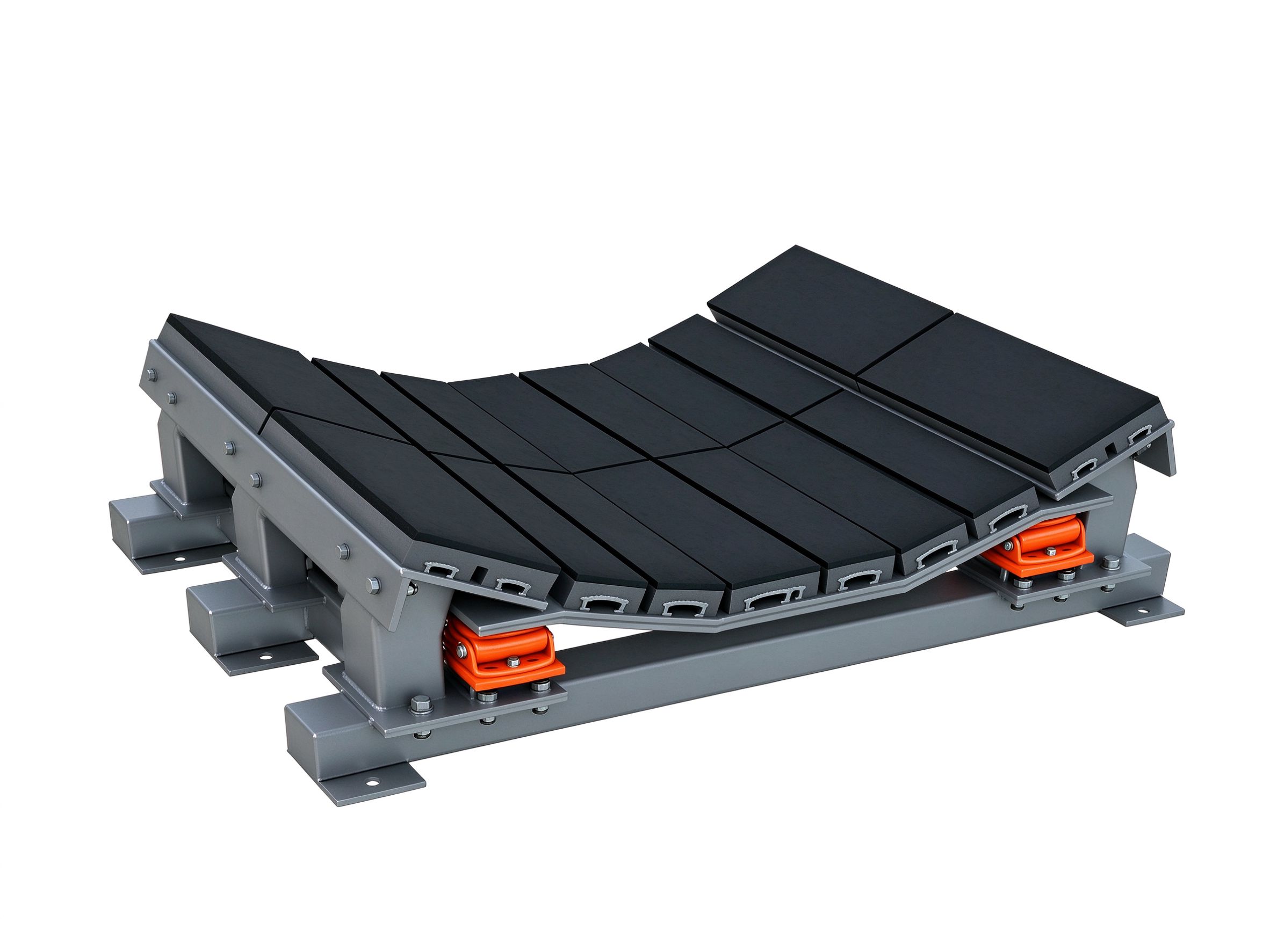
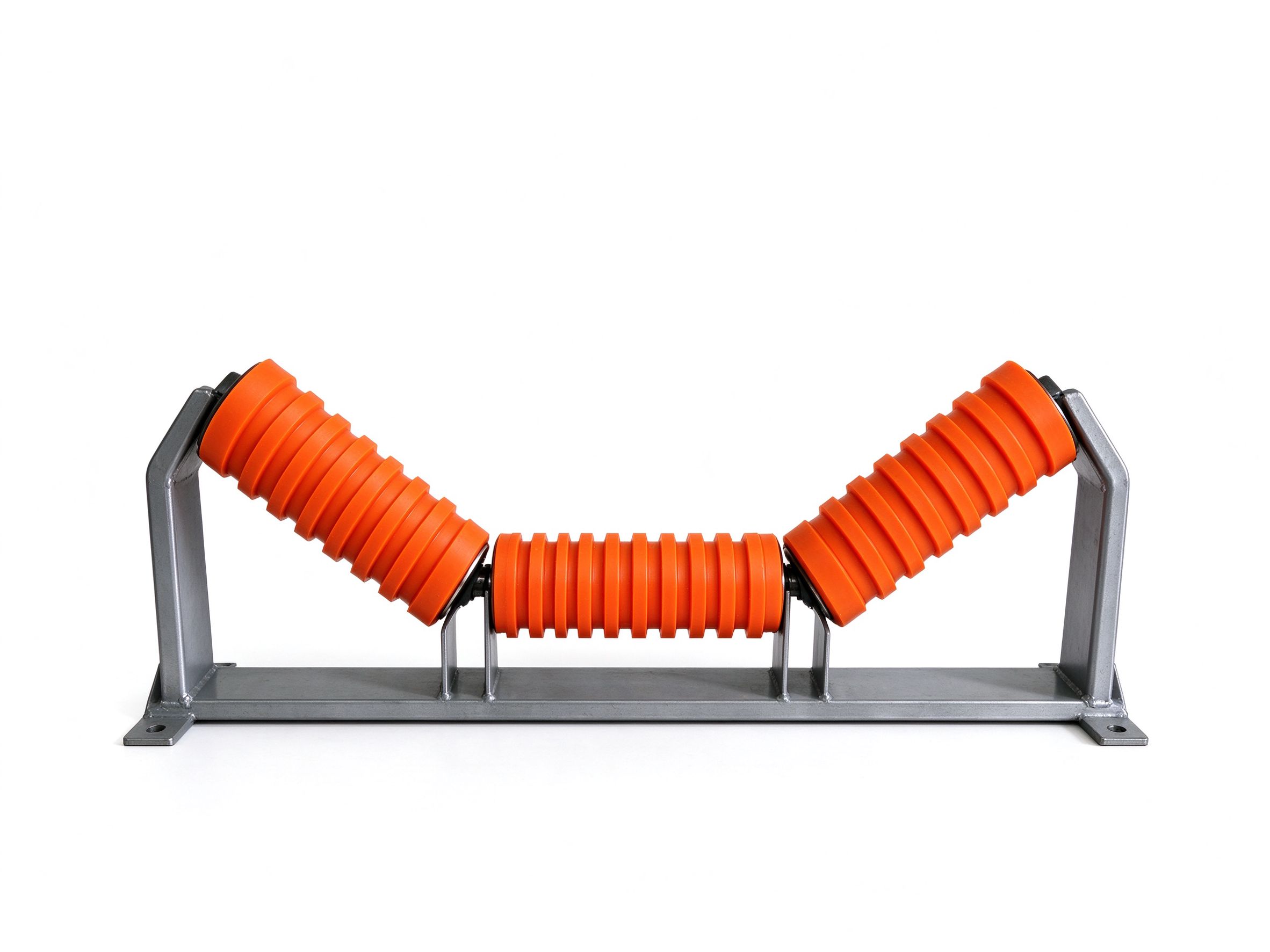
An impact bed (buffer bed) is a key belt-protection element at bulk material transfer points, and its effectiveness depends directly on correct installation and structural design; installation errors are the leading cause of rapid belt wear. For height position, the top surface of the buffer bars must sit below the level of the side idlers, with an optimal drop of 2 to 5 mm: installed too high it creates resistance to belt movement, installed too low the belt sags under the weight of material and sustains damage. For centering, the bed axis must coincide exactly with the conveyor axis, with an allowable deviation of no more than 3 mm; offset causes the belt to run off the rollers and uneven wear of the protective layer.
Structural Design and Build Reliability
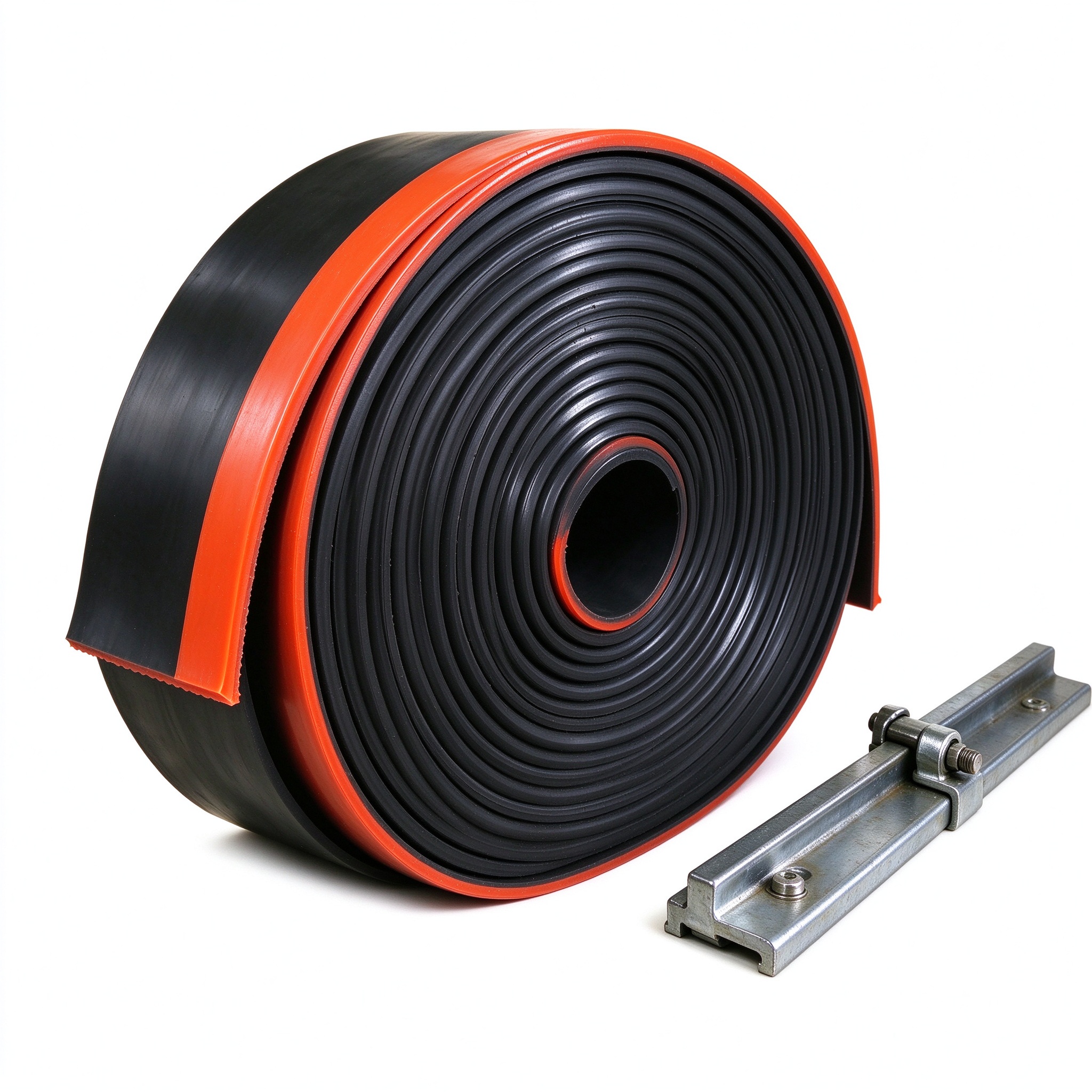
Because operating conditions at mineral processing plants can be extreme, production technology matters during selection. The spacing of the support beams determines the bed's ability to absorb impacts from large rock lumps; the beam pitch should be calculated individually for the load to prevent excessive belt deflection and reduce dynamic loading on the frame. Layer bonding also matters: low-cost alternatives often rely on adhesive or mechanical fasteners that fail under vibration, whereas vulcanization bonds the UHMWPE layer to the rubber base into a monolithic construction and keeps abrasive dust from entering between layers.
Preventive Maintenance Routine
To extend belt life, monitor wear and replace the buffer bars when the polymer layer thickness has been reduced by 60 to 70 percent or through-cracks appear. Regularly remove adhered material, especially wet ore or coal, from the space under the belt, because accumulated dirt distorts the loading geometry and can trigger an emergency conveyor shutdown.
Engineering Summary
Precise height and centering alignment, load-rated beam spacing, and a vulcanized UHMWPE-to-rubber build protect the belt at transfer points, while scheduled wear inspection and clearing of adhered material minimize downtime and belt replacement cost.