Pivot Self-Aligning vs Crown Tracking: How Belt Centering Systems Compare
Active swivel-frame guide rollers, passive waist-drum crown rollers, tapered rotary stations and spiral PU idlers — pick the tracking method for your section and load variation.
Belt drift needs a corrective force
A belt wanders under off-center load, out-of-square idlers and carry-back. Tracking systems either actively swivel the frame when the edge touches a guide, or passively push the belt back using a shaped roller face.
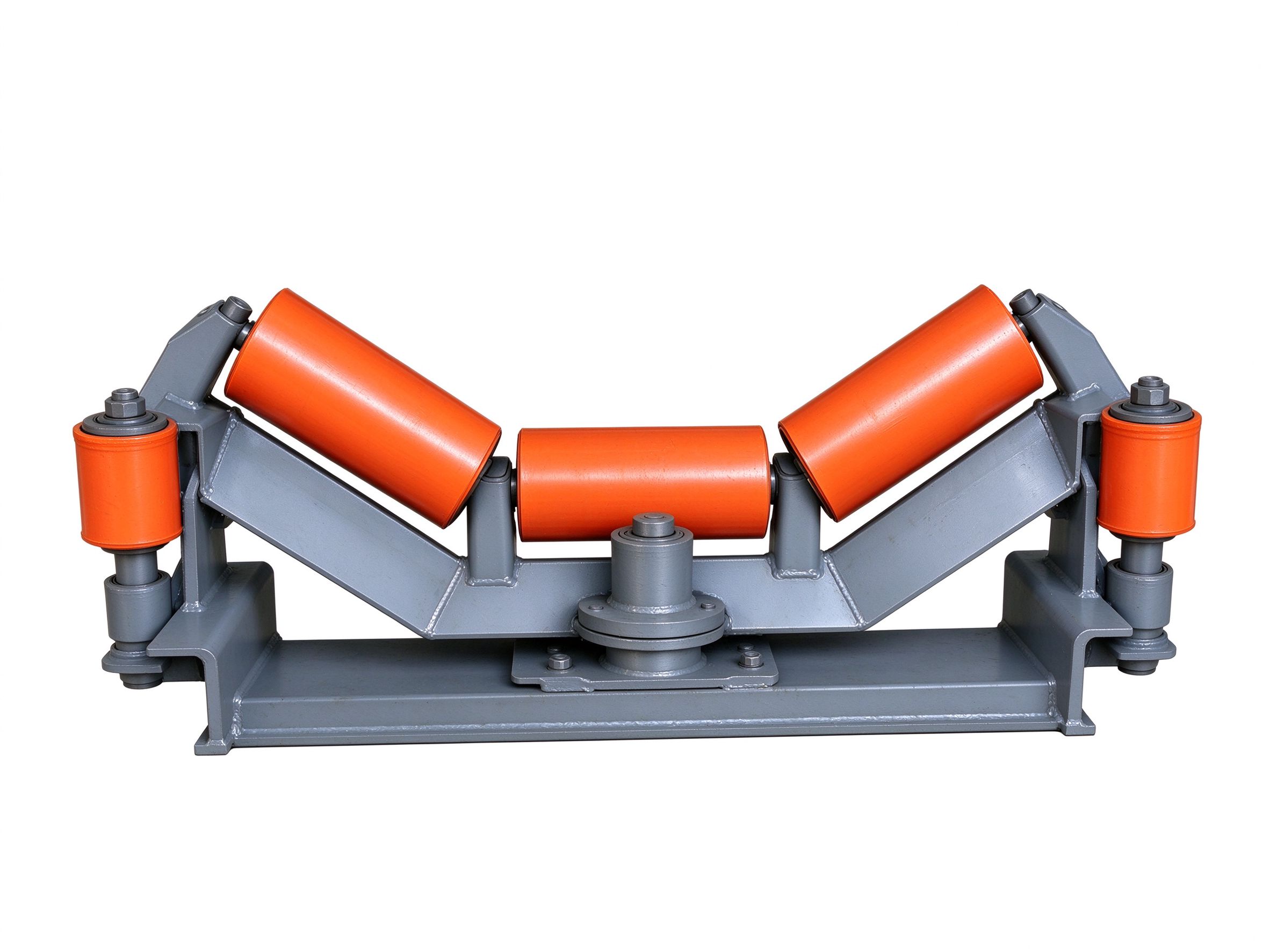
Pivot self-aligning idler (active)
The CEMA E/D self-aligning troughing or return idler rotates the whole frame on a central vertical pivot; vertical guide rollers ride the belt edges, so drift turns the frame and steers the belt back to center. It works on loaded carrying side or empty return and suits long overland and reversible belts placed at intervals.
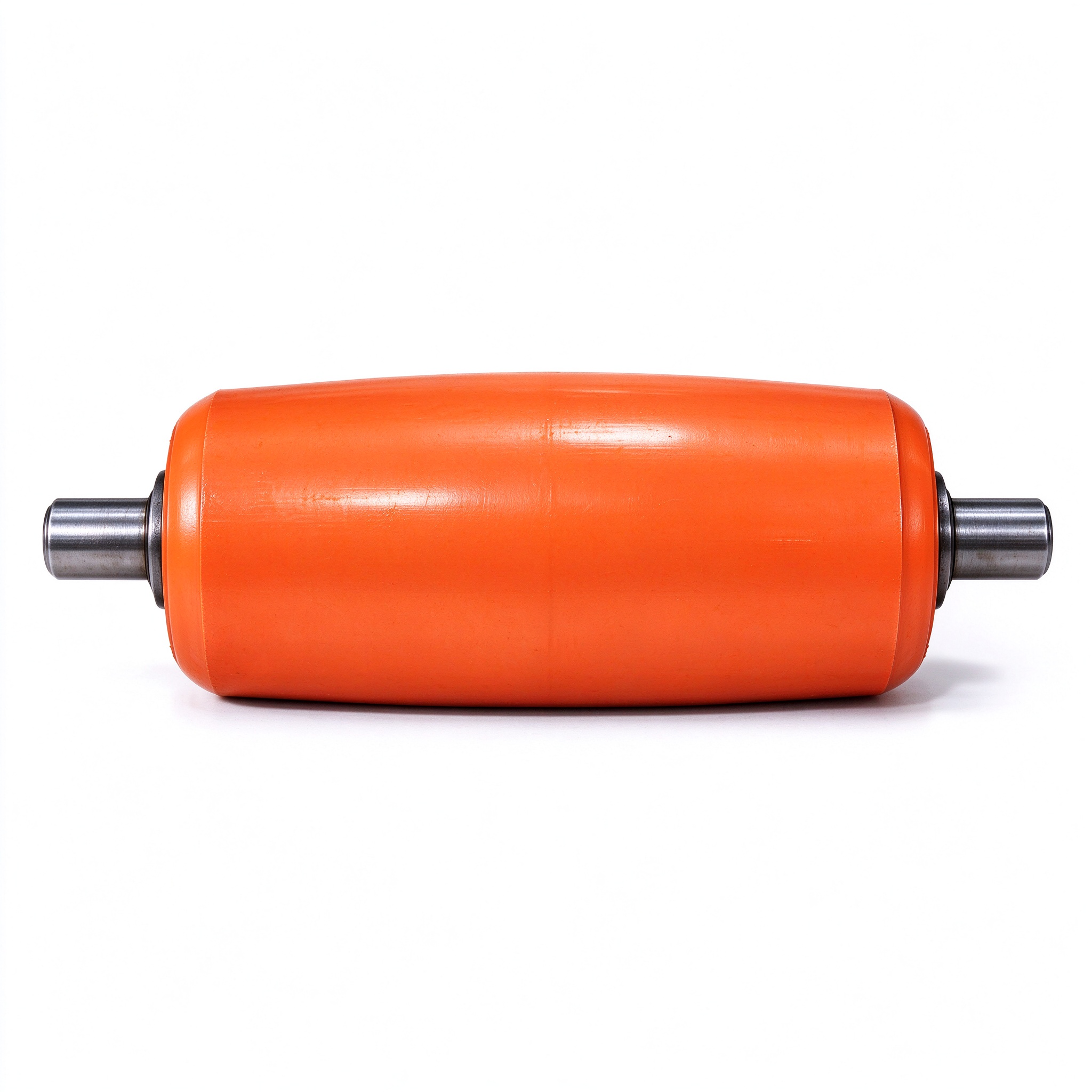
Crown / waist-drum roller (passive)
The PU crown roller uses a barrel-shaped convex face — middle slightly larger — to passively push a drifting belt to center without an active drive or pivot station. It suits long runs needing quiet passive alignment and retrofits onto existing frames.
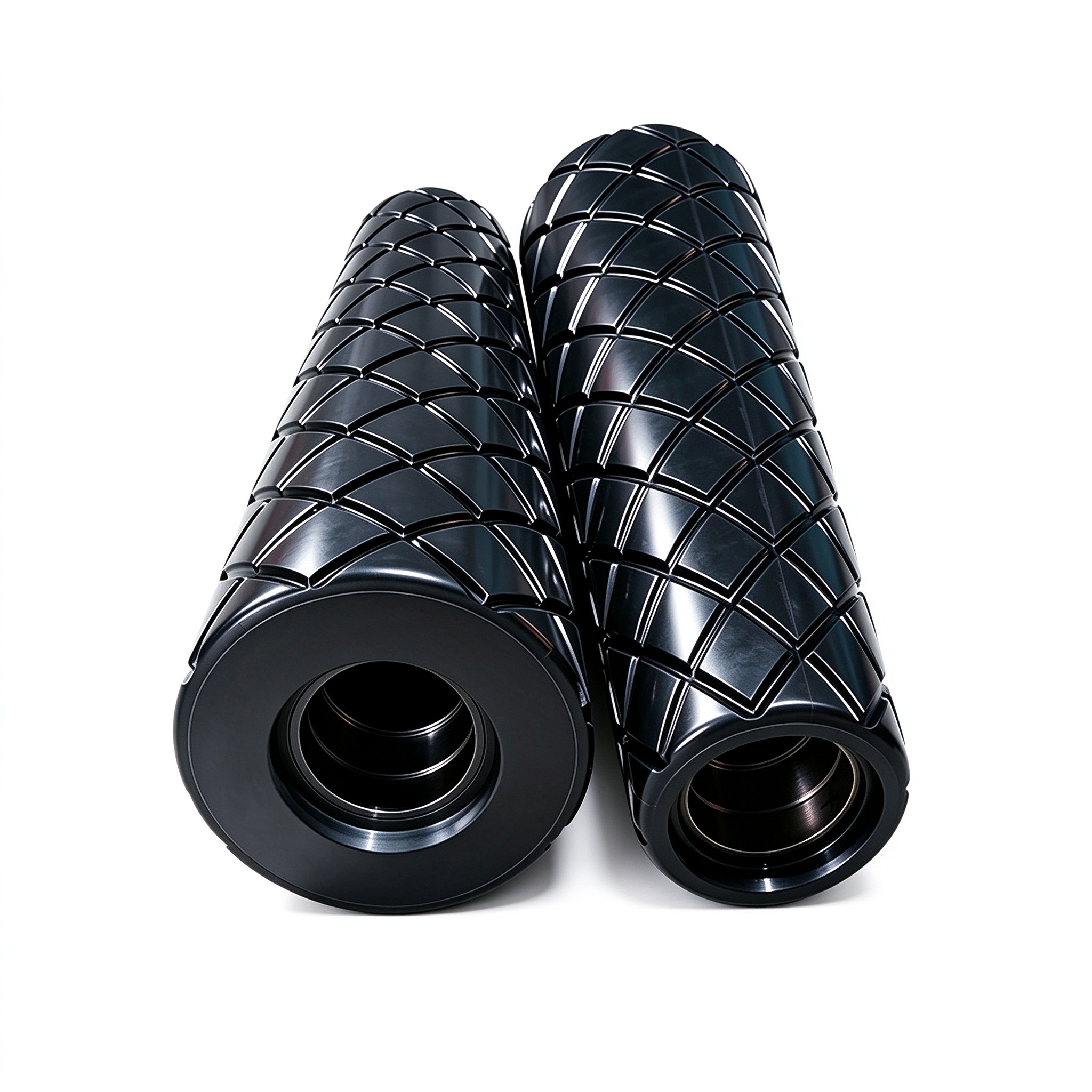
Tapered rotary tracking station
A conical PU roller used as a pair in a rotary self-aligning station converts belt movement into steering correction under changing load; it targets curved, inclined and variable-tonnage sections on long conveyors.
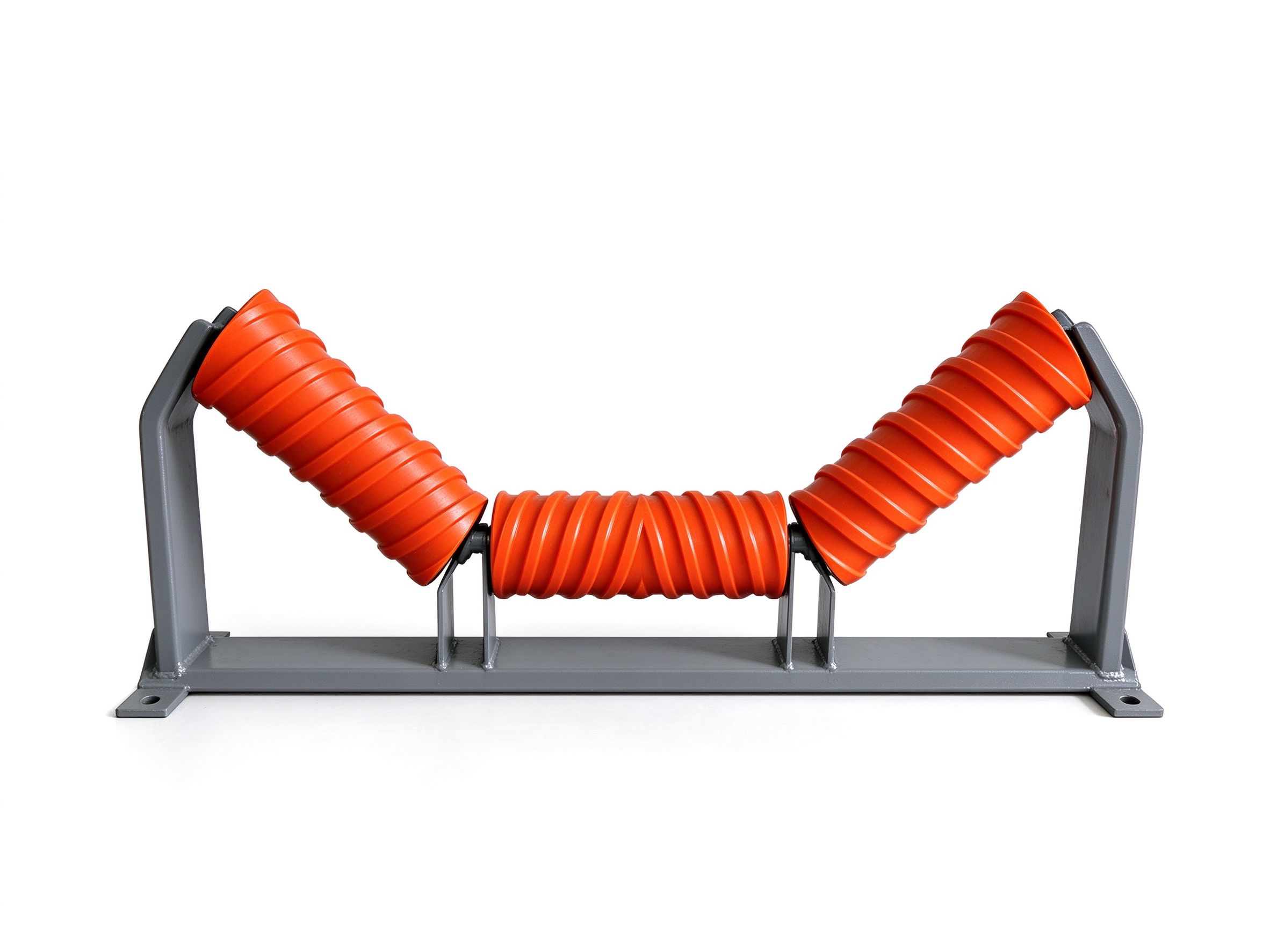
Spiral centering plus cleaning
The PU spiral idler combines a helical rib that auto-centers the belt while scraping stuck fines off, serving zones that need both tracking and carry-back control on sticky, moist return runs.
Pick the method for the section
High-speed loaded overland: pivot SA idlers. Low-maintenance passive long runs: crown. Curved/variable tonnage: tapered station. Sticky damp returns: spiral. Combine rather than double up, and space tracking units per belt length and speed.