Heavy-Duty Conveyor Spare Parts for Mining, Ports and Overland Systems
Why light-duty B/C components fail on high-tonnage belts, what a true CEMA E heavy-duty spare consists of, and how to source drop-in replacement idlers, lagged pulleys and impact protection for mines, ship loaders and stackers.
Why light-duty parts fail on heavy belts
Most catalogs online push light and medium CEMA B/C components sized for portable and general-purpose conveyors. On a high-tonnage mine, ship loader or overland belt, those small tubes, stamped frames and simple seals deflect, fatigue and leak grease within months. The failure shows up as belt-edge wear, replace-every-season idlers and unplanned downtime that costs far more than the part saved.
What defines a true heavy-duty spare
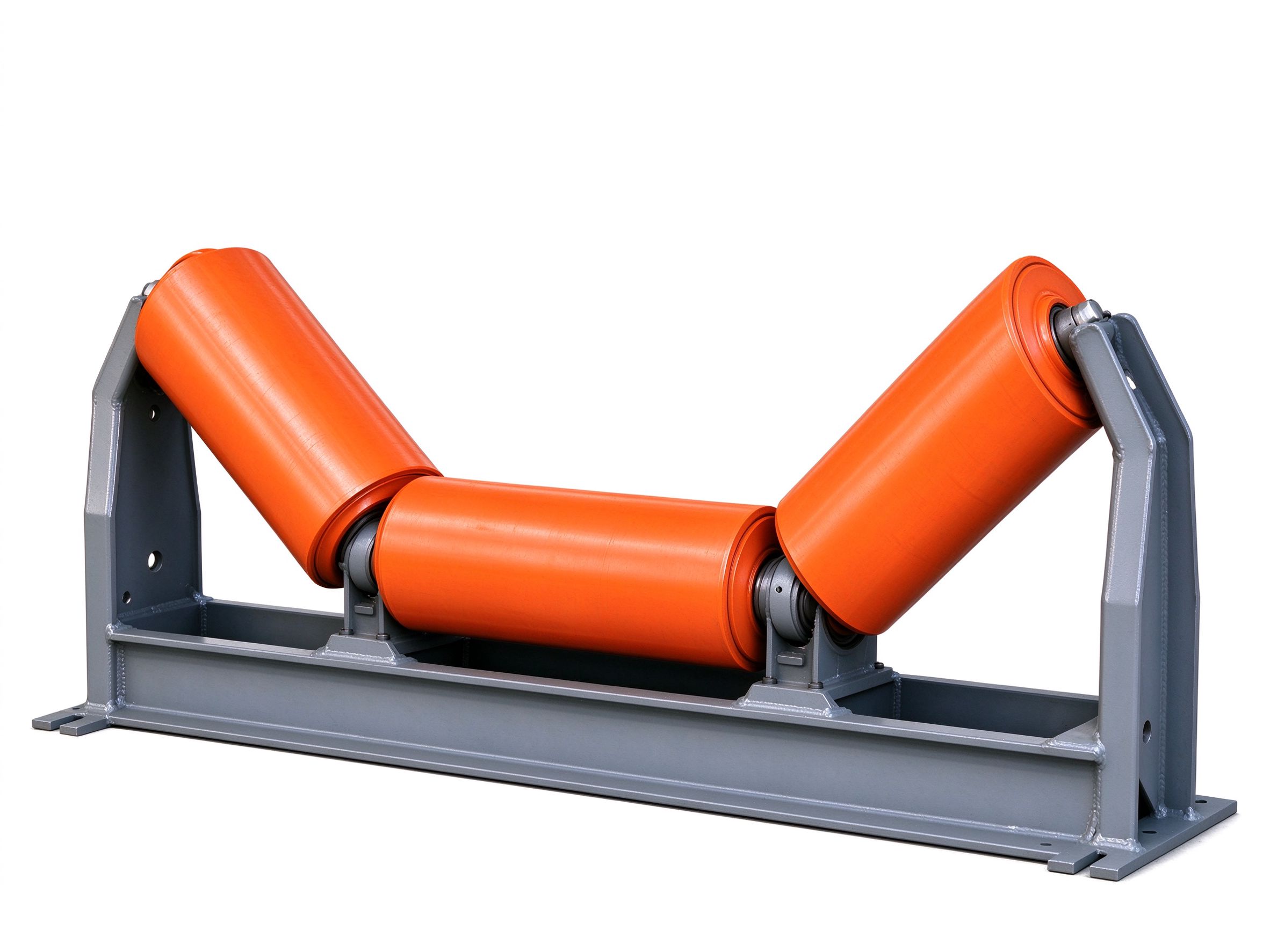
A heavy-duty spare starts at CEMA D and centers on CEMA E: 5"–7" tubes, sealed spherical lifetime-lubricated bearings, welded steel channel frames rather than stamping, multi-stage IP66 labyrinth seals, forged keyed shafts on pulleys and split plummer-block housings. Each item is rated for the load, tension and drop energy of the section it serves, not a generic one-size fit.
Carrying and impact idlers for high tonnage
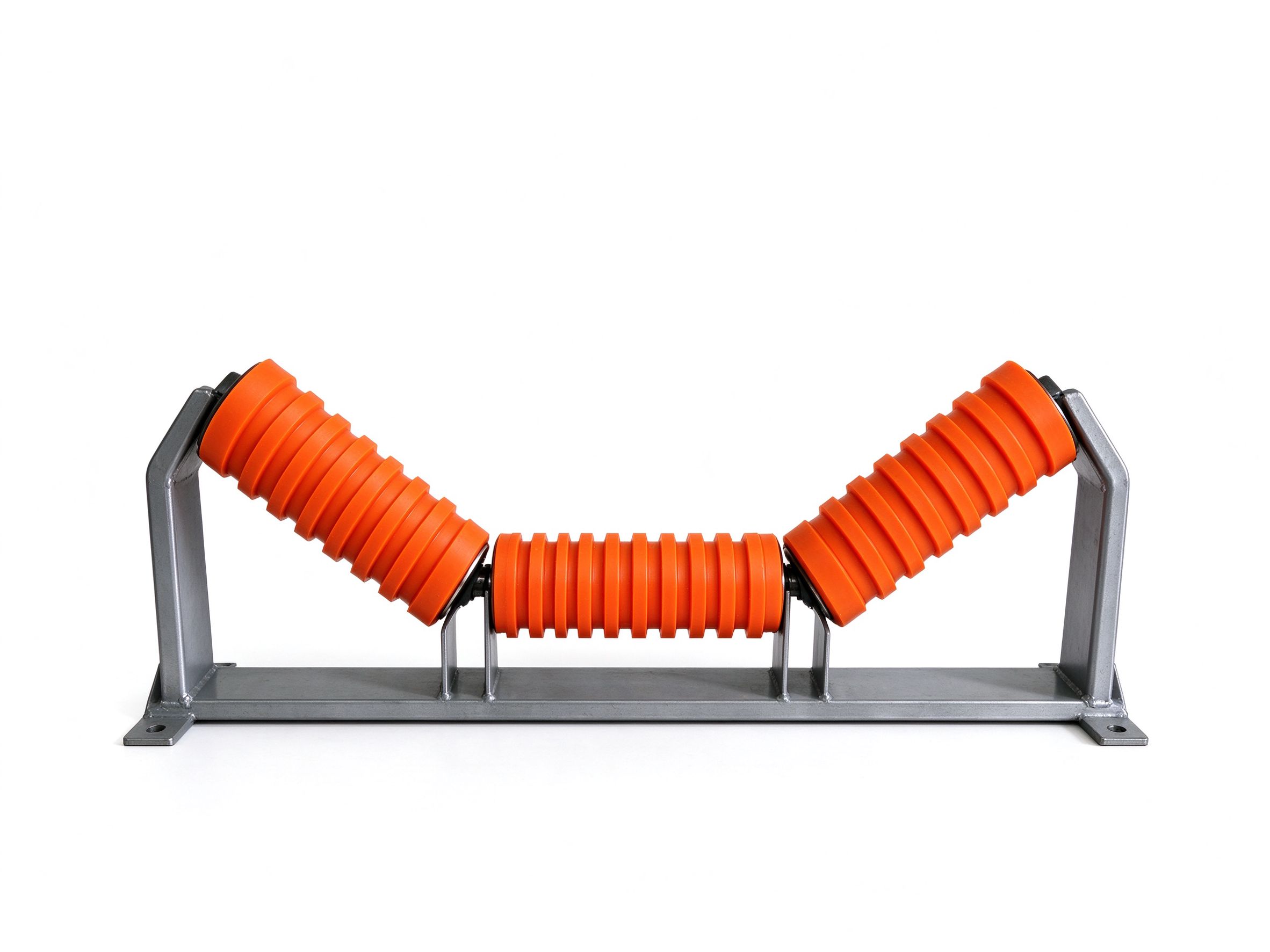
On loaded runs, CEMA E equal or unequal troughing idlers carry 36"–96" belts at sustained tonnage; under the chute, equal or unequal impact idlers with rubber cushion rings absorb drop energy instead of passing shock to the carcass. Spacing tightens at the loading point and opens on stable stretches.
Drive and return pulleys
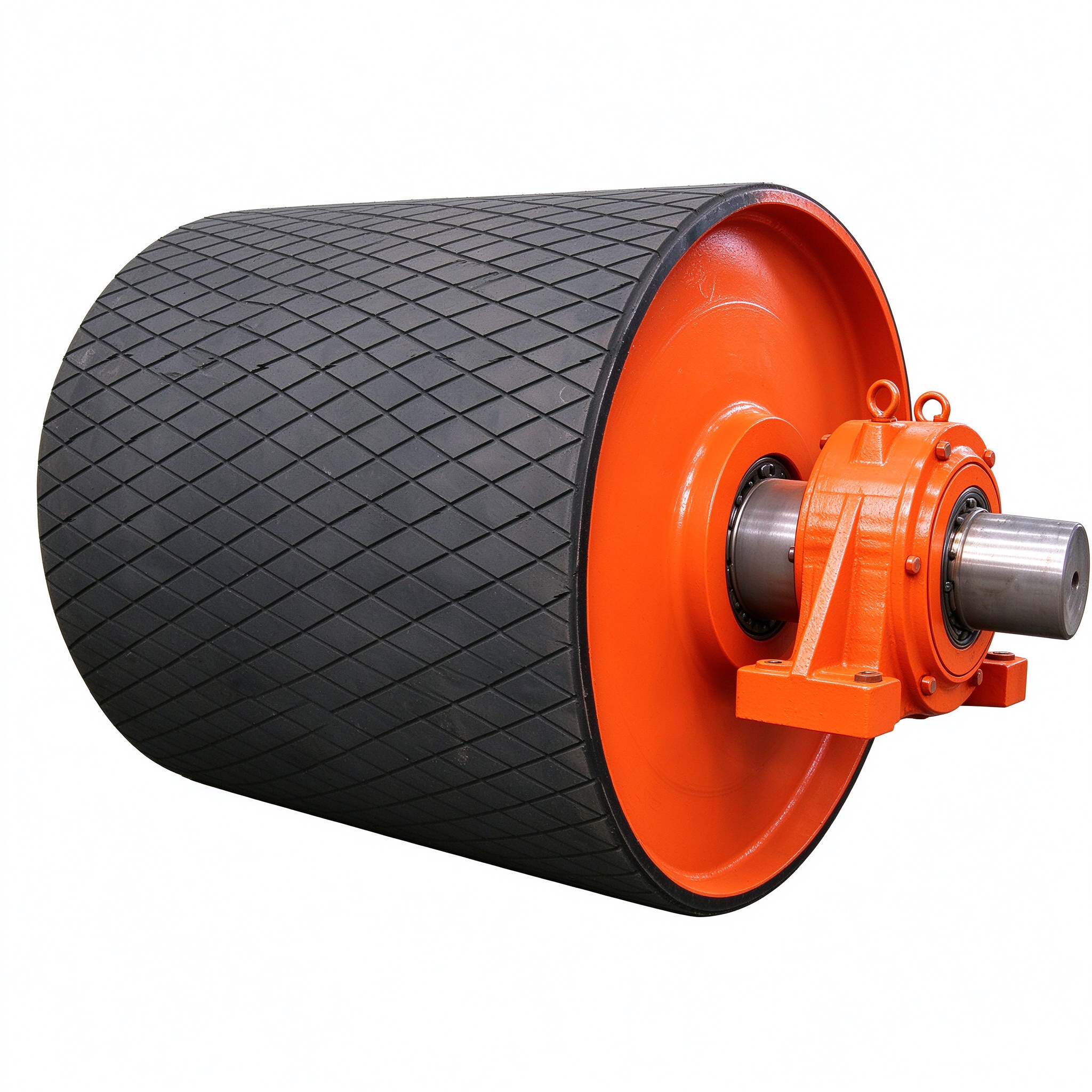
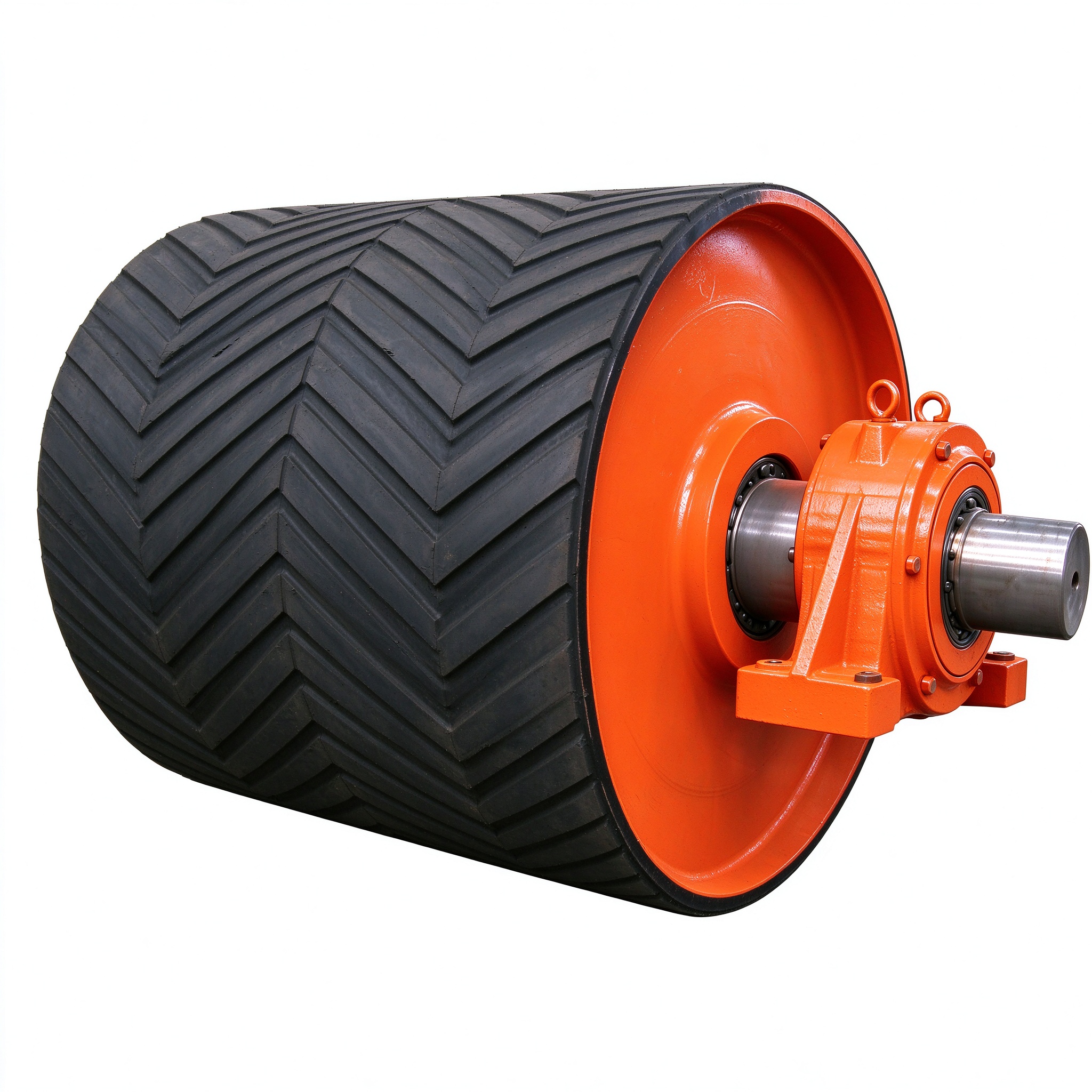
The head drive pulley carries torque on a forged shaft with herringbone or diamond rubber lagging that raises friction and sheds water to stop slip in wet or abrasive duty. Tail and snub/bend pulleys run smooth or lightly lagged; a wing/spiral return pulley sheds sticky carry-back at the return end.
Protect the transfer point
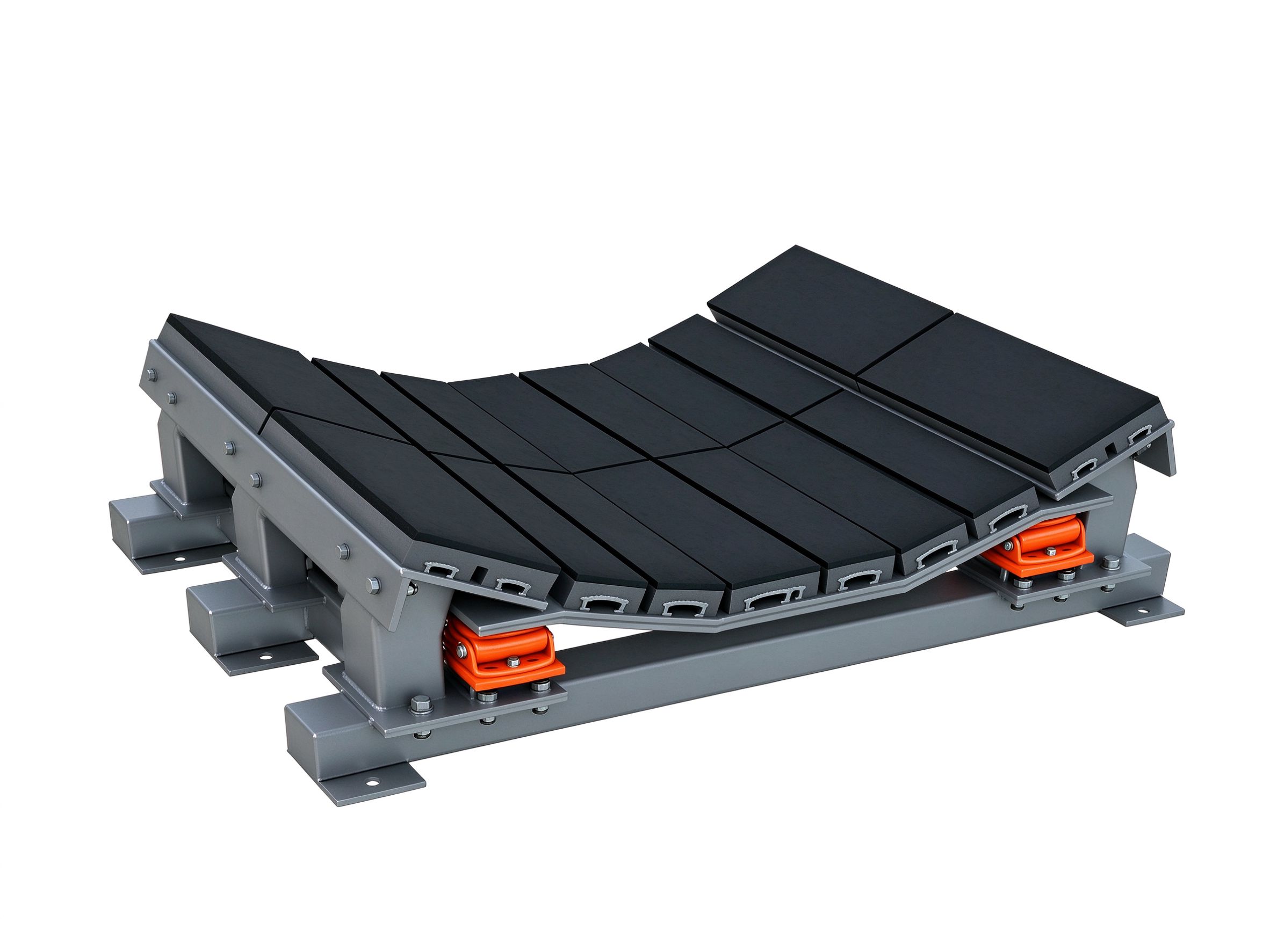
High-drop chutes need a spring-suspended impact bed spreading energy across UHMWPE bars, double rubber skirt seals to contain dust and spillage, and bolted replaceable steel or ceramic chute liners that protect the hopper from abrasion. Specify the bed, skirts and liners as one package.
Life-cycle cost over the cheapest quote
The cheapest CEMA B idler looks good on a purchase order but fails early; a properly sized CEMA E unit costs more per piece and lasts several times longer, cutting labor, downtime and spare inventory. Compare replacement frequency and installed cost, not unit price.
Drop-in OEM replacement and customization
Heavy-duty spares should fit existing CEMA D/E spacing without reworking the frame: tube diameter, trough angle, lagging, seal, shaft and finish are built to spec, with seaworthy export packing. Record belt width, material density, speed, tension and duty zone for an exact match.