How to Prevent Belt Misalignment: 5 Proven Belt Tracking Methods
Belt misalignment causes spillage, edge damage and unplanned downtime. This guide covers five proven belt tracking methods, from correct splicing and tension control to training idler frames, carryback removal and track geometry maintenance.
Why Belt Misalignment Is Costly
Belt misalignment, also called belt drift or belt wandering, is one of the most frequent and expensive problems on a belt conveyor. When the belt runs off its centered path, bulk material spills along the structure, belt edges rub against the frame and become damaged, and forced stops interrupt production. Addressing the root cause rather than repeatedly re-centering the running belt keeps equipment in service and avoids recurring losses.
Start with a Correct Belt Splice
A poor splice is a leading cause of misalignment because uneven edge tension pulls the belt toward one side. During vulcanized splicing or mechanical fastening, the splice diagonal must run strictly perpendicular to the belt axis, both edges must carry equal tension, and a stepped splice must be built symmetrically. A skewed or asymmetric joint makes the belt constantly search for a side on its own.
Maintain Uniform Tension and Laser Alignment
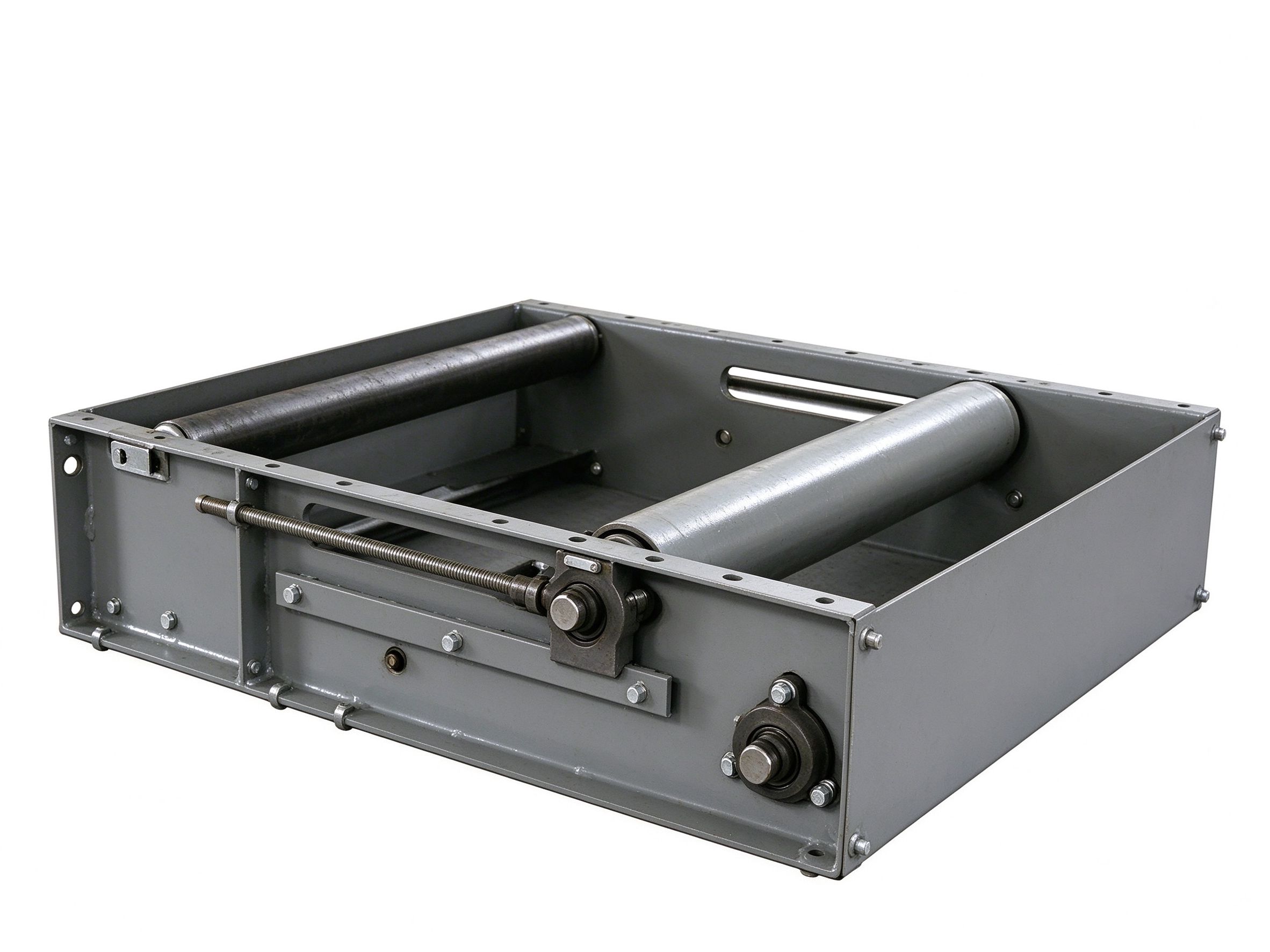
Incorrect take-up tension often produces drift: one side of the belt is over-tensioned while the other sags. Inspect take-up pulley travel regularly and use tension sensors to confirm even load across the width. After commissioning new equipment or completing a repair, align the entire conveyor with laser levels so pulleys and idler lines are parallel to the belt centerline.
Use Training Idler Frames for Automatic Correction
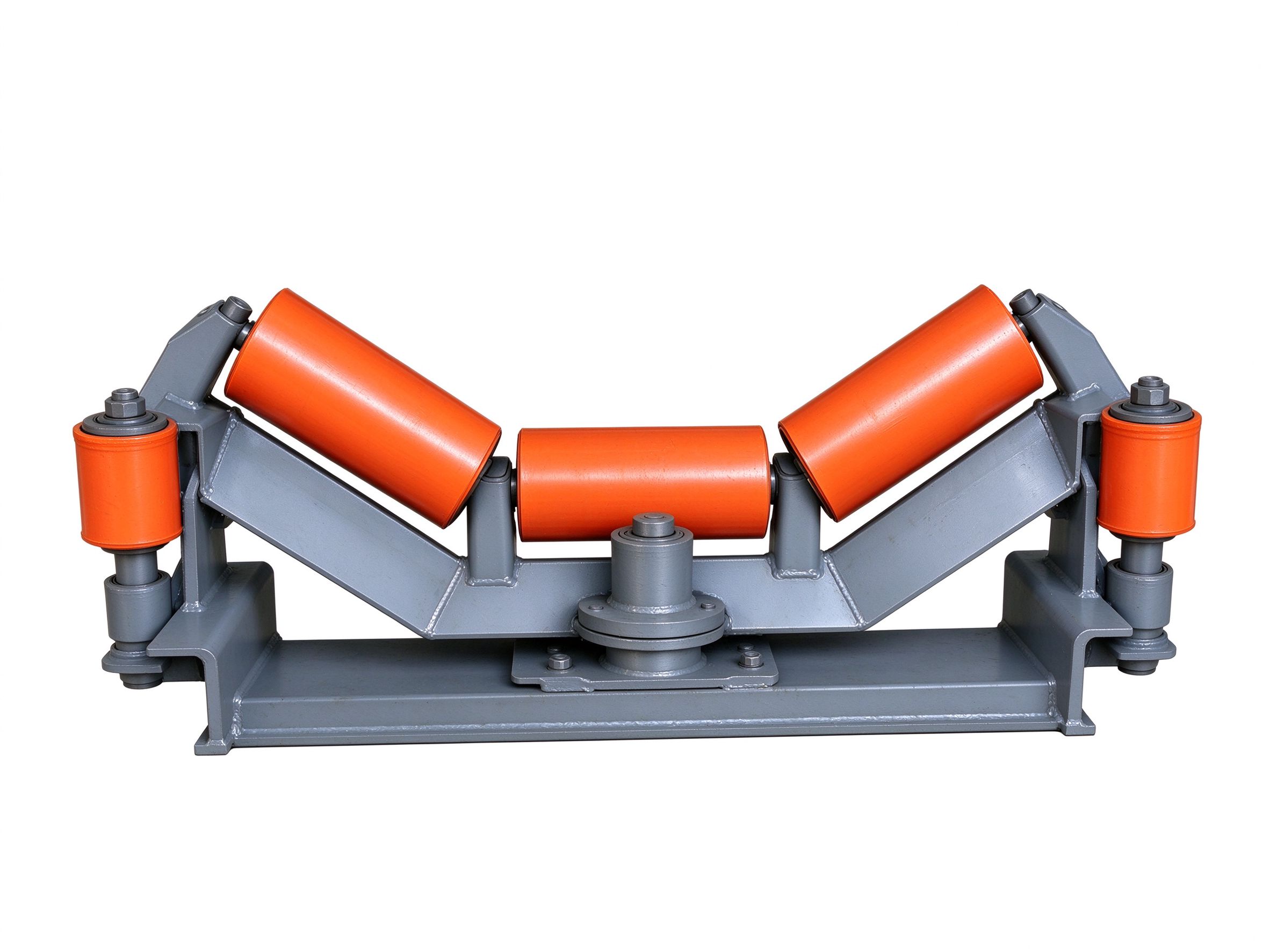
Training, or centering, idler frames provide automatic stabilization of the belt. They are installed on long straight runs, after loading points and on curved sections. When the belt drifts, the rollers pivot around a vertical axis and steer it back to the center, automatically correcting deviations up to 10 degrees. Sealed bearings give these frames a service life of up to 60,000 hours.
Control Carryback with Cleaners and Spiral Rollers
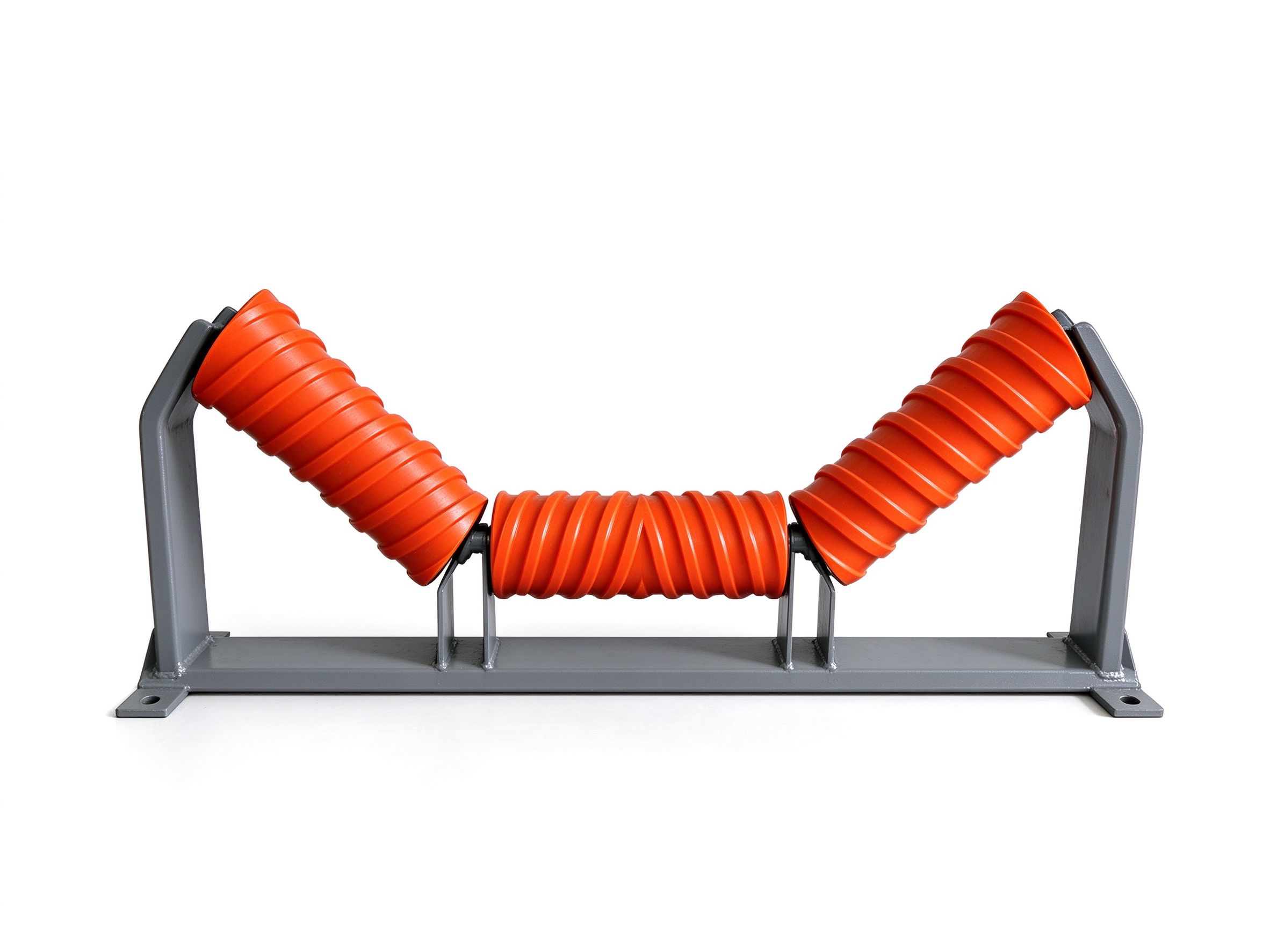
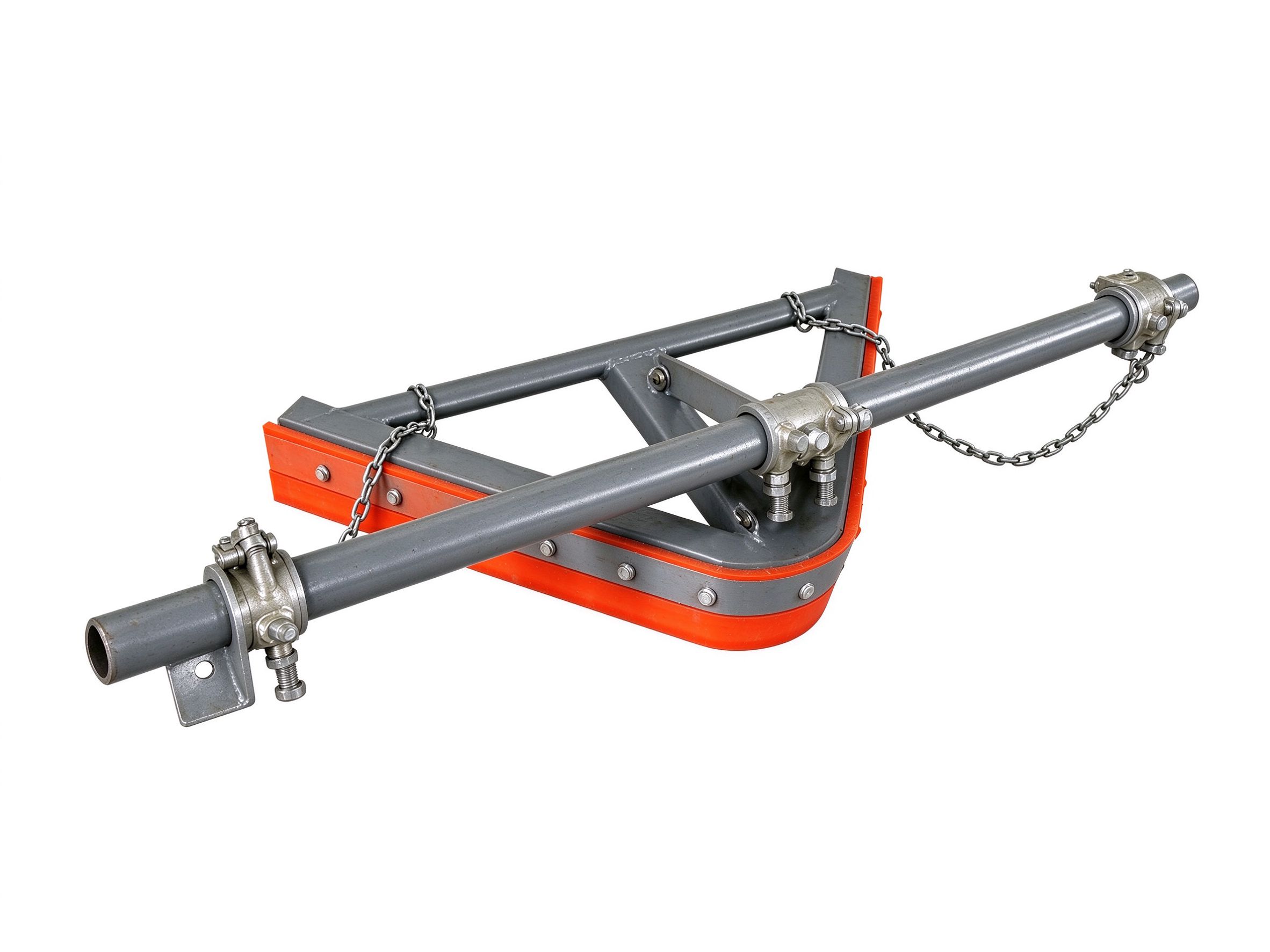
Material carried back and packed onto return idlers changes their effective diameter and creates local speed differences that push the belt sideways. Fit spiral cleaning rollers on the return run and install scraper belt cleaners on the head, or discharge, pulley to remove residual material; for sticky or wet materials, spray or warming systems reduce carryback before it accumulates.
Maintain Track Geometry and Centered Loading
Over time, steel structures deform and foundations settle, and a skewed conveyor frame is a hidden source of persistent drift. Regularly check that idler frames remain perpendicular to the belt path and that the frame stays straight. The loading chute must feed material exactly along the belt centerline so that no lateral shifting force is introduced at the loading point.
Summary
Preventing belt misalignment is easier than repairing its consequences. Correct splicing, uniform tension control, training idler frames, carryback removal and disciplined track-geometry maintenance combine to keep belt tracking risk to a minimum over the conveyor's service life.