How to Extend Conveyor Roller Service Life: Causes of Premature Failure and Fixes
Conveyor rollers fail early under overload, mistracking, contamination and poor installation. This guide covers the causes of premature roller failure and the practical measures that extend conveyor roller service life.
Why Conveyor Rollers Fail Before End of Life
Conveyor idlers are the most numerous component on a belt conveyor; on a kilometre-long line thousands can be in service, and the failure of even a few causes belt misalignment, accelerated wear and unplanned stoppages. A large share of failures stems from operating conditions and maintenance rather than design alone. Overloading with material beyond the design capacity or uneven feed creates peak loads that damage bearings and deform the shell, and impact loads in the loading zone are several times higher than on the carry run. When the belt wanders, load shifts to the roller edges, the belt edge rubs against the idler frame sides, and rollers run at an angle, causing uneven shell wear and early bearing failure. Abrasive dust and moisture are the bearing's main enemies: dust mixes with grease like an abrasive paste, while water causes corrosion and washes grease out, which makes labyrinth-sealed rollers essential in dusty plants. A misaligned idler frame during installation makes rollers run at an angle to belt travel, adding friction and accelerating wear of both rollers and belt; even small deviations from design geometry accumulate over time.
Routine Inspection and Cleaning
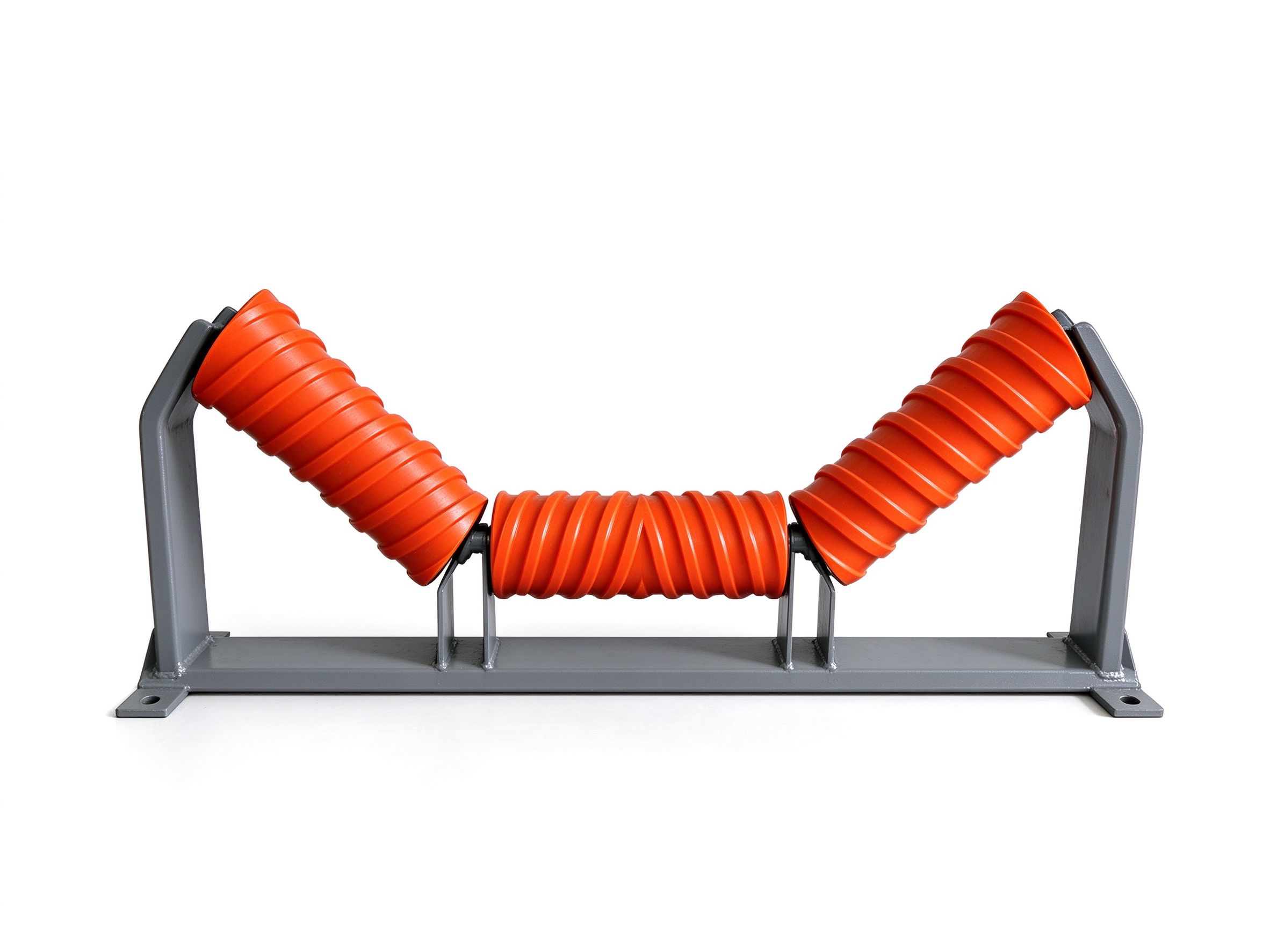
Periodic walkabouts that check roller rotation identify seized or damaged units before they damage the belt. Material build-up on a roller increases its effective diameter and disrupts belt centering. Spiral cleaning rollers on the return run automatically remove carryback and reduce the need for manual cleaning.
Maintain Proper Belt Tracking
A stable belt position ensures even roller wear. Self-aligning idler frames automatically correct belt deviations and prevent the belt from drifting to the edges; on long conveyors they should be installed at a set spacing, especially after loading zones and along curved sections.
Protect Bearings from Dust and Moisture
Rollers with sealed bearings and labyrinth seals last considerably longer in dusty conditions. For aggressive environments such as salts, fertilizers and chemicals, HDPE rollers do not corrode and need no extra protection. The bearing unit should be matched to the dust level and humidity of the working zone.
Reduce Impact Loads at the Loading Point
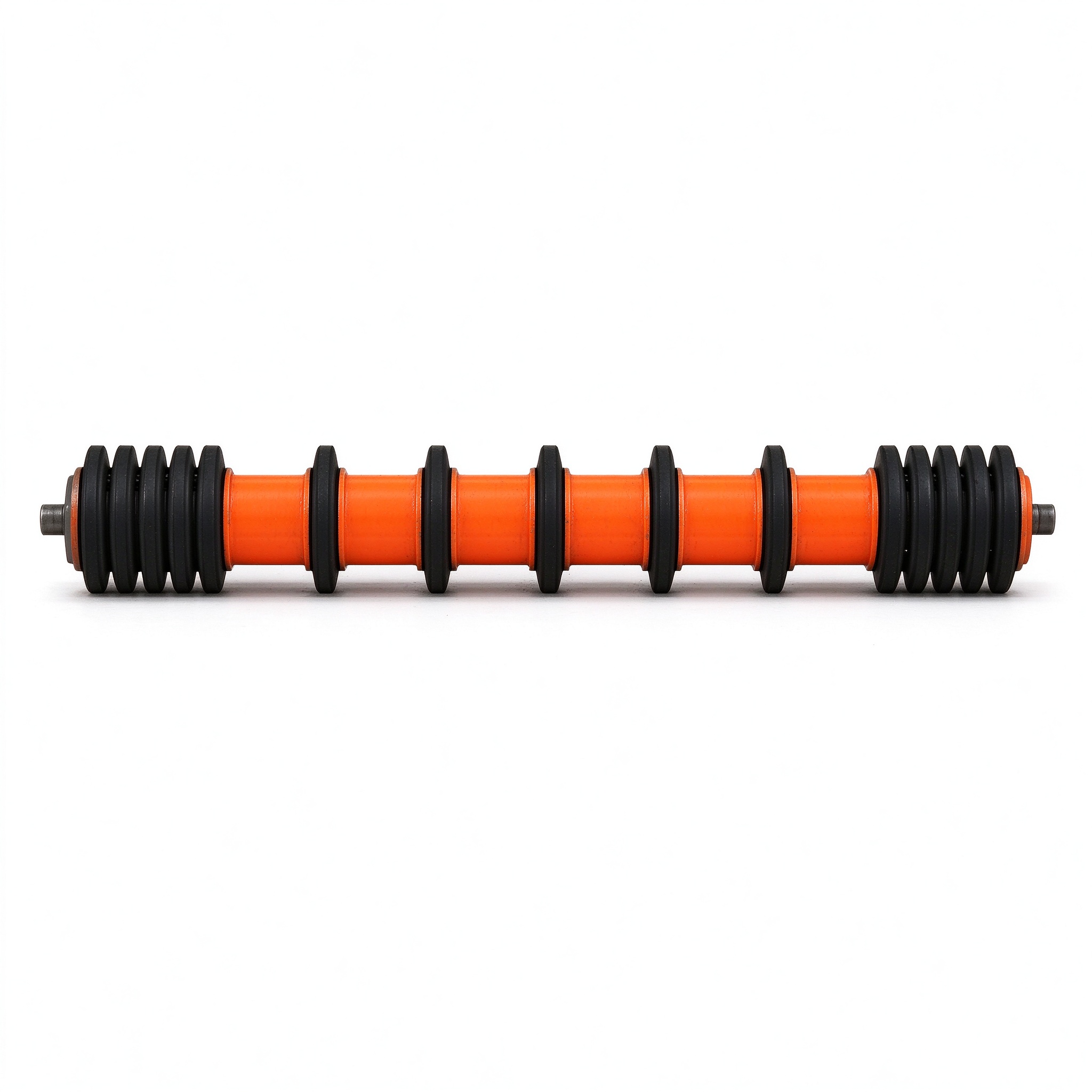
Impact rollers with rubber rings absorb the shock of material falling onto the belt. Installed in the loading zone, they reduce bearing loads and protect the belt from tears, making this one of the most effective measures for extending the life of the whole line.
Which Rollers Last Longer
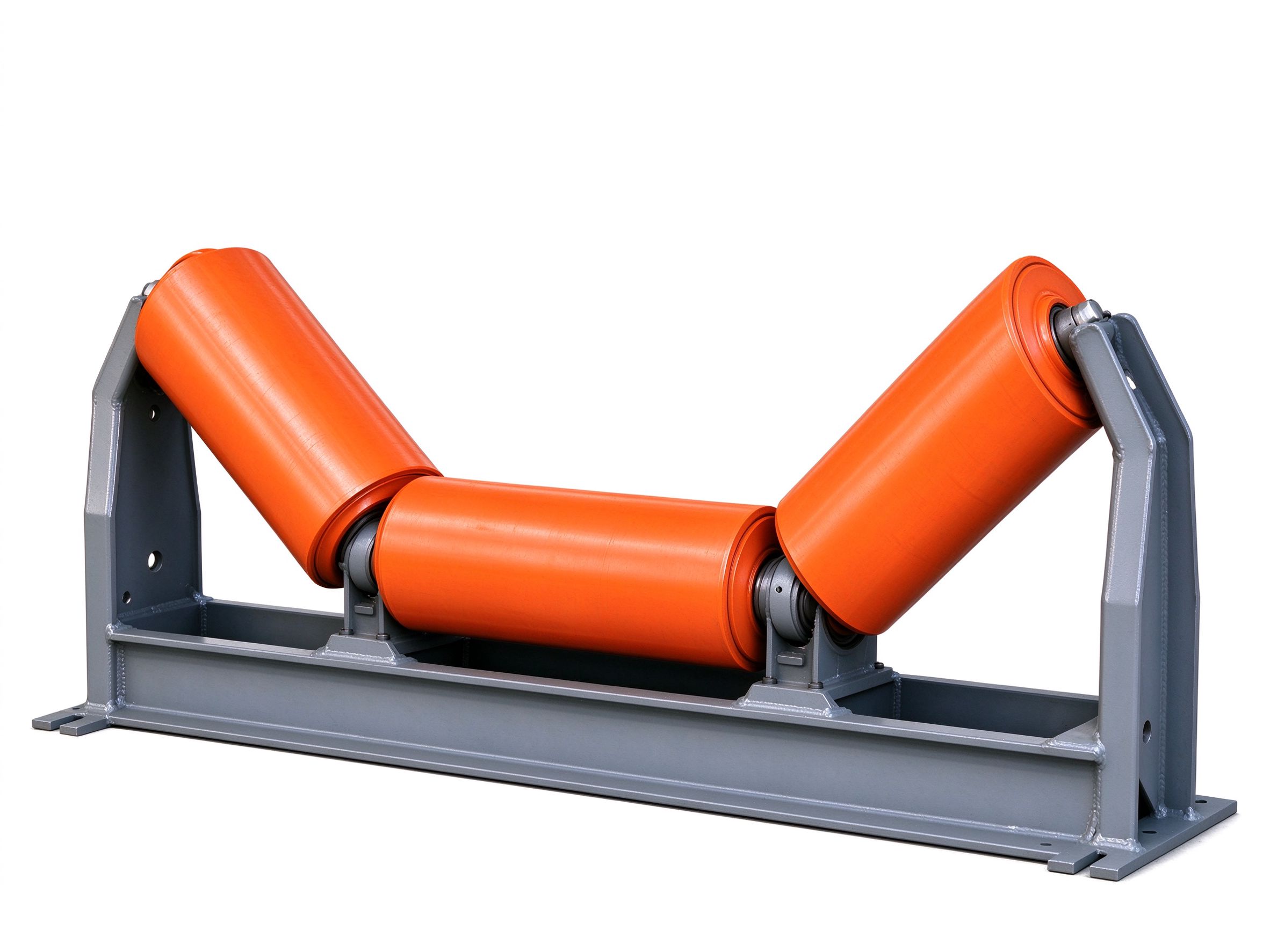
Smooth steel rollers with sealed bearings and checked balancing are the baseline for standard conditions, and their life depends directly on seal quality and balance accuracy. High-density polyethylene (HDPE) rollers resist corrosion, acids, alkalis and salts; they are lighter than steel, reducing belt load and drive energy use, and are justified in chemical plants and port terminals despite a higher initial cost. At material drop points, impact rollers with rubber rings are mandatory: they absorb the shock that would destroy ordinary rollers within months, and matching ring hardness to material lump size is the key factor in their effectiveness.
Conclusion
Conveyor roller service life depends on three factors: selecting the right type for each section of the route, manufacturing quality, and regular maintenance. Even the best rollers fail early under overload and belt misalignment, so matching the roller to the duty and keeping a disciplined maintenance routine are the engineering prerequisites for long life.