Heavy-Duty Conveyor Rollers Selection Guide for Harsh Conditions
A heavy-duty conveyor rollers selection guide covering smooth, impact, cleaning and HDPE types, with sizing by material, temperature, belt speed and load.
Types of Heavy-Duty Conveyor Rollers
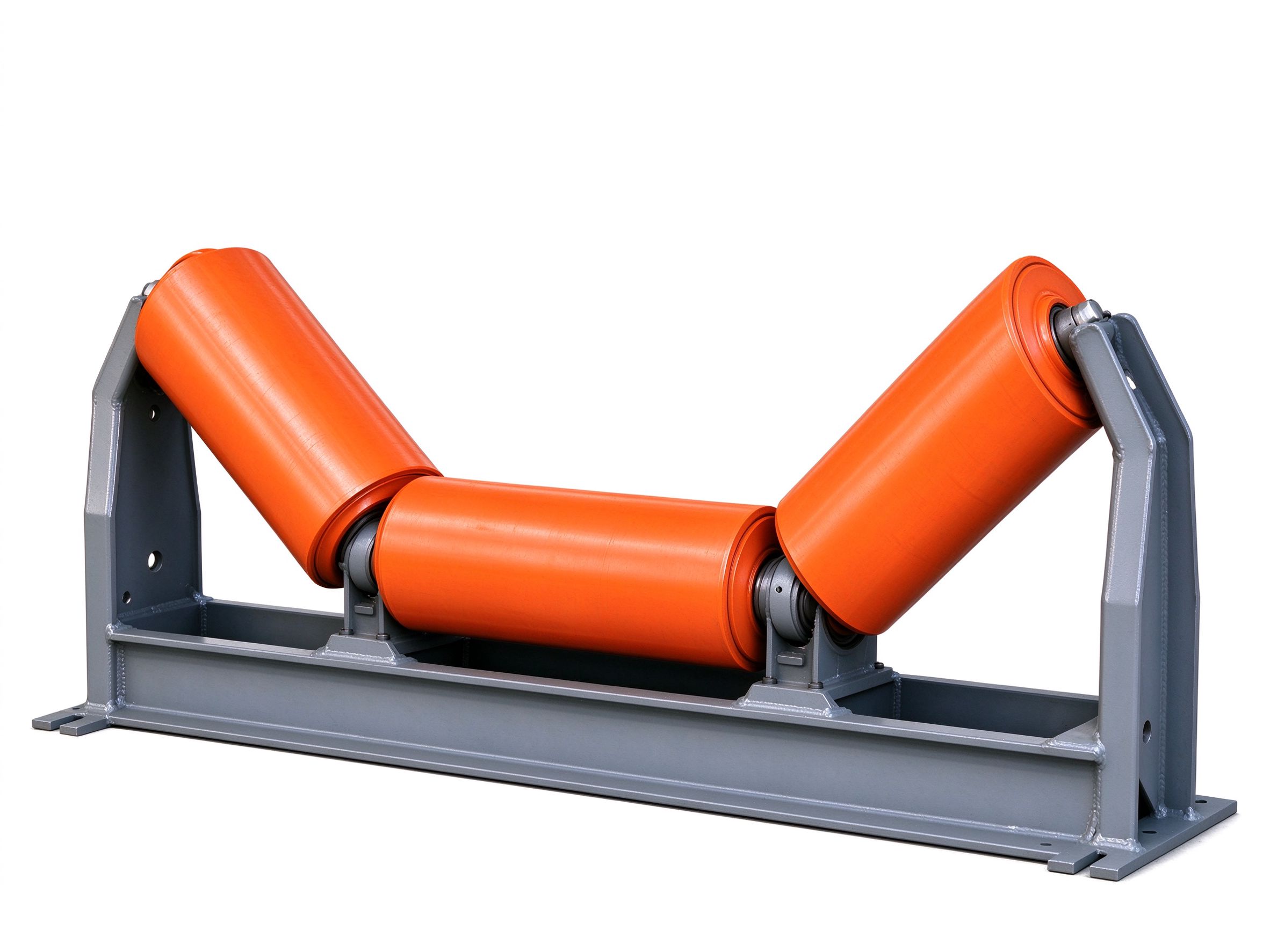
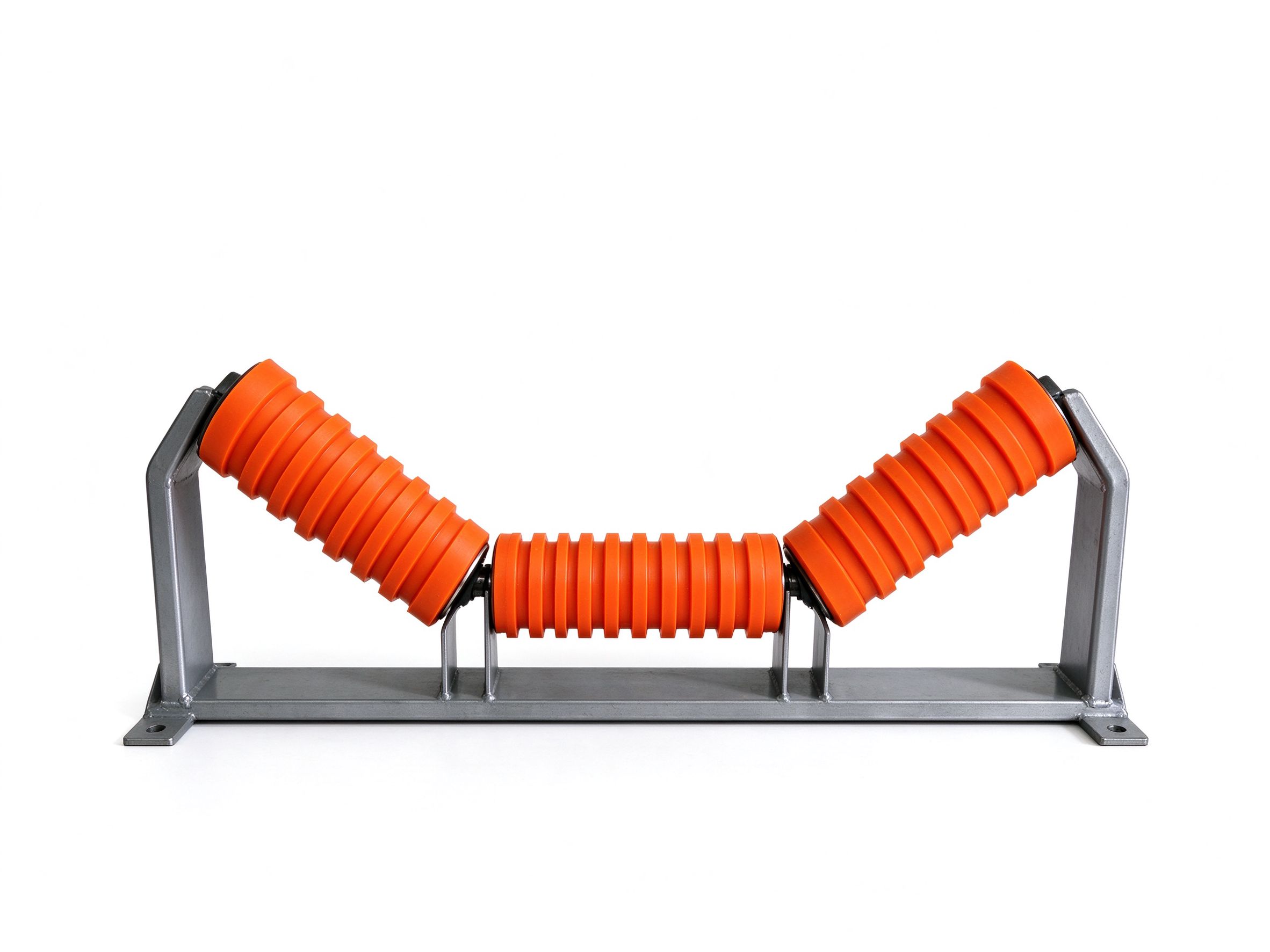
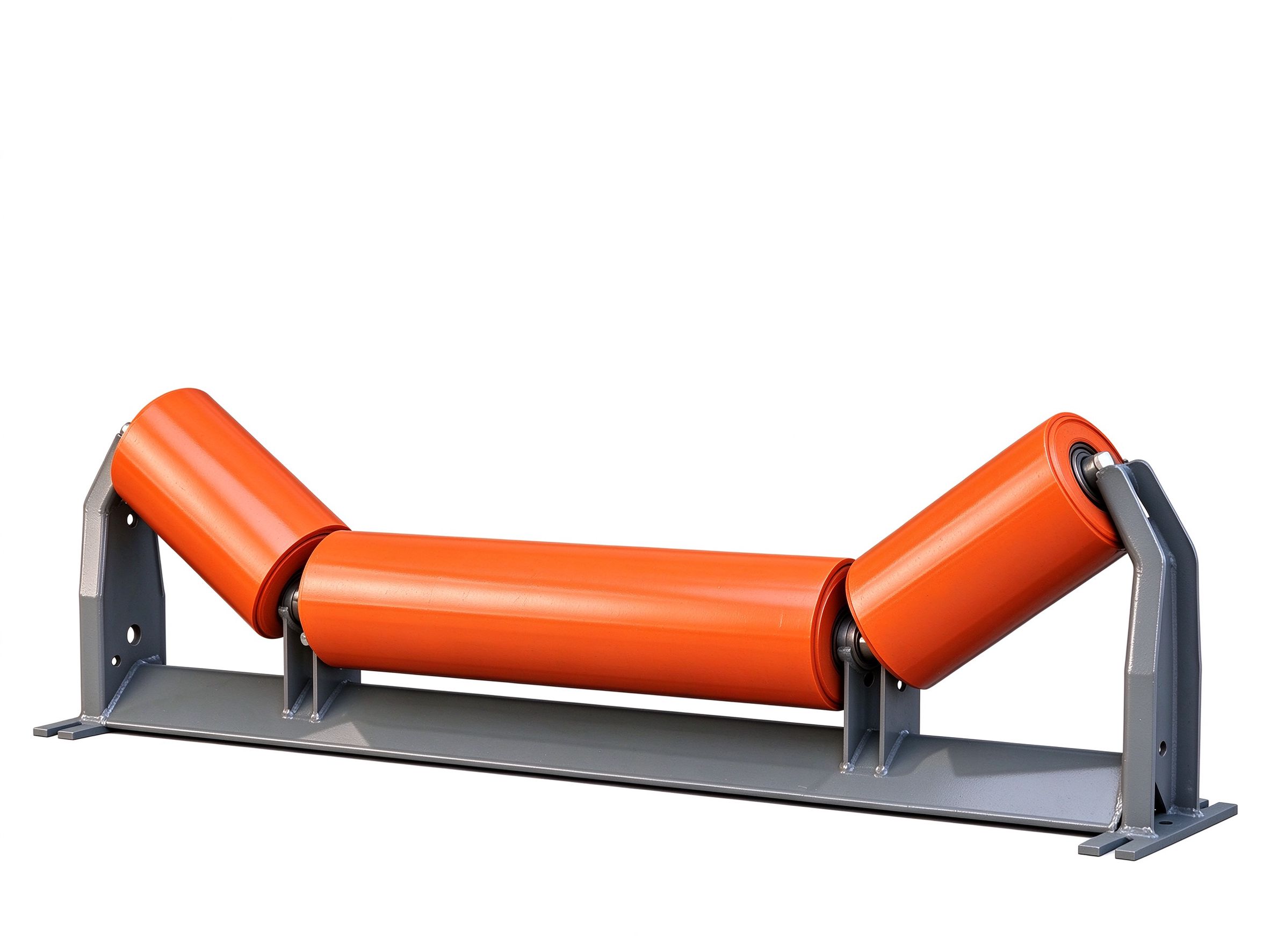
Rollers directly govern the service life of the whole belt system; they account for up to 30% of conveyor operating costs, and poor selection cuts belt life by 2 to 3 times, which matters most under heavy-duty conditions of high impact, abrasive wear, aggressive media and extreme temperatures. Smooth rollers are the baseline for supporting the belt on straight sections: diameter up to 219 mm, load up to 20 kN, sealed bearings rated up to 60,000 hours, made of steel, HDPE or ceramic-coated, and suitable for most standard conditions. Impact rollers with rubber rings are installed at the loading zone where material drops onto the belt; they absorb up to 50% of impact load, protecting the carcass from tears and delamination, with diameter up to 159 mm and load up to 20 kN, and are mandatory for large-lump abrasive rock. Spiral cleaning rollers remove carryback from the return run: the rubber spiral winds contaminants toward the edges, preventing abrasive rubbing and lowering drive load, with service life up to 60,000 hours, especially useful for wet, sticky materials such as coal, clay and cement raw mix. HDPE rollers of high-density polyethylene are the choice for chemically aggressive media, resisting corrosion, acids, alkalis and salts, with service life up to 40,000 hours, diameter 102 to 219 mm and SKF/FAG bearings, used in fertilizer, salt and chemical production and humid seaports.
Selecting by Material Handled
Dry, non-abrasive materials only need smooth steel rollers; large-lump abrasive rock in the loading zone requires impact rollers; wet and sticky materials require spiral cleaning rollers on the return run; chemically active substances call for HDPE rollers exclusively.
Selecting by Operating Temperature
Standard steel rollers operate from -40°C to +80°C. For transporting hot clinker and cement up to 200°C, heat-resistant rollers with ceramic coating and high-temperature bearing grease are used to prevent seal breakdown and grease leakage.
Selecting by Load and Belt Speed
Roller diameter is chosen for belt speed and material mass. Rollers up to 159 mm diameter suit speeds up to 3.5 m/s and loads up to 15 kN; diameters up to 219 mm suit speeds up to 5 m/s and loads up to 20 kN. Exceeding rated parameters causes bearing overheating and premature failure.
Industry-Specific Selection
Mining prioritizes impact strength and abrasion resistance, using impact rollers in the loading zone and smooth steel on the carry run; coal needs flame-retardant construction and spark resistance; cement needs heat resistance; chemical and port applications need corrosion resistance and HDPE. Selecting rollers and pulleys as a matched package can extend the system overhaul interval by 40 to 60 percent.
Conclusion
Heavy-duty roller selection matches type, diameter, bearing seal and material to impact, abrasion, chemistry and temperature; staying within rated speed and load windows preserves bearings and belt life under the toughest duty cycles.