Pulley Drum Selection Guide for Belt Conveyors: Types, Lagging and Sizing
Learn how to select the right pulley drum for a belt conveyor: drive, take-up and bend types, lagging options, diameter sizing by belt carcass, material grade and industry requirements.
Types of Conveyor Pulleys
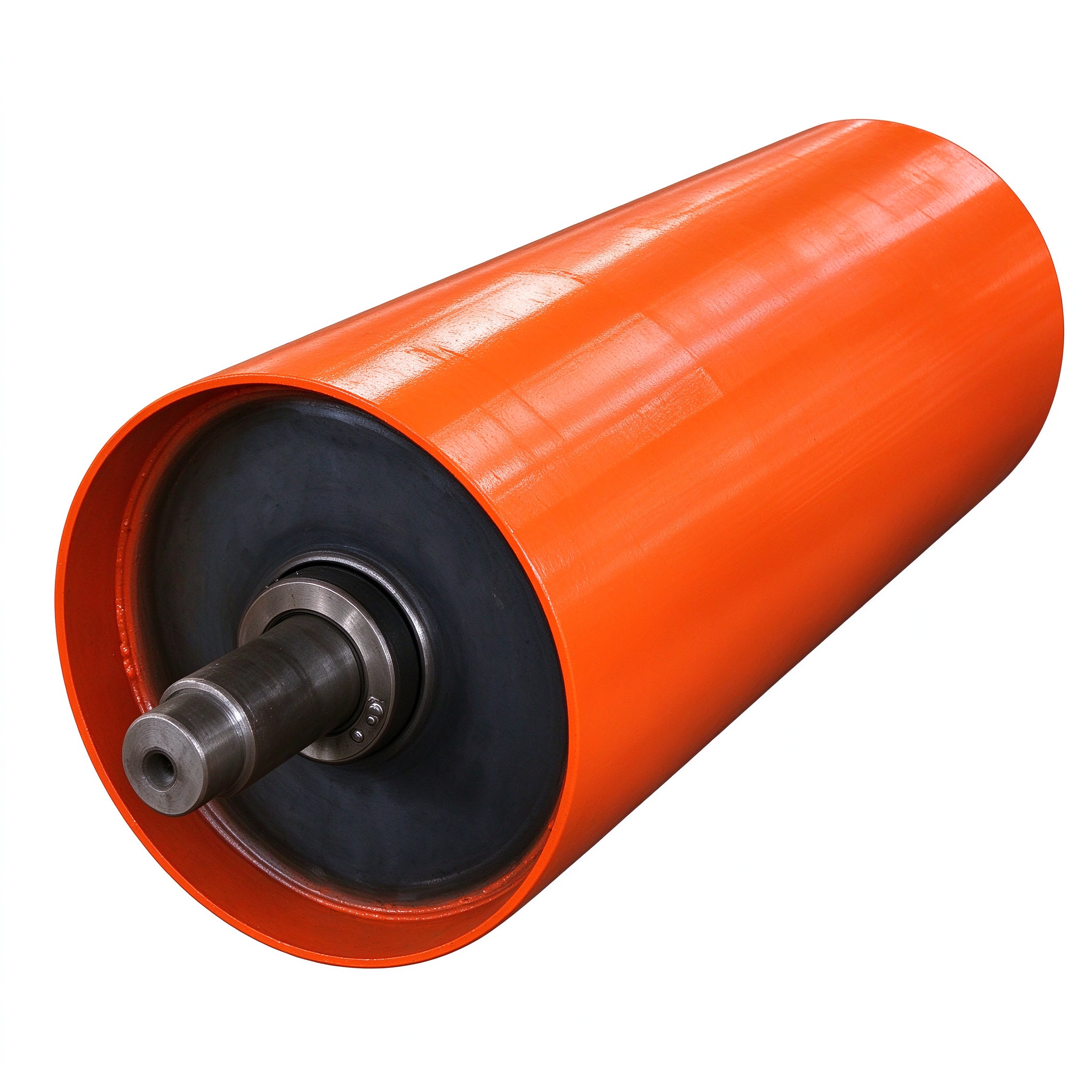
Pulleys (drums) are key elements that determine belt stability, tractive force and overall system life; wrong selection of diameter, material or lagging leads to slip, accelerated belt wear and unplanned downtime. By function and location, four main types are used. Drive pulleys transmit torque from the motor to the belt and are the most heavily loaded elements; diameter and construction are sized to the project considering belt tension, carcass type and required tractive force, and the surface is lagged with rubber or ceramic for reliable grip, used on everything from short warehouse conveyors to long main lines. Non-drive pulleys perform auxiliary functions such as changing belt direction, tensioning and deflection, including head, tail, take-up and bend pulleys; although undriven, their reliability is critical, and failure of a take-up or bend pulley can stop the whole line. Take-up pulleys maintain the tension needed to prevent slip on the drive pulley and compensate for belt stretch in service, mounted on a moving carriage with screw or weighted take-up, and the travel is calculated from belt type, route length and operating conditions. Bend pulleys change the belt trajectory at route changes; they run under constant friction, so surface finish and balancing require higher standards, and proper balancing reduces vibration and extends bearing life.
Selecting Diameter by Load and Belt Carcass
Pulley diameter is chosen from belt type and carcass strength, tension level and operating conditions; minimum diameter requirements differ for fabric carcass belts and steel cord belts. An undersized diameter causes excessive belt bending as it wraps the pulley, leading to accelerated wear and carcass delamination. Exact parameters are set at design using the belt manufacturer's recommendations and industry standards.
Choosing the Lagging Type
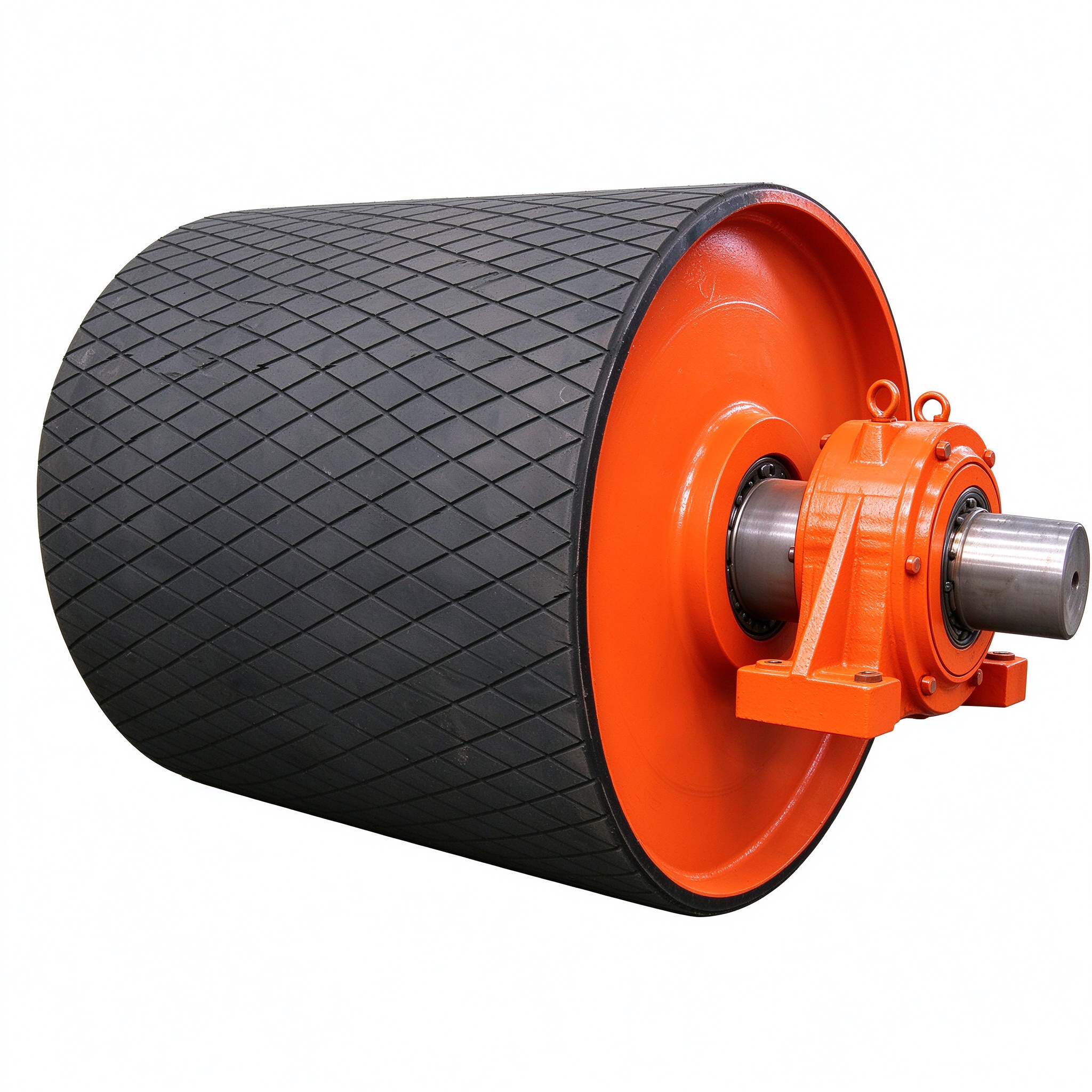
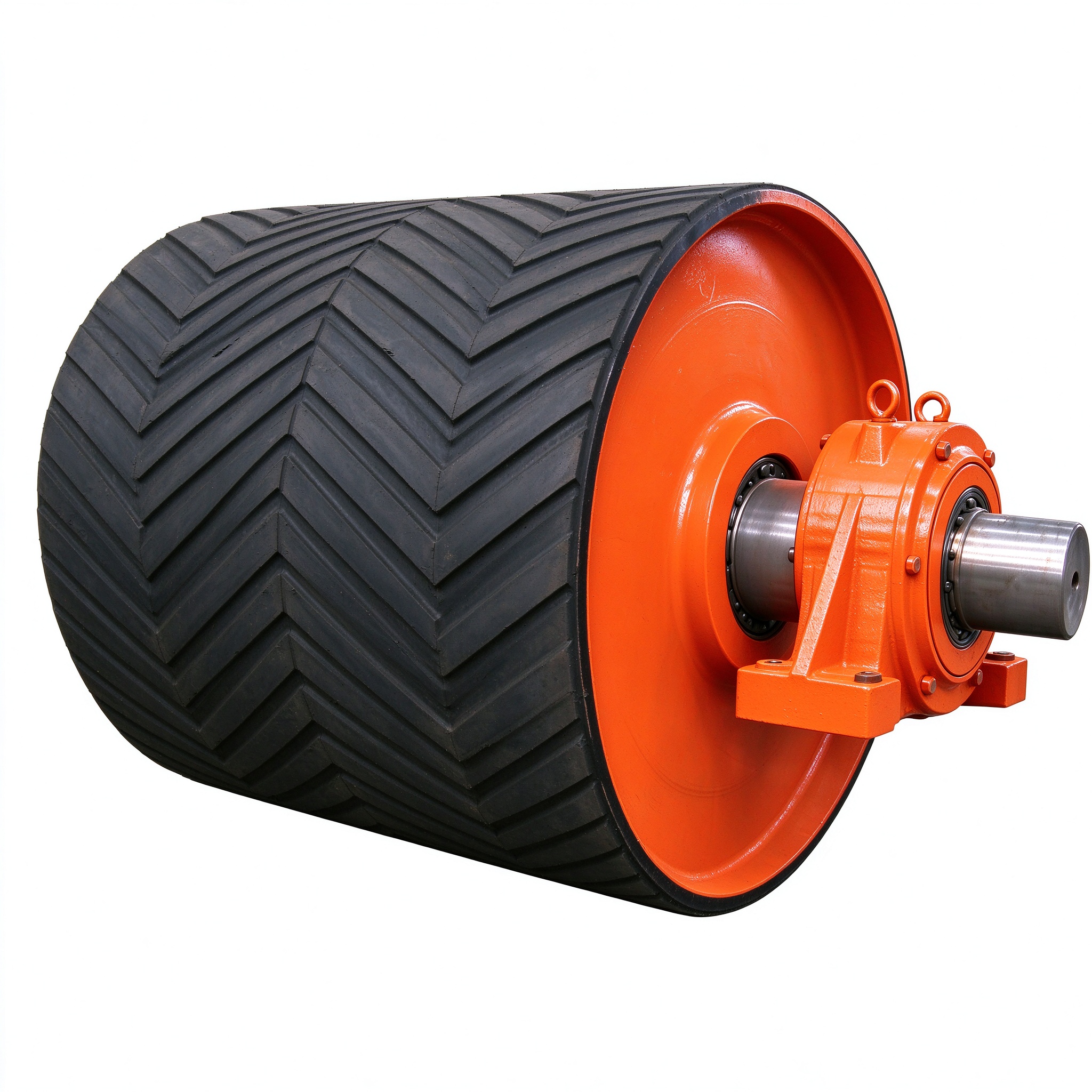
Drive pulley lagging determines the friction coefficient and therefore tractive capacity. Smooth rubber lagging suits dry conditions with low slip; chevron rubber lagging works in wet and dirty environments because it channels water and dirt out of the contact zone; ceramic lagging delivers maximum grip and wear resistance, especially under high loads and abrasive conditions. The lagging type is matched to humidity, contamination, temperature and the calculated tractive force.
Selecting Pulley Material
Steel grade and heat treatment are chosen from calculated torque, belt tension, operating conditions and project requirements. Normalized structural steels are used for standard conditions; alloy steels with heat treatment provide higher hardness and wear resistance for elevated loads; stainless steel pulleys are used in corrosive environments. The specific grade and treatment are determined by engineers at the design stage.
Industry-Specific Requirements
In mining, impact strength and abrasion resistance are the priority; in coal, spark resistance and flame-retardant construction; in cement, bearing units that withstand high temperatures; in ports, corrosion resistance to humid sea air and salt spray. Selecting pulleys together with conveyor rollers appropriately can substantially extend the mean time between repairs of the whole system.
Conclusion
A correct pulley drum selection balances diameter, lagging, material and industry duty so that grip, tension and alignment are maintained without belt slip or overload; verifying these parameters against the design load and belt manufacturer guidance prevents premature failure and extends system service life.