How to Extend Pulley (Drum) Service Life on a Belt Conveyor
Most pulley failures come from operating conditions and poor maintenance rather than build quality. This guide covers shell wear, lagging, bearings, balancing and repair-or-replace decisions.
Why Conveyor Pulleys Fail Before Their Design Life
Pulleys are key elements that determine belt tension, direction and tractive force; failure of a single pulley stops the line, and replacement requires production stoppage and significant cost. Many failures stem not from manufacturing quality but from operating conditions and insufficient maintenance.
Shell Wear and Lagging Damage
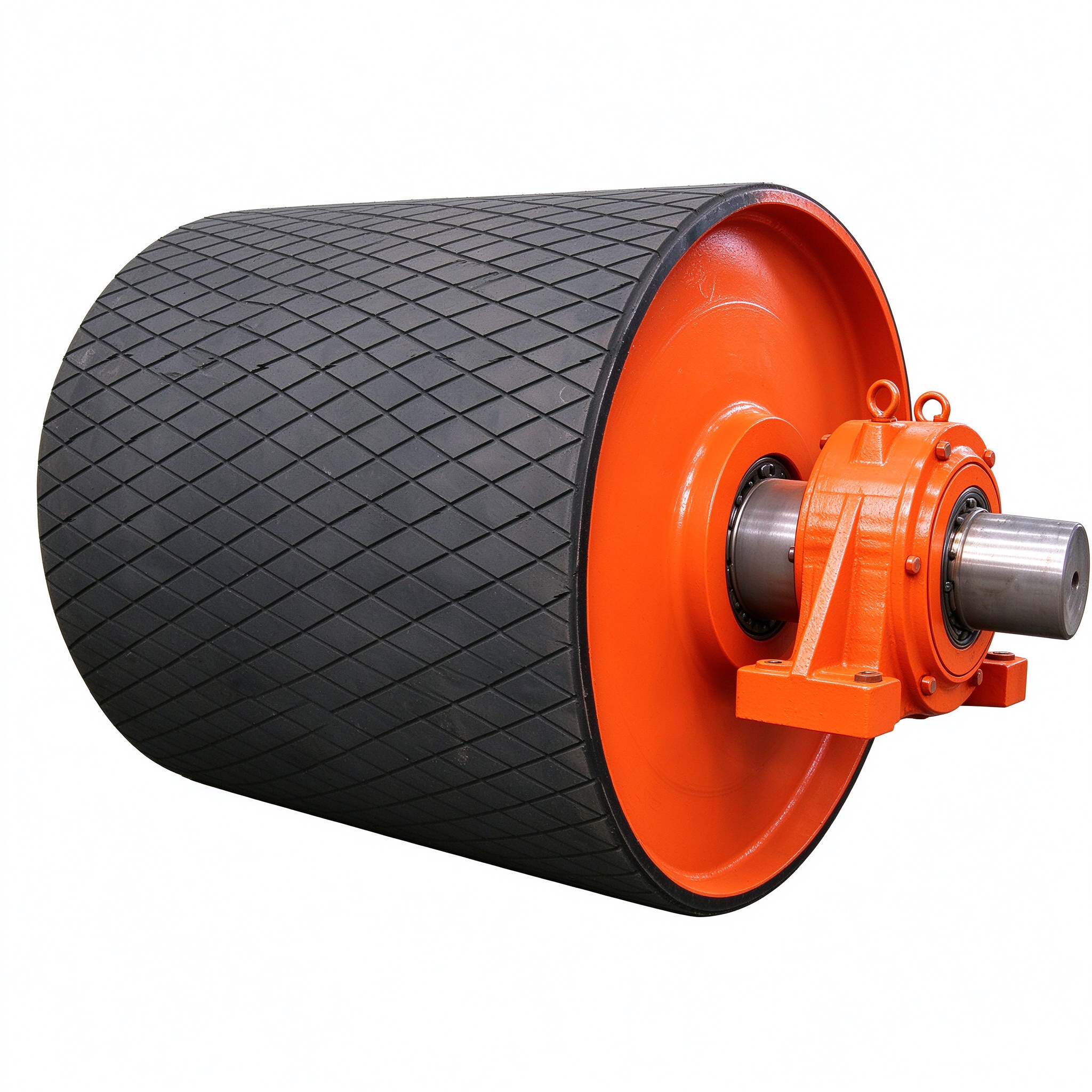
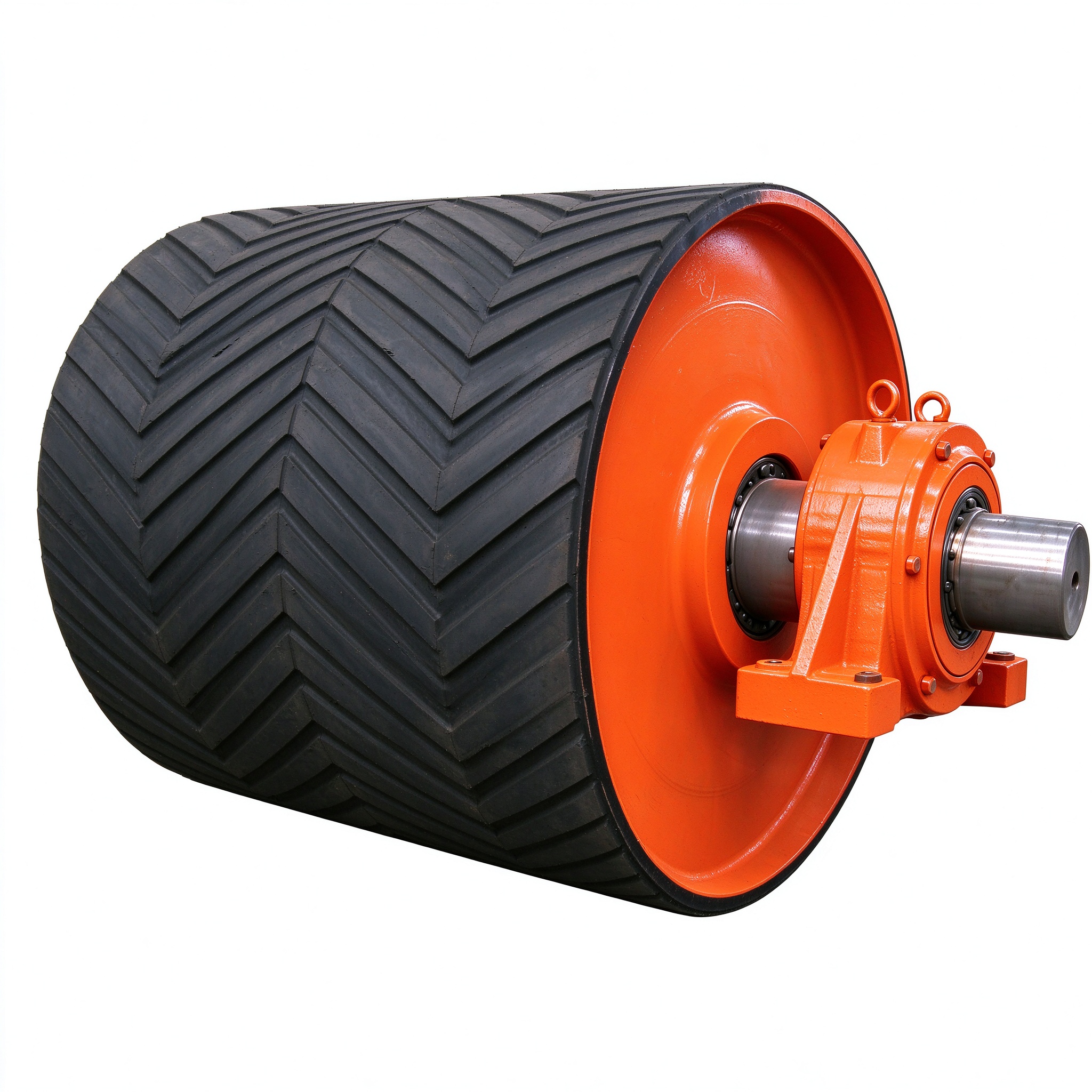
The pulley shell contacts the belt continuously and its surface wears over time, most intensely on drive pulleys where friction is highest; abrasive particles trapped between belt and shell accelerate wear severalfold. Rubber or ceramic lagging protects the shell and provides grip; as lagging wears, the friction coefficient drops, the belt slips, and overheating destroys both lagging and belt faster.
Bearing Failure and Imbalance
Bearing housings are the most vulnerable part of a pulley. Dust and moisture ingress, overheating from belt slip and shock loads destroy bearings; a seized bearing causes emergency stoppage and shaft damage. Uneven shell wear, adhered material or structural damage create imbalance, whose vibration destroys bearings and transmits into the conveyor steel structure.
Regular Inspection and Lagging Condition Control
Monthly inspection of every pulley catches early signs of wear: shell cracks, lagging separation, bearing heating and increased vibration; detecting a problem early costs less to fix than later overhauls. Lagging is checked for wear and peeling; when thickness drops to a critical level it is replaced before belt slip begins, which is far cheaper than shell repair or full pulley replacement.
Bearing Lubrication, Sealing and Balancing
Bearing housings are lubricated regularly per schedule; dusty plants use bearings with reinforced seals, cold climates call for low-temperature grease, and monitoring bearing temperature reveals a problem before failure. After repair or lagging replacement the pulley is balanced: correct balancing reduces vibration, extends bearing life and protects the steel structure, and balancing is mandatory on high-speed conveyors.
When to Repair or Replace the Pulley
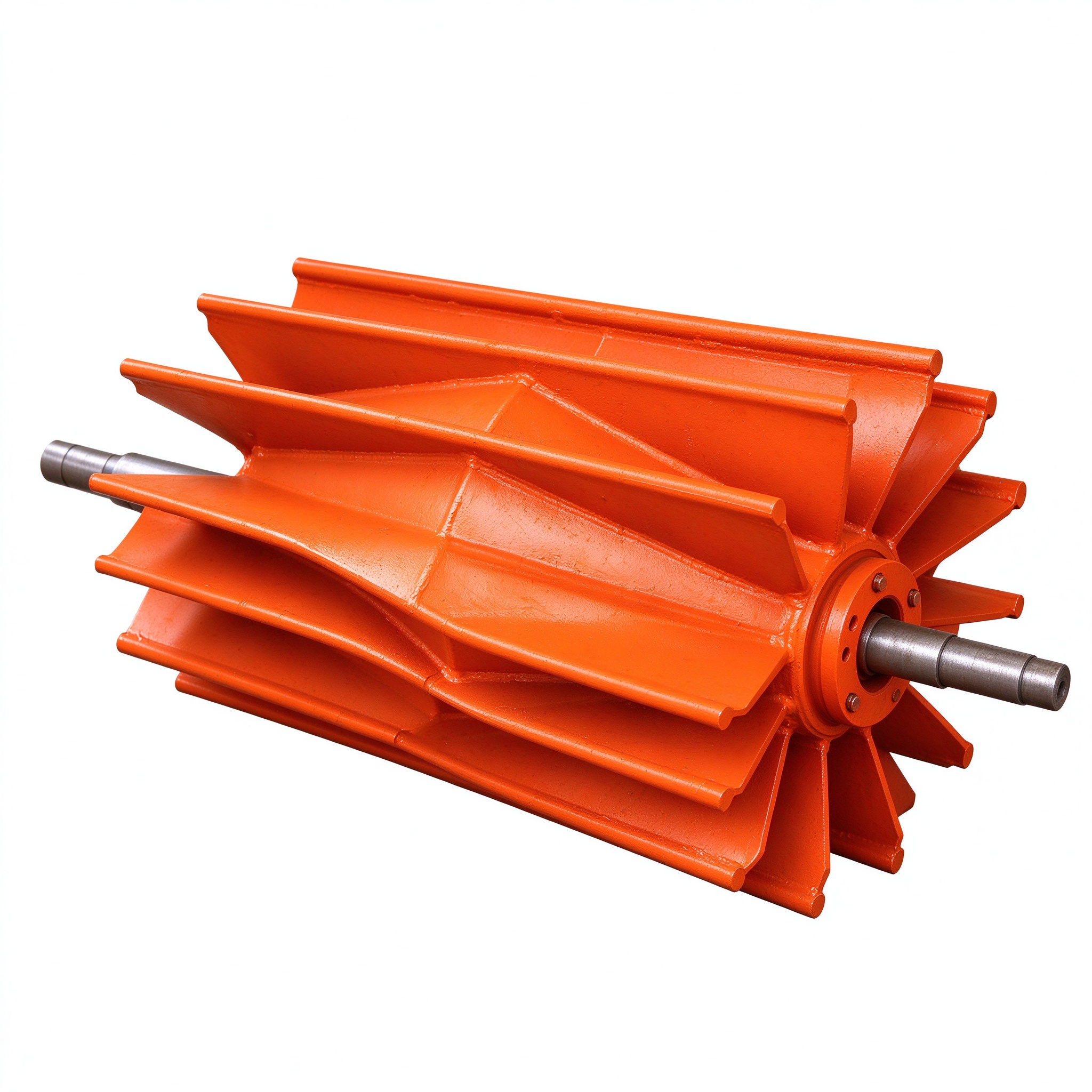
Deep shell grooving, cracks, irreversible lagging separation, elevated bearing noise and persistent vibration signal that repair or replacement is due; ignoring them leads to emergency stoppage. Non-drive pulleys can often be restored by replacing bearings, balancing and repairing the shell, at lower cost than full replacement and sometimes without conveyor disassembly. When the shell has through damage or the shaft is deformed, replacement is unavoidable; the new pulley must be compatible with the conveyor idlers and the overall line configuration.
Conclusion
Pulley service life is determined by build quality, operating conditions and maintenance regularity; timely inspection and lagging replacement cost far less than emergency stoppages.