Idler Frame Selection for Belt Conveyors: Troughing Sets, Angles and Placement
Idler frames hold and shape the belt; type, trough angle and load rating determine stable tracking, wear and energy use. This guide compares troughing, centering, impact and return frames.
What Idler Frames Do on a Belt Conveyor
Idler frames are supporting structures that hold the belt and give it the required shape; correct type and spacing determine stable belt movement, wear and energy consumption of the whole line. Unlike individual rollers, an idler frame works as an assembly, so angle, construction and load capacity must match the specific route section.
Main Idler Frame Types
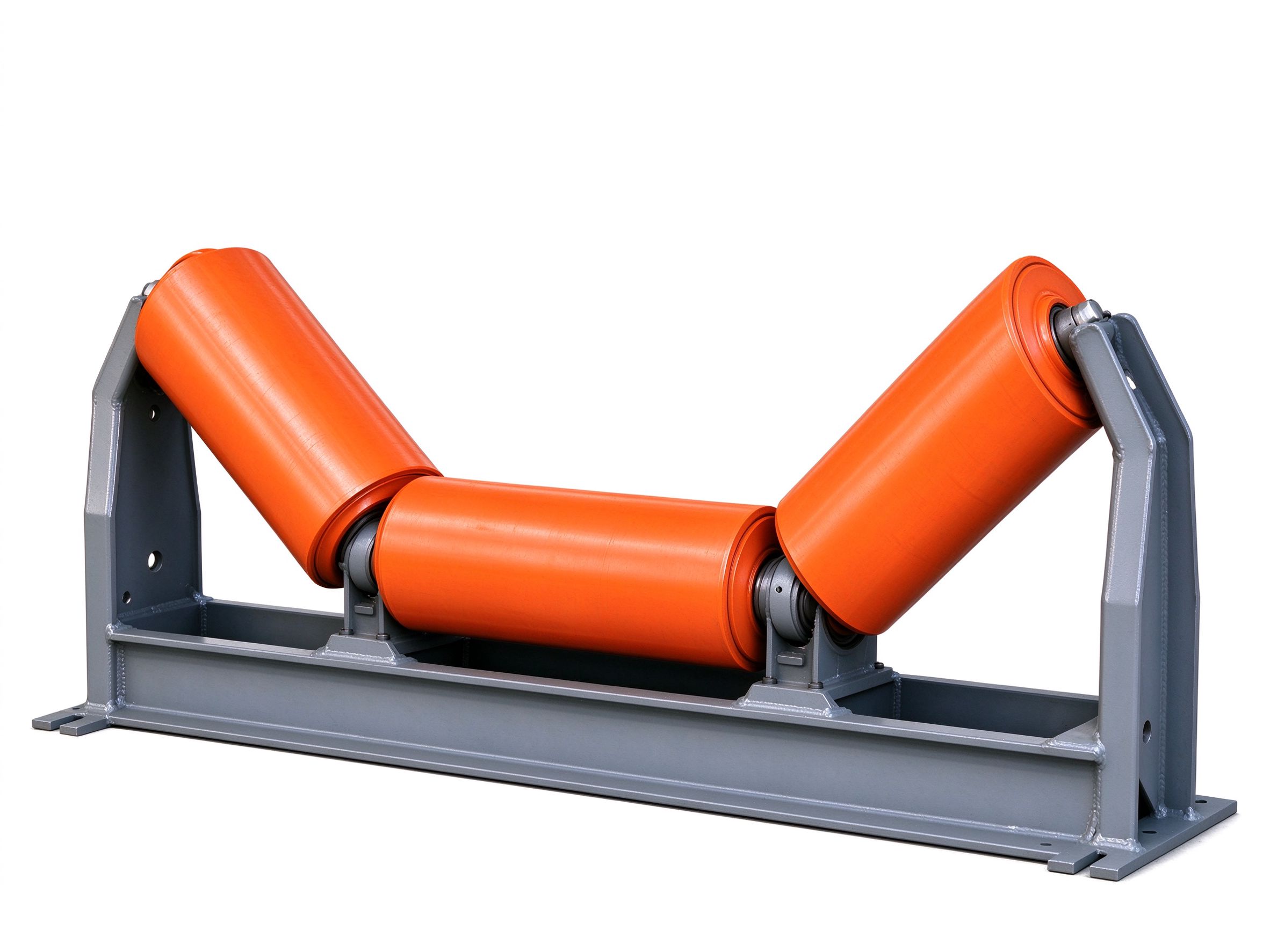
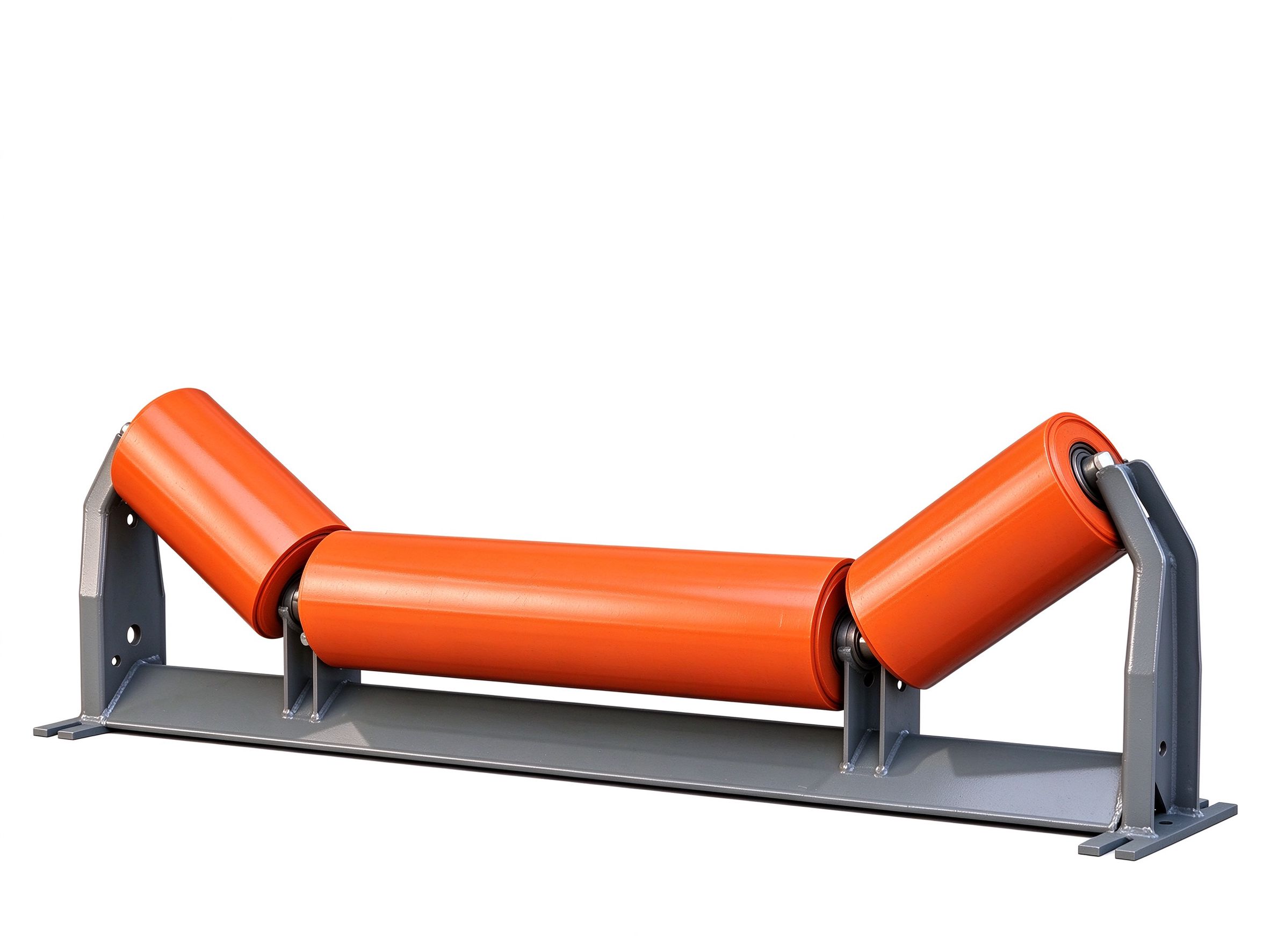
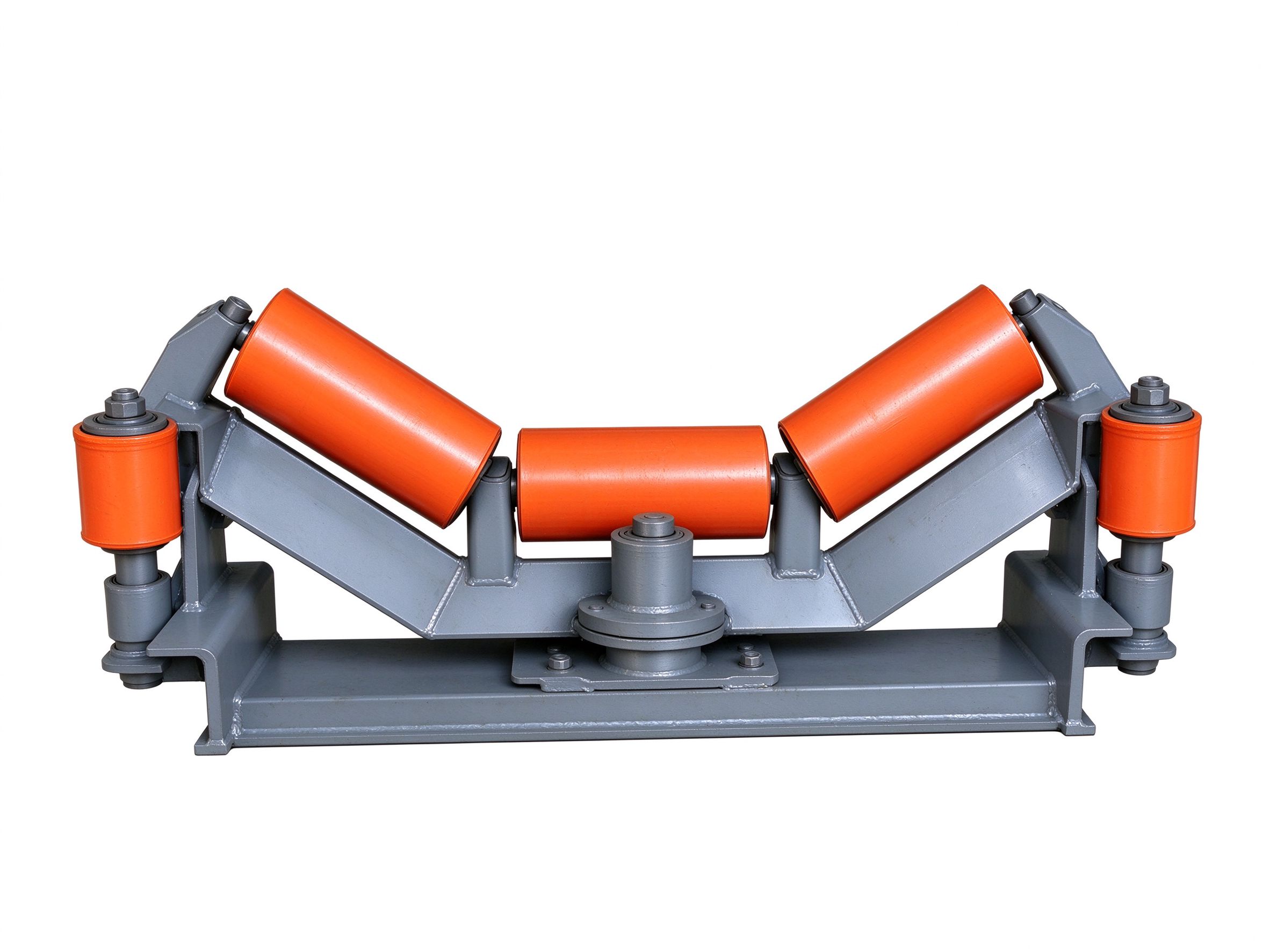
Smooth troughing frames are the primary belt support on straight route sections, forming the trough that carries material; they consist of three rollers, a horizontal central roller and two angled side rollers, and are used where shock loads are modest. Centering frames automatically correct belt position during lateral drift, using a pivoting mechanism that returns the belt to center; they are installed on long routes, after loading points and on curves where drift risk is higher. Impact frames use rollers with rubber rings at loading points where material falls from height, absorbing shock and protecting against tearing, and are mandatory for large-lump and abrasive material. Return frames support the return run; they are plain or centering to stabilize the return side, chosen by route length and belt drift tendency.
Choosing the Trough Angle: 20°, 35°, 45°
The 20° minimum trough angle suits light, free-flowing material such as grain, sand and fine coal, giving a smooth belt profile and lower wear at the bend between rollers; it fits moderate-capacity conveyors. The 35° angle is standard for most bulk materials, such as coal, ore, crushed stone and cement raw meal, balancing trough capacity and belt stability as a universal solution for the straight run. The 45° angle serves high bulk-density material on limited belt width, raising capacity without widening the belt, but demands a stiffer belt and accurate alignment.
Selecting by Load
Frame load capacity must match the weight of material and belt; for heavy-duty mining and metallurgy, reinforced constructions with larger-diameter rollers and sealed bearings are used.
Selecting by Material Type
Abrasive material demands wear-resistant roller surfaces; wet and sticky material calls for a smooth surface that prevents buildup; chemically aggressive environments call for frames with HDPE rollers.
Selecting by Location on the Route
The straight carry run uses smooth troughing frames; the loading point uses impact frames; curves and long straights use centering frames; the return run uses plain or centering return frames.
Conclusion
Choosing idler frames means matching type, angle and load capacity to the route section and material characteristics; proper spacing and configuration stabilize tracking and reduce wear and energy use.