Herringbone vs Ceramic Lagging: Which Pulley Surface Do You Need?
Comparing friction, wear life and maintenance for wet, dry and abrasive drive applications.
Why lagging matters
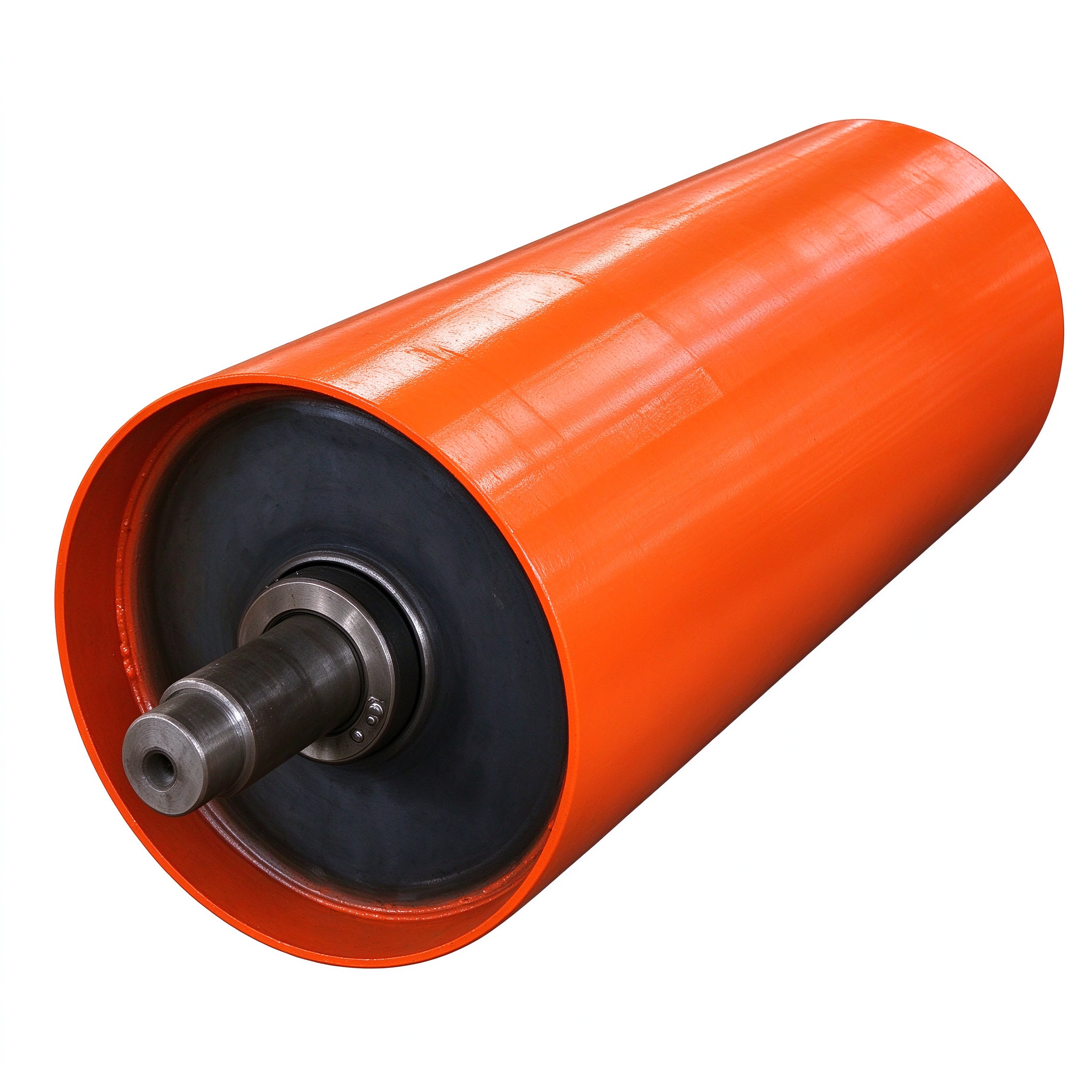
Lagging protects the steel shell from wear and raises friction so the drive pulley transmits torque without slip. Bare steel works for light tail and bend pulleys; the drive/head pulley almost always needs a covered surface in wet or abrasive duty.
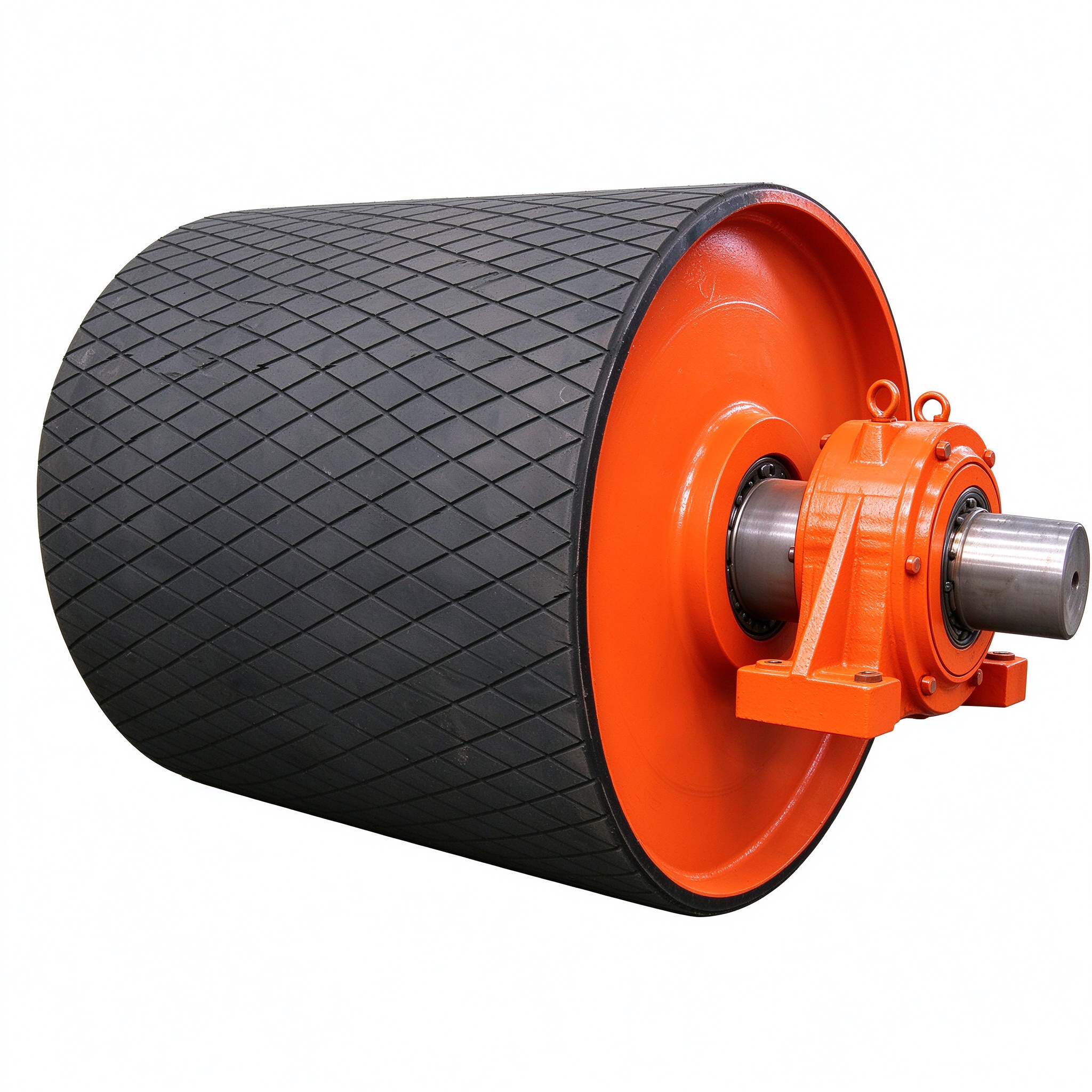
Herringbone (chevron) rubber lagging
Grooved herringbone rubber channels water away from the contact zone and provides good grip at moderate cost. It suits dry and moderately wet aggregate, coal and grain conveyors and is easy to replace on site.
Ceramic lagging
Embedded ceramic tiles give very high friction and outstanding abrasion resistance for high-tension drives, wet slurry and severe slip problems, at a higher purchase price. It is the right choice where downtime from slip is expensive.
Match pulley role to surface
Drive/head pulleys carry the torque; tail and snub/bend pulleys mainly change direction and can run smooth or lightly lagged. For wet or slip-prone drives a rubber-covered lagged drive pulley is the standard upgrade. Self-cleaning wing/spiral pulleys are used on the return run to shed carry-back.