How to Choose Conveyor Rollers for the Cement Industry
Cement production exposes conveyor idlers to abrasive clinker, penetrating dust and heat up to 200°C. Learn which roller types, coatings and seals suit each section of a cement plant conveyor.
The Three Challenges of Cement Plant Conveyors
The cement industry is one of the most aggressive environments for conveyor equipment. Clinker and limestone are highly abrasive, fine cement dust penetrates the smallest gaps, and hot material raises operating temperatures. Each condition demands a specific idler design rather than a generic steel roller.
Abrasion: Clinker Acts Like Sandpaper
Clinker and limestone particles trapped between the belt and the roller behave like sandpaper, so ordinary smooth steel rollers can wear out within a few months of service. Ceramic-coated rollers provide maximum abrasion resistance and last three to four times longer than standard steel; they are used on high-load sections such as loading points and clinker conveyors.
Heat: Rollers for Hot Clinker Up to 200°C
Transporting hot clinker at temperatures up to 200°C requires heat-resistant rollers fitted with high-temperature grease and reinforced seals. Standard grease drains out at these temperatures and the bearing seizes, whereas heat-resistant bearings maintain function up to 200°C.
Dust Sealing and Impact Protection
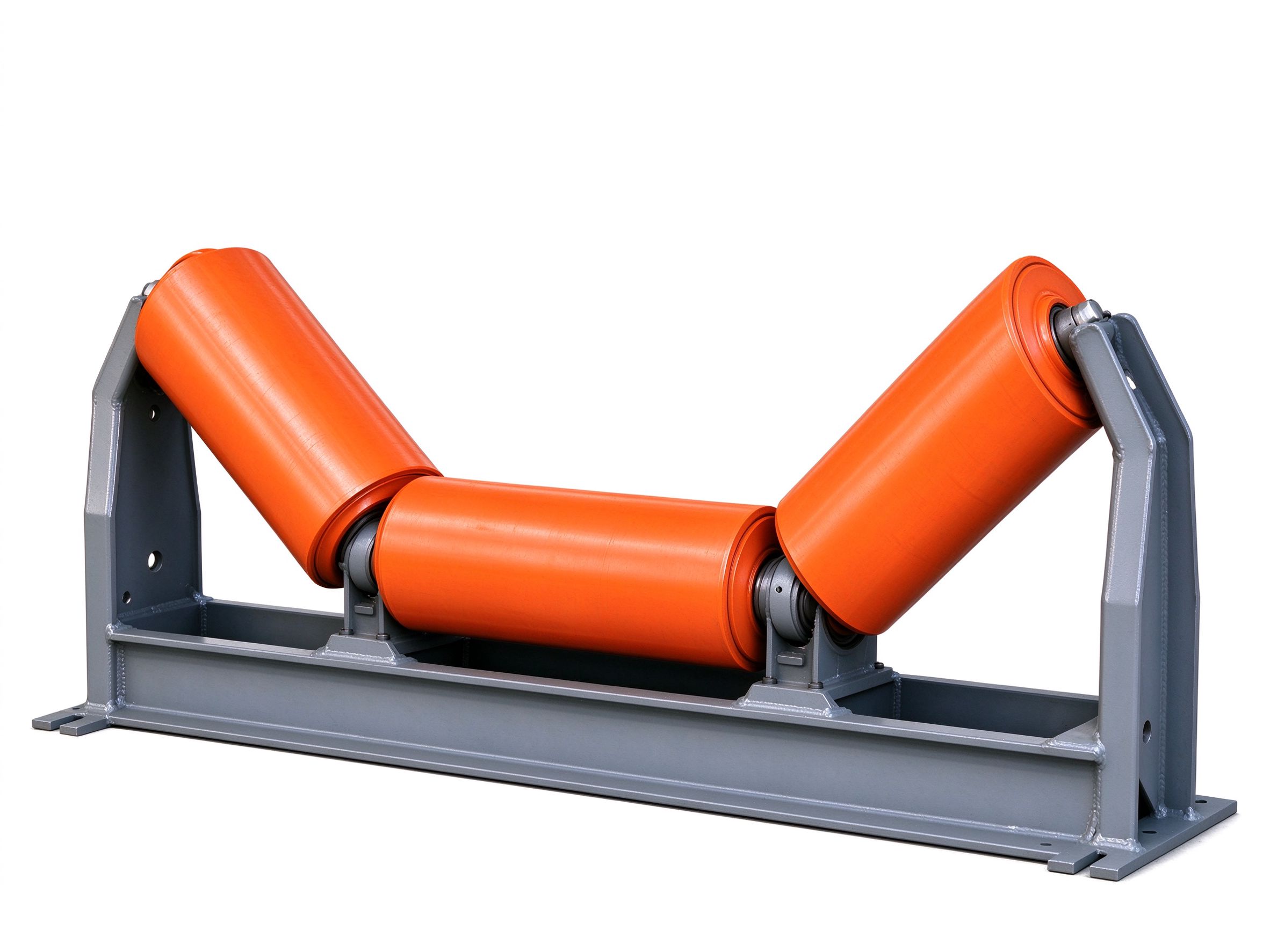
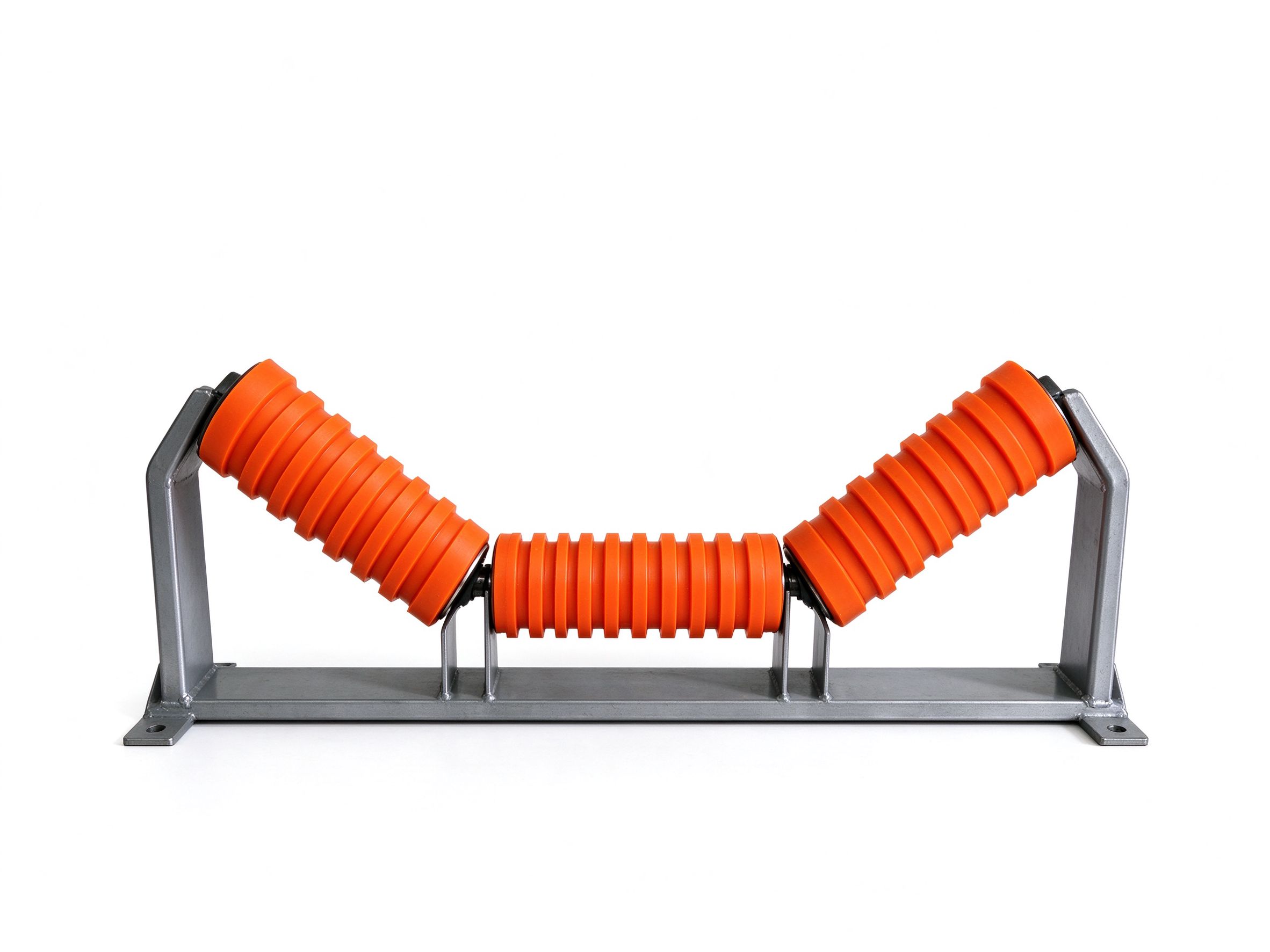
Fine cement dust enters unsealed bearing housings and can disable them within weeks, so labyrinth seals and protective end covers are a mandatory requirement in cement service. At loading points where material falls from height, impact rollers with rubber rings cushion the shock load and protect the belt from damage.
Compare Roller Types by Abrasion and Heat Resistance
Smooth steel rollers offer medium abrasion and medium heat resistance; ceramic-coated rollers offer high resistance to both; impact rollers are medium on both; HDPE rollers are medium in abrasion resistance but low in heat resistance; heat-resistant rollers combine high abrasion resistance with very high heat resistance.
Selecting Rollers for Each Track Section
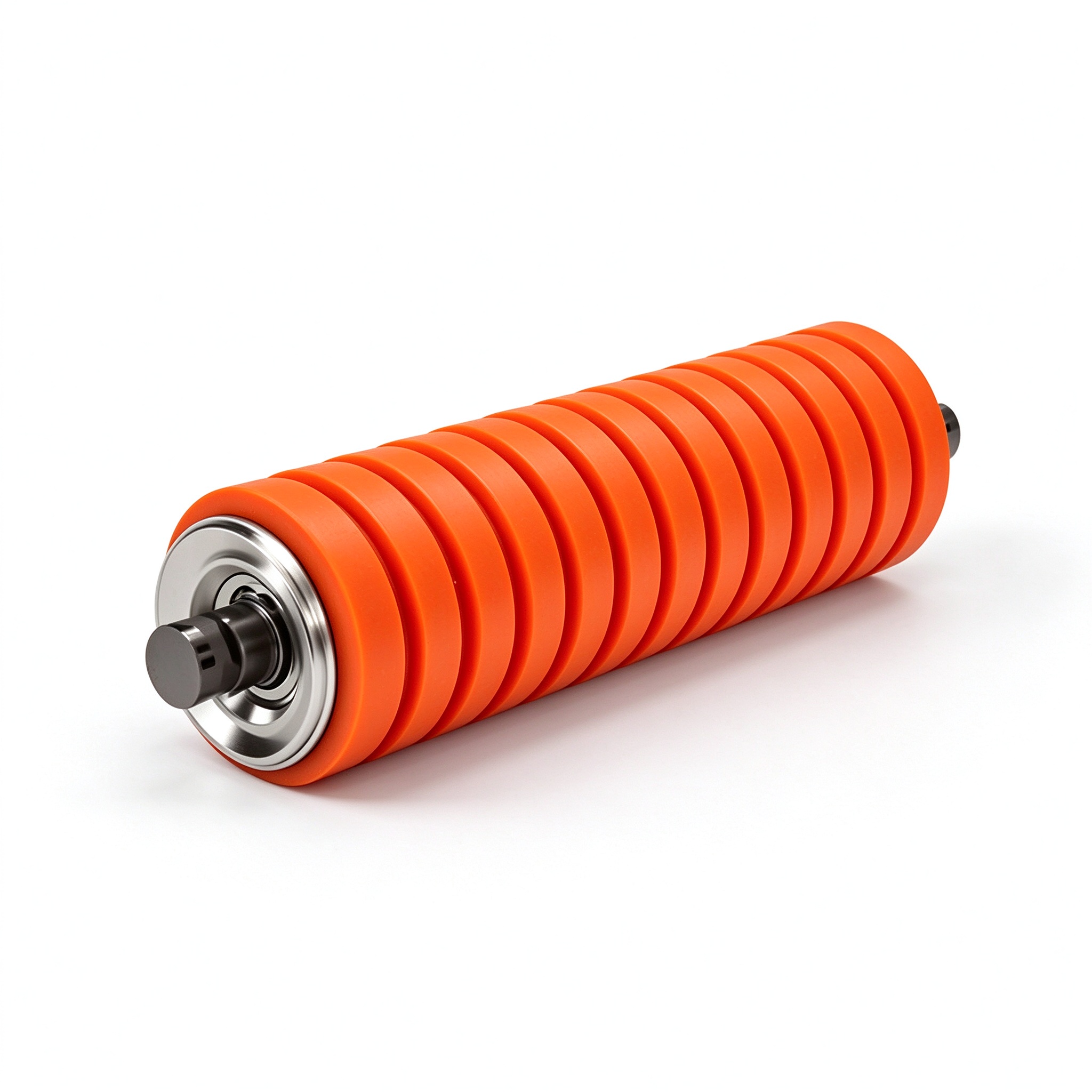
Use impact rollers with rubber rings at the loading zone, heat-resistant rollers with high-temperature grease for clinker transport, ceramic rollers for abrasive material on straight runs, HDPE rollers in chemically aggressive environments, and spiral cleaning rollers on the return run to remove carryback.
Summary
Choosing conveyor rollers for cement production balances abrasion resistance, heat resistance and sealing; matching the roller to each section extends conveyor life and lowers operating costs.