CEMA D vs E Troughing Idler: Which Grade Fits Your Belt?
Tube diameter, bearing bore, frame thickness and load per idler — when CEMA D heavy-duty is enough and when the CEMA E extra-heavy rating earns its cost on high-tonnage belts.
CEMA D vs E at a glance
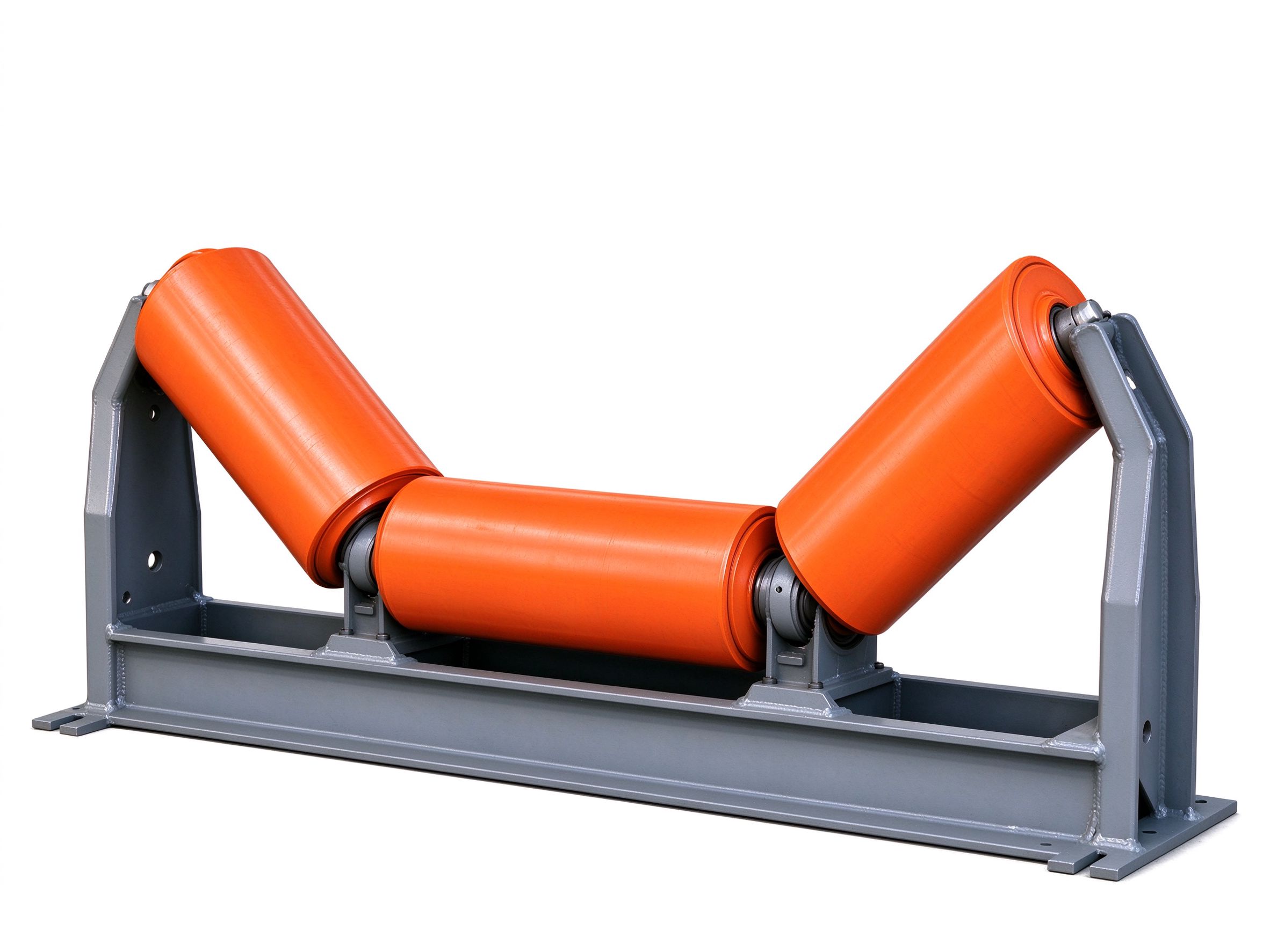
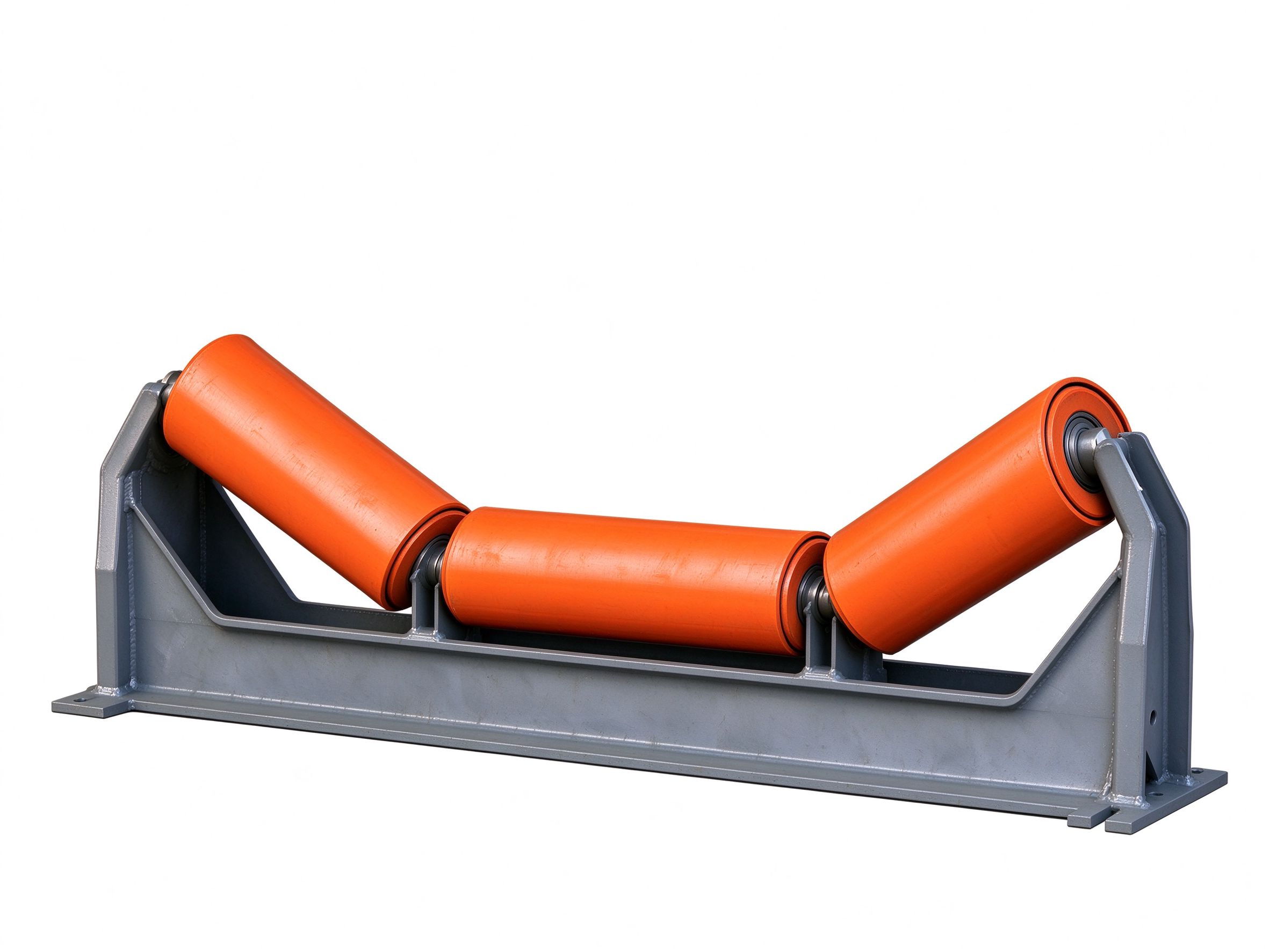
CEMA D (Heavy-Duty) and CEMA E (Extra Heavy-Duty) are the two grades used on serious bulk conveyors. The difference is not marketing: E uses larger 6"/7" tubes, bigger sealed spherical bearings, a thicker welded channel frame and a higher rated load per idler than D, which runs 5"/6" tubes on a heavy channel. D covers 24–72 inch belts; E is sized for 36–96 inch high-capacity lines.
When E earns its cost
Choose CEMA E where tonnage, tension and drop energy are high: long overland mines, ship-loader hoppers, high-tension port belts and stacker-reclaimers carrying dense ore or coal. The heavier tube and larger bearing resist deflection and fatigue under sustained load, and the lifetime-lubricated spherical bearing with IP66 labyrinth seal keeps running in dust, mud and wash-down. On these sections, a D-grade idler replaced early by E lowers total replacement frequency even though the unit costs more.
Where D is the smarter buy
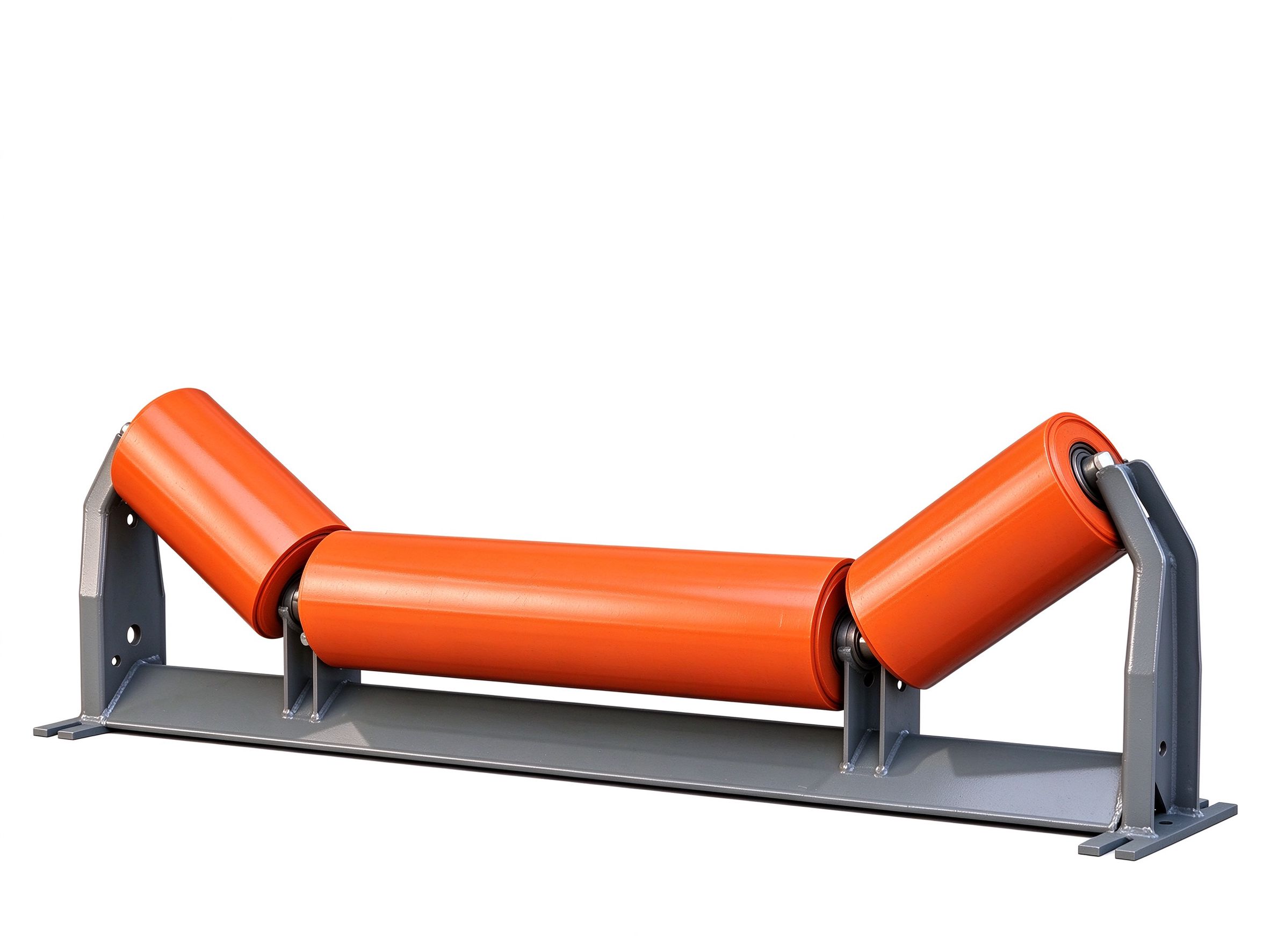
CEMA D is the economical correct choice for quarry aggregate, cement plant carry sections and secondary mining runs on 24–72 inch belts where load, speed and tension are moderate. Paying for E over-spec here buys capacity you never use. In most general-purpose duty, a well-built D with a good seal package outperforms a cheap E with a weak bearing.
Frame, seals and bearings decide life, not just grade
A CEMA E stamped-frame unit with a poor seal fails before a CEMA D welded-frame unit with IP66 labyrinth protection. Inspect the frame (welded channel beats light stamping), the seal (multi-stage labyrinth keeps grease in and fines out) and the bearing (sealed spherical, lifetime-lubricated) before comparing price tags.
Equal or unequal layout on either grade
Both D and E are available as equal-length three-roller sets or unequal sets with a longer center roller (offset L1/L2). Equal is the default for stable runs; unequal spreads edge load at transition zones and under the heaviest belt contact.
How to specify the right grade
Record belt width, material bulk density, belt speed, working tension, required spacing and the environment (wet, dusty, abrasive, high-drop). Match the CEMA grade, tube diameter, trough angle, seal and finish as a drop-in replacement for the existing frame.