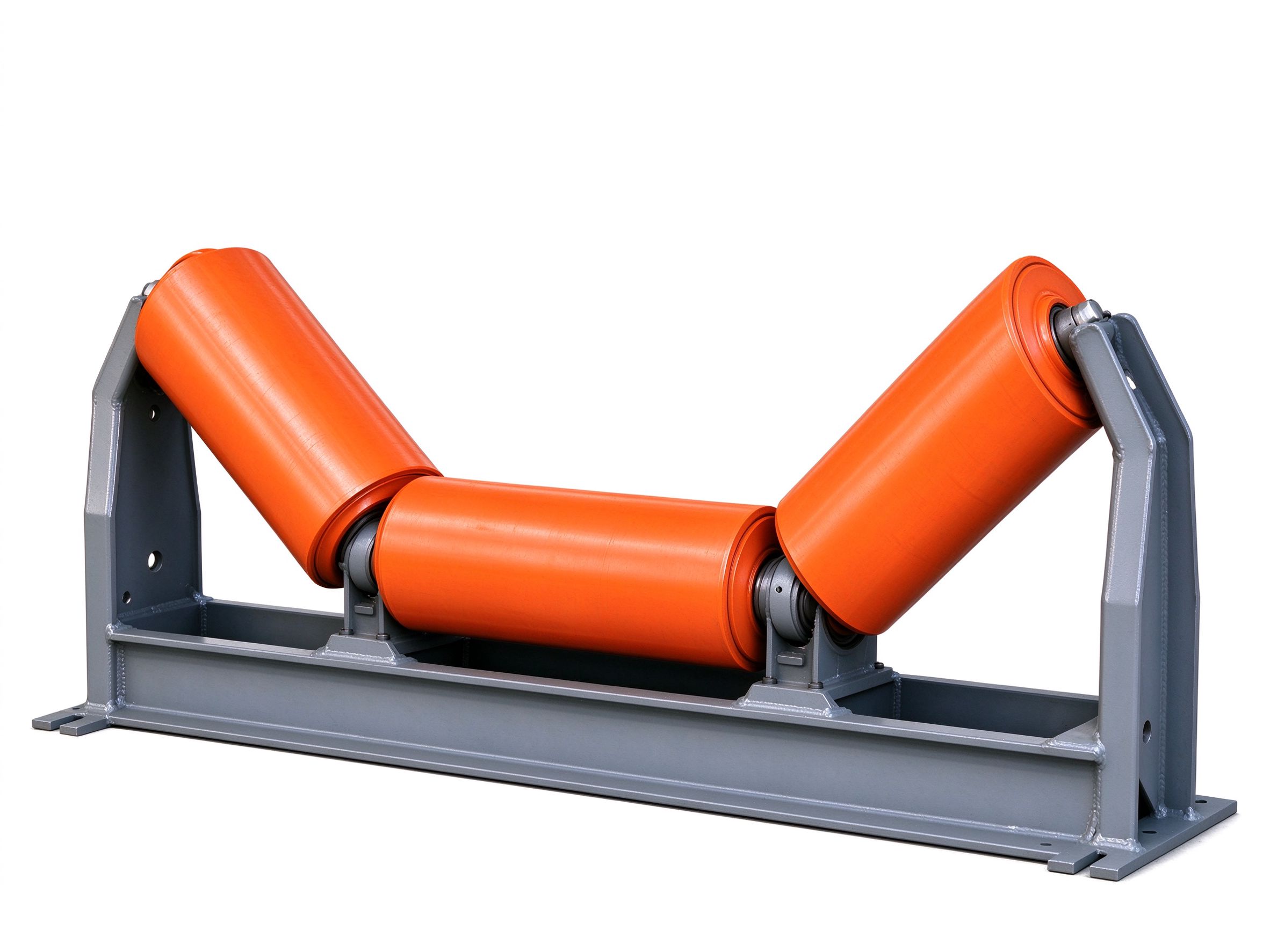
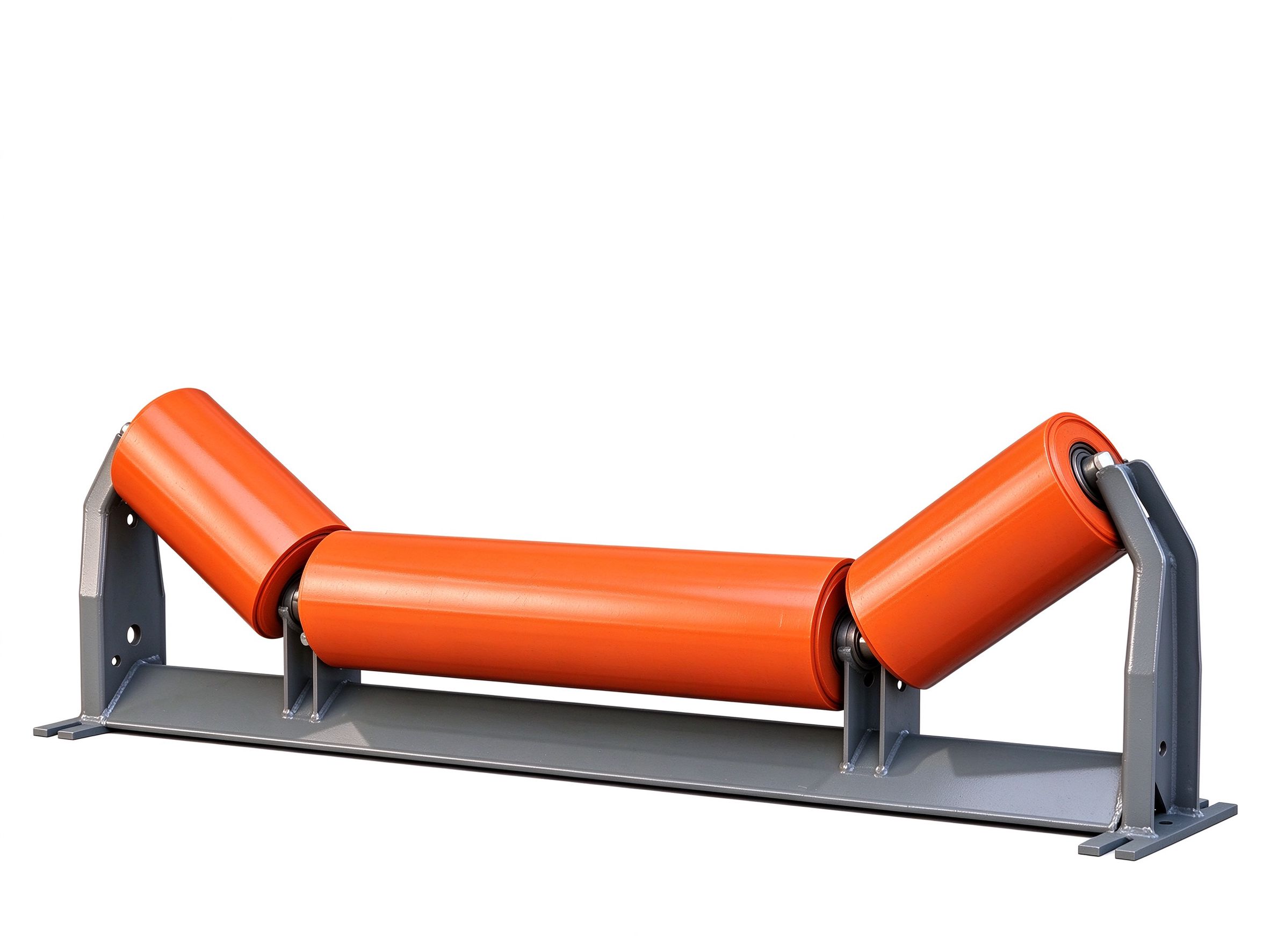
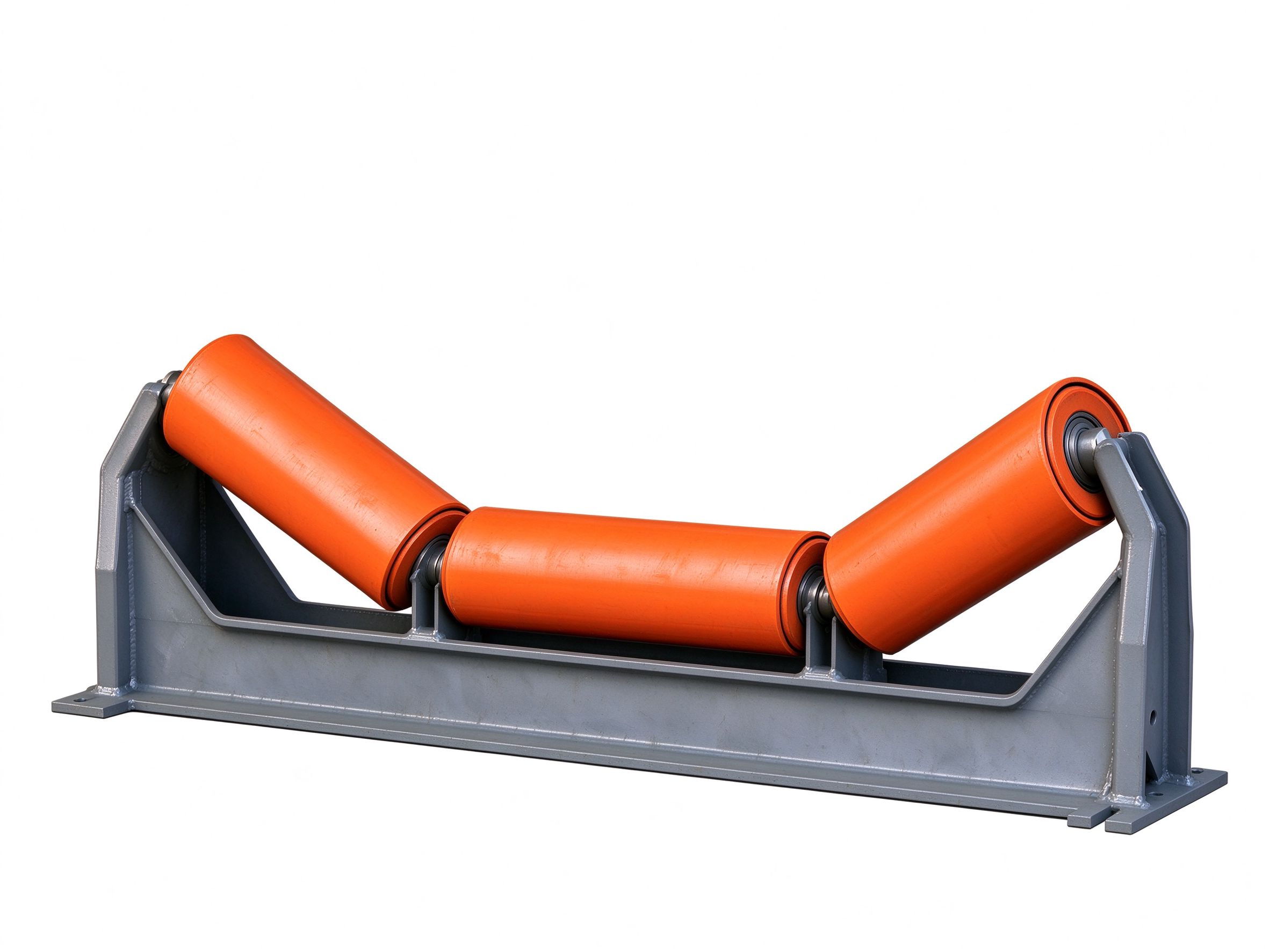
Equal vs Unequal Troughing Idler: Three-Roller Layout Compared
Why a longer center roller (offset L1/L2) changes edge loading and belt support at transition zones, and when a standard equal-length three-roller set is all you need.
The equal three-roller set
An equal troughing idler carries three rollers of the same length that form a 20°, 35° or 45° trough under the loaded belt. It is the default carrying-side layout on stable, straight runs and is the easiest to stock and replace because every roller in the set shares the same diameter and part number.
The unequal (offset L1/L2) layout
An unequal troughing idler pairs a longer center roller with two shorter side rollers. The longer center sits under the heaviest belt contact while the shorter sides set the trough angle, spreading load more evenly and easing stress on the belt edges where it bends over the side rollers.
Where unequal helps most
The offset geometry pays off at transition zones where the belt flattens from flat return into trough, under high tonnage, and on belts prone to edge wear or spillage. It stabilizes the profile where the load sits heaviest instead of letting pressure concentrate on the center seam.
When equal is enough
On steady, straight carry sections with even loading, the equal set performs identically at lower cost and simpler spare-parts inventory. Upgrading to unequal is a zone-specific decision, not a whole-line requirement.
Interchangeability and build
Both layouts are built to CEMA D and E on welded channel frames with sealed bearings and IP66 labyrinth seals, and mount on the same standard bracket spacing, so you can mix equal and unequal sets along one belt without changing structure.
Specify by zone
Keep equal sets on stable runs and place unequal sets at transitions and heavy-contact points. Record belt width, trough angle and spacing to specify the correct L1/L2 ratio as a direct replacement on the existing bracket spacing.