Idler Frame Types and Their Applications on a Belt Conveyor
Troughing, training, impact, return and specialty idler frames each solve a specific problem. This guide matches idler frame types to straight runs, loading points, curves and the return run.
Troughing Idler Frames for Straight Runs
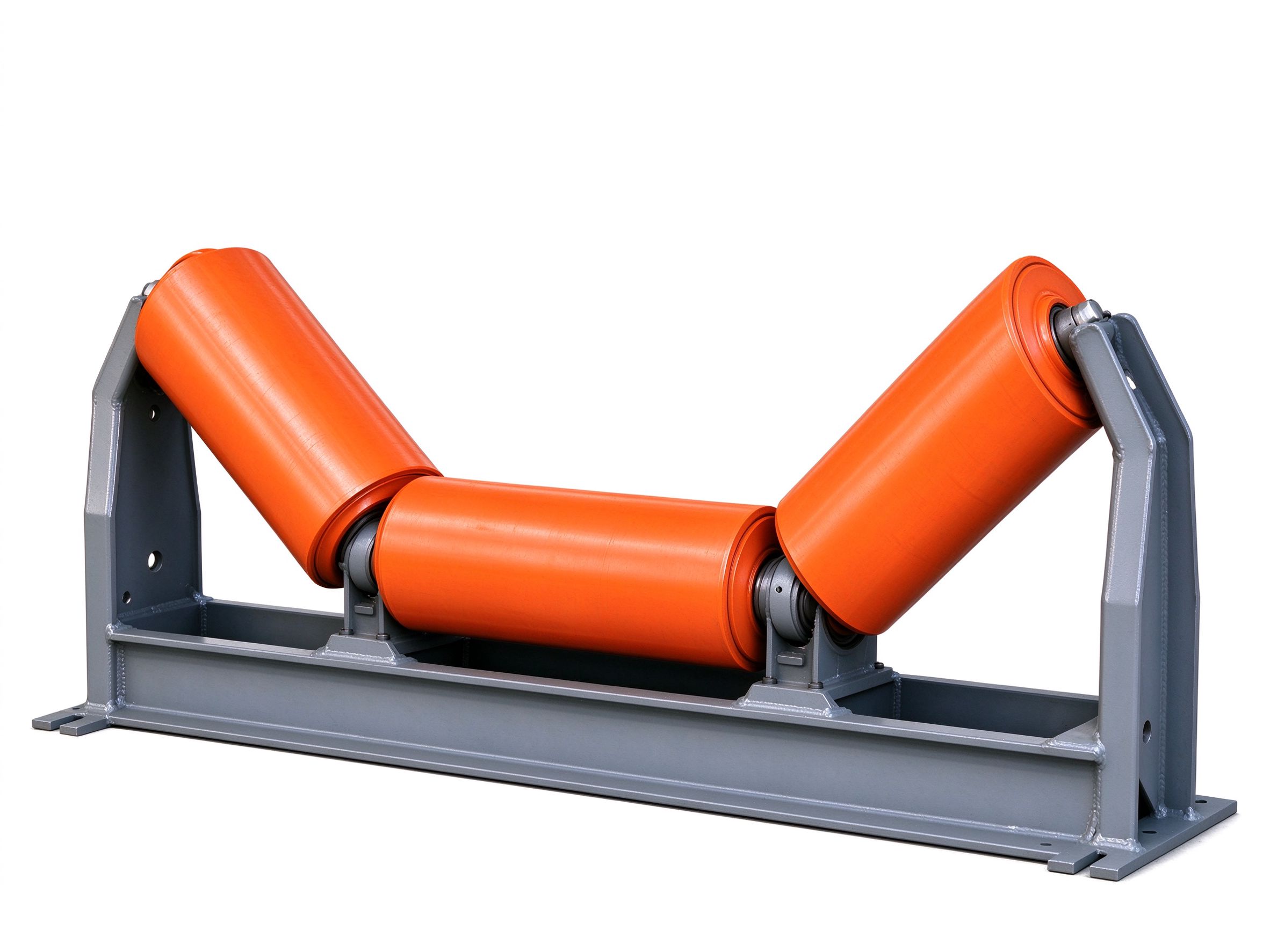
Idler frames are support structures that hold the conveyor belt and set its profile; the correct type determines belt stability, belt wear and the energy consumption of the whole line. Troughing frames are the primary support on straight sections, forming a trough that carries the material. They consist of three idlers, one central horizontal roller and two angled side rollers, and are the most widely used frame type in conveyor systems. Plain troughing frames suit straight runs without significant impact loads and are available at 20, 35 and 45 degree troughing angles for most standard conditions.
Troughing Training Frames for Drift Correction
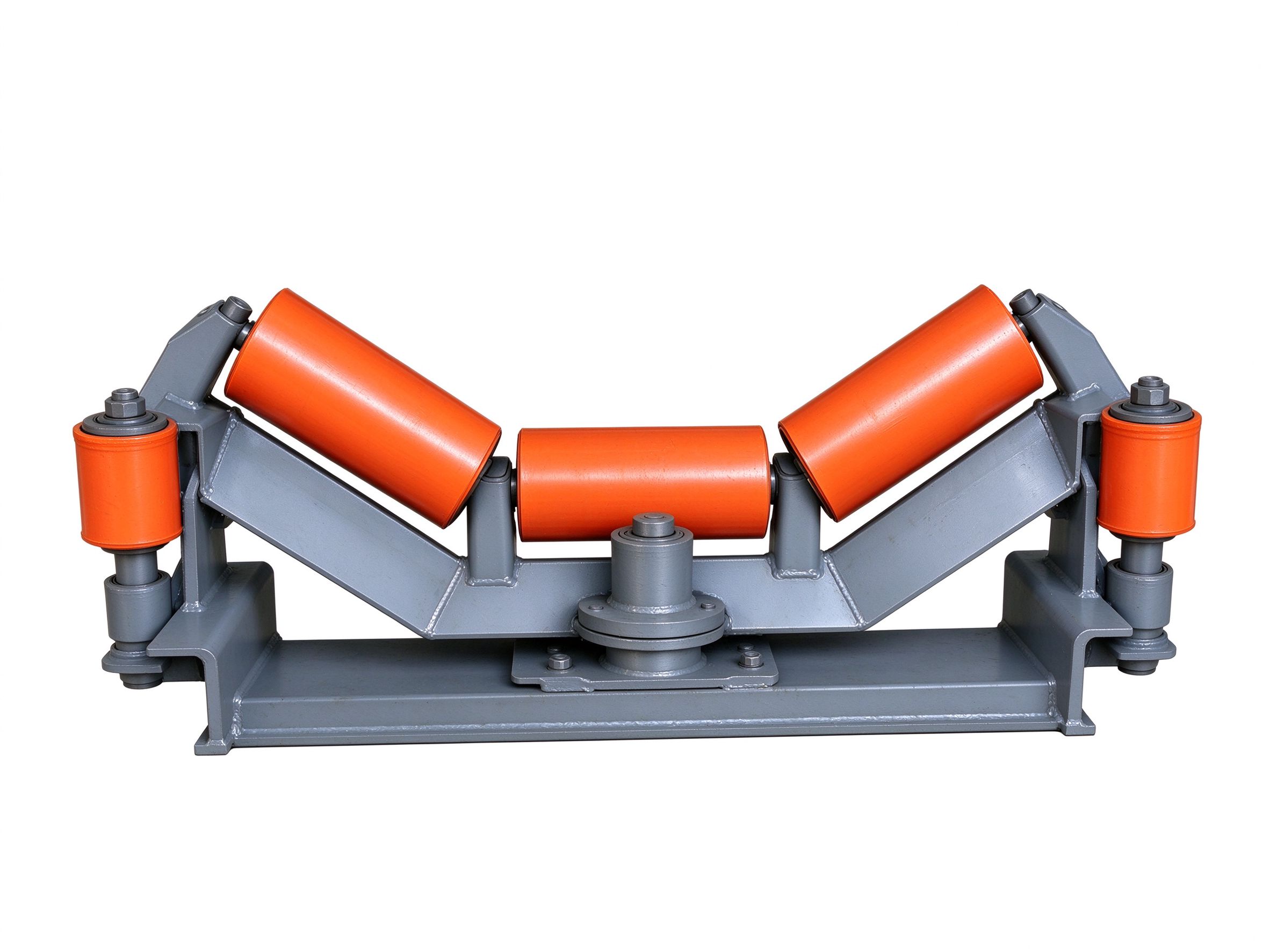
Troughing training, or centering, frames automatically correct the belt's position when it shifts sideways. They are installed on long runs, after loading points and on curved sections, and correct deviations of up to 10 degrees.
Impact Frames at Loading Points
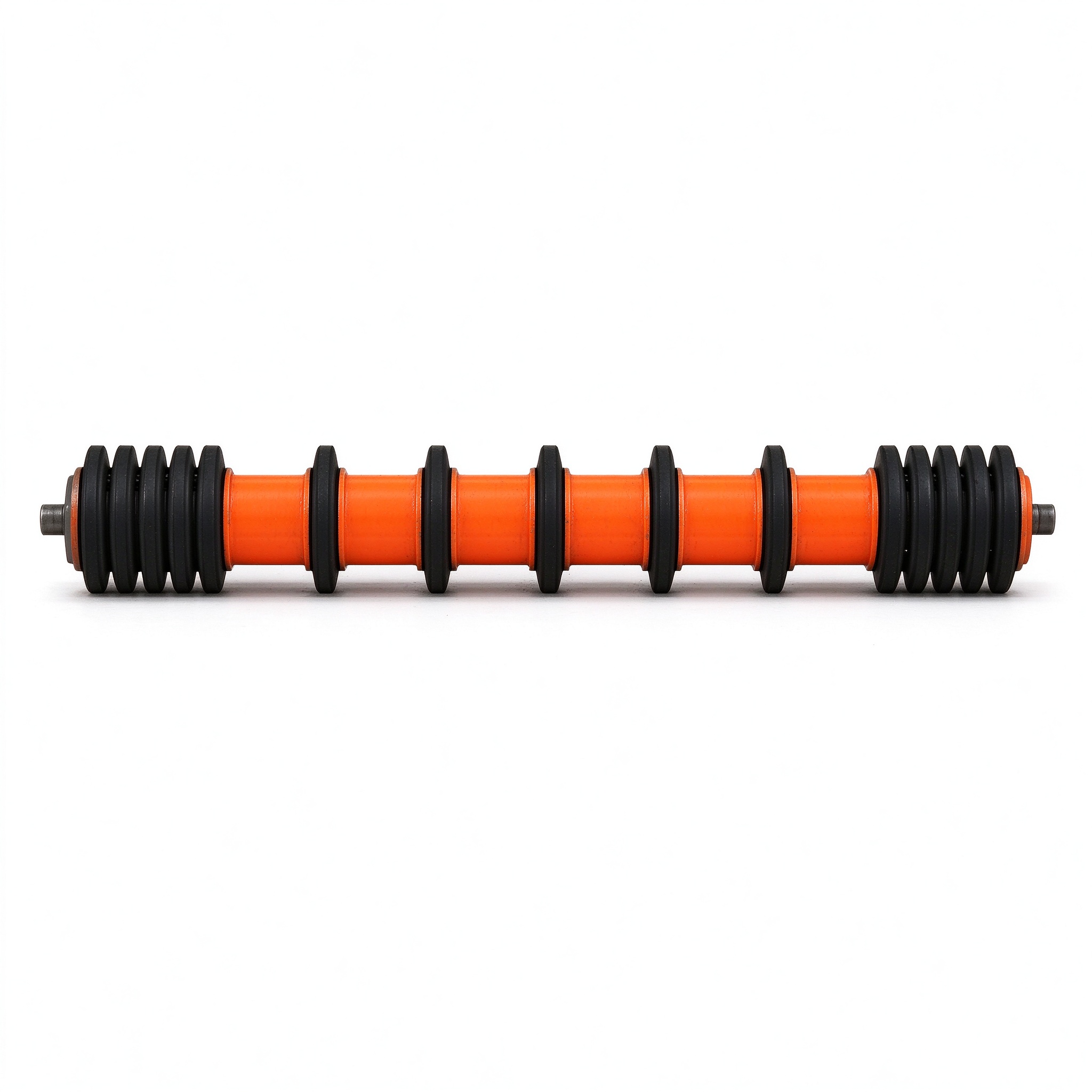
Impact frames are installed at loading points where material falls onto the belt from height, cushioning the impact load and protecting the belt from breaks and delamination. They are a mandatory element of the loading station when handling coarse, abrasive material; rubber-ring impact rollers absorb up to 50 percent of the impact energy, significantly extending belt service life.
Return, or Lower, Frames
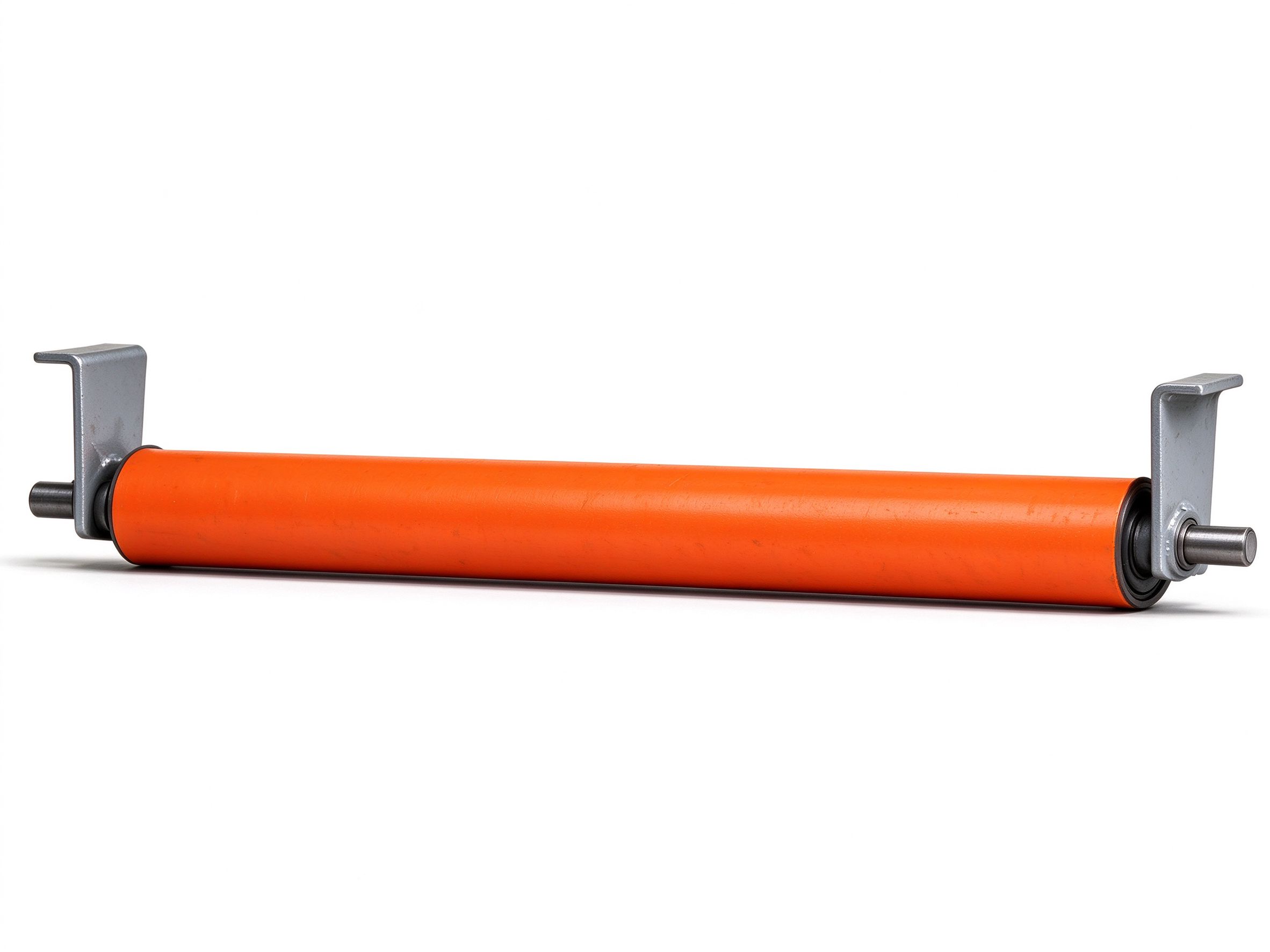
Return frames support the empty return run and come in plain or training versions. Lower training plain frames automatically correct belt position on the return run and are installed at regular spacing on long conveyors. V-shaped return frames use two rollers set at an angle so that the belt self-centers and stays in the correct position on the return side.
Specialty Frames: Transition and Sensor-Equipped
Transition frames sit between troughed and flat belt sections, providing a smooth profile change that prevents sharp kinks and belt damage. Modern monitoring systems also use sensor-equipped frames carrying temperature and vibration sensors that track bearing condition in real time and warn of faults before an emergency stop.
Match the Frame to Each Track Section
On straight runs use plain troughing frames; at the loading zone use impact frames; on long runs use troughing training frames; on curved sections use training frames; and on the return run use lower training or V-shaped frames.
Summary
Each idler frame type solves a specific task, and combining the right types across the track delivers stable conveyor operation and extends equipment service life.