Primary vs Secondary Belt Cleaner: Two-Stage Carry-Back Removal
Why a PU primary blade at the head pulley and a tungsten-tip secondary after it work as a system, what each removes, and where a V-plow fits on the return run.
Cleaning is a two-stage job
No single blade removes everything. The primary cleaner takes the bulk carry-back at the discharge; the secondary polishes the fine film the primary leaves behind. Used together they keep the return run clean, reduce idler fouling and cut fugitive dust.
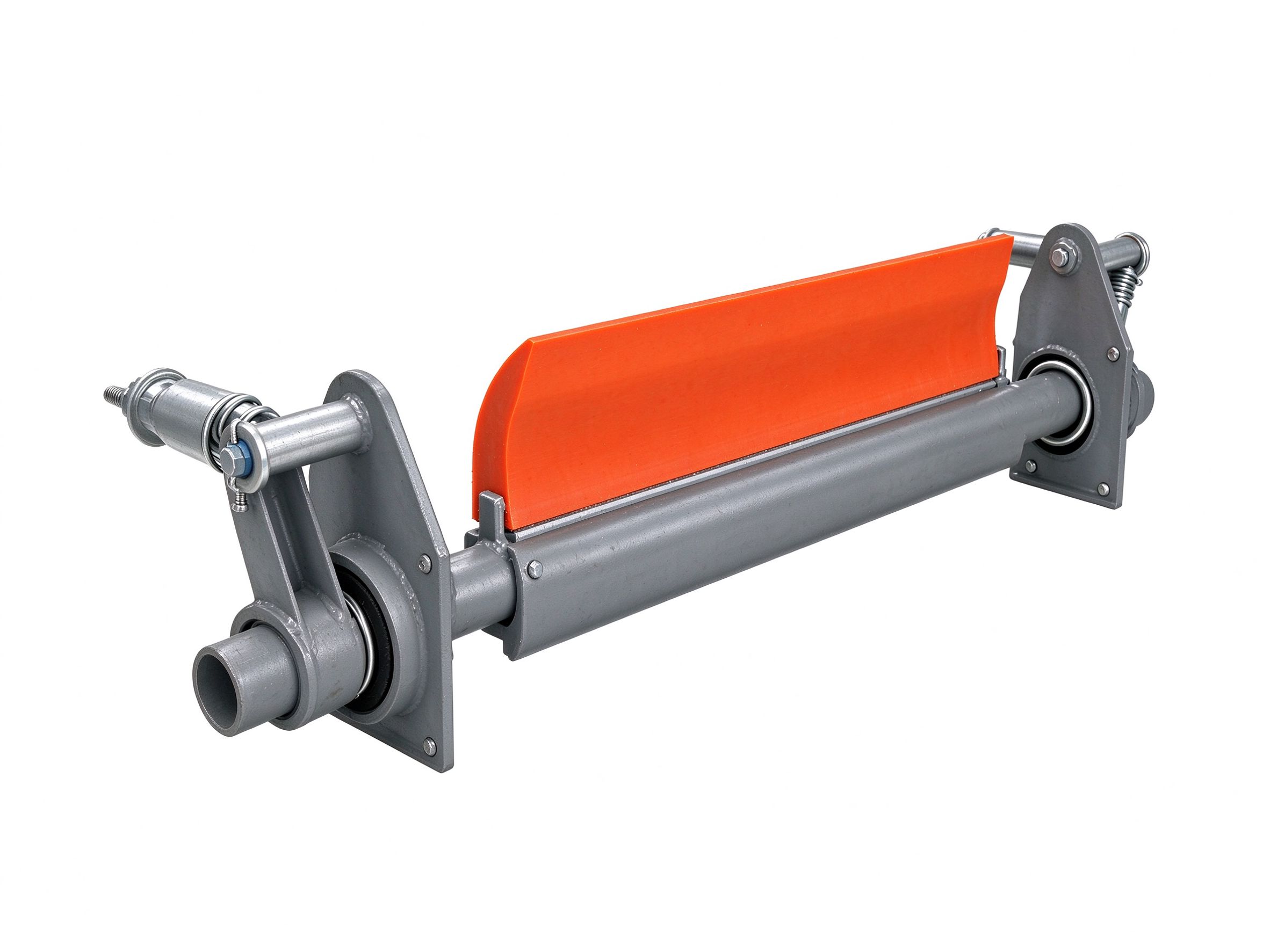
Primary cleaner (PU blade)
The primary PU cleaner mounts across the head-pulley arc with segmented, replaceable polyurethane blades that conform to the belt face and scrape coal, aggregate and grain off at discharge. It handles the loose bulk material before it reaches the return run; worn segments are replaced individually without removing the body.
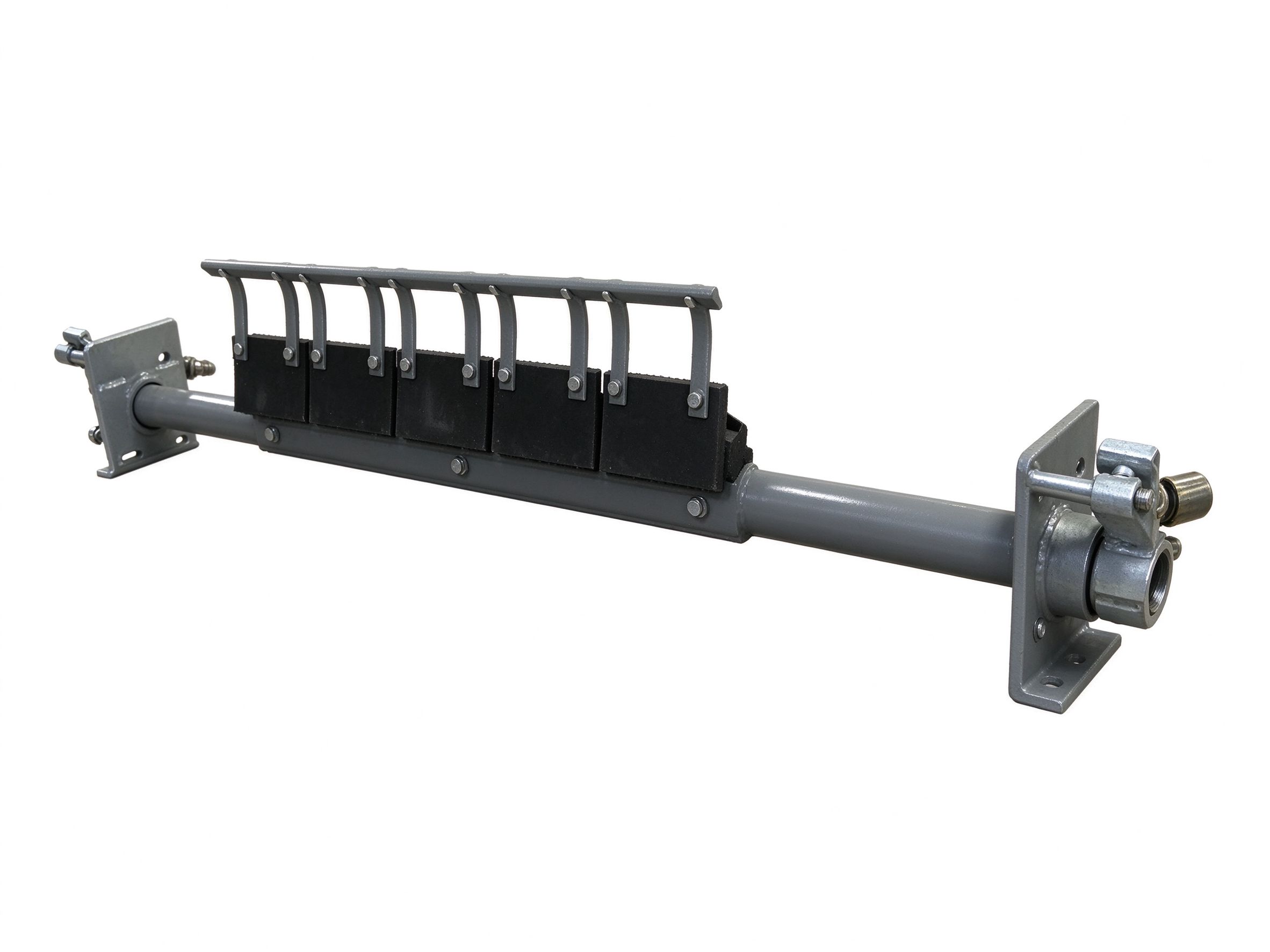
Secondary cleaner (tungsten tip)
The secondary tungsten scraper sits after the primary with tungsten-carbide tipped segments that polish the belt and remove sticky film and fine residue a PU blade cannot reach. It cuts dust on the return run and protects downstream return idlers and pulleys from buildup.
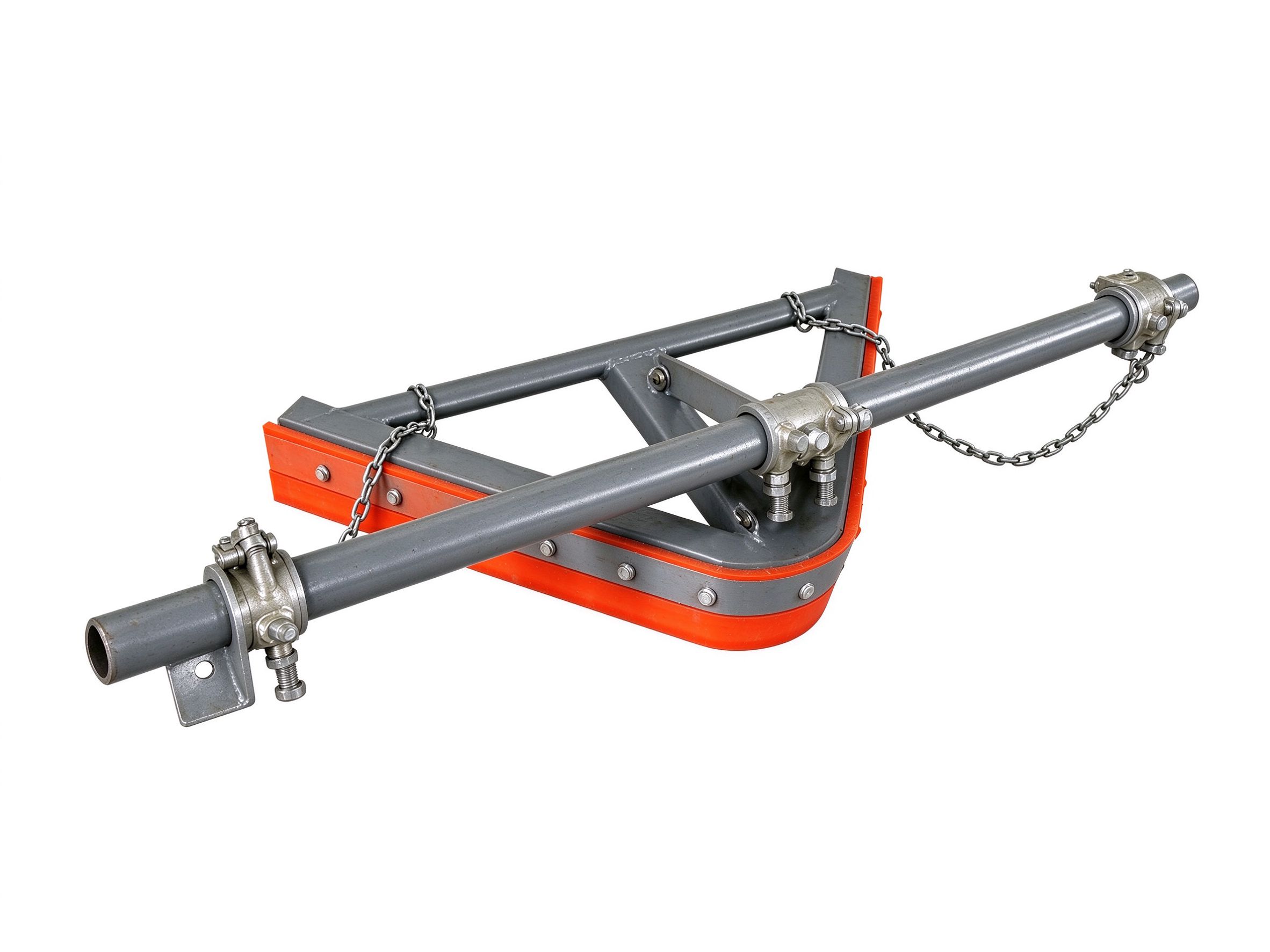
V-plow on the return run
A return V-plow hangs across the empty return belt just ahead of the tail pulley, sweeping lumps outward before they jam between belt and drum. It is a light-to-medium line guard, not a replacement for the primary/secondary pair.
When one cleaner is enough
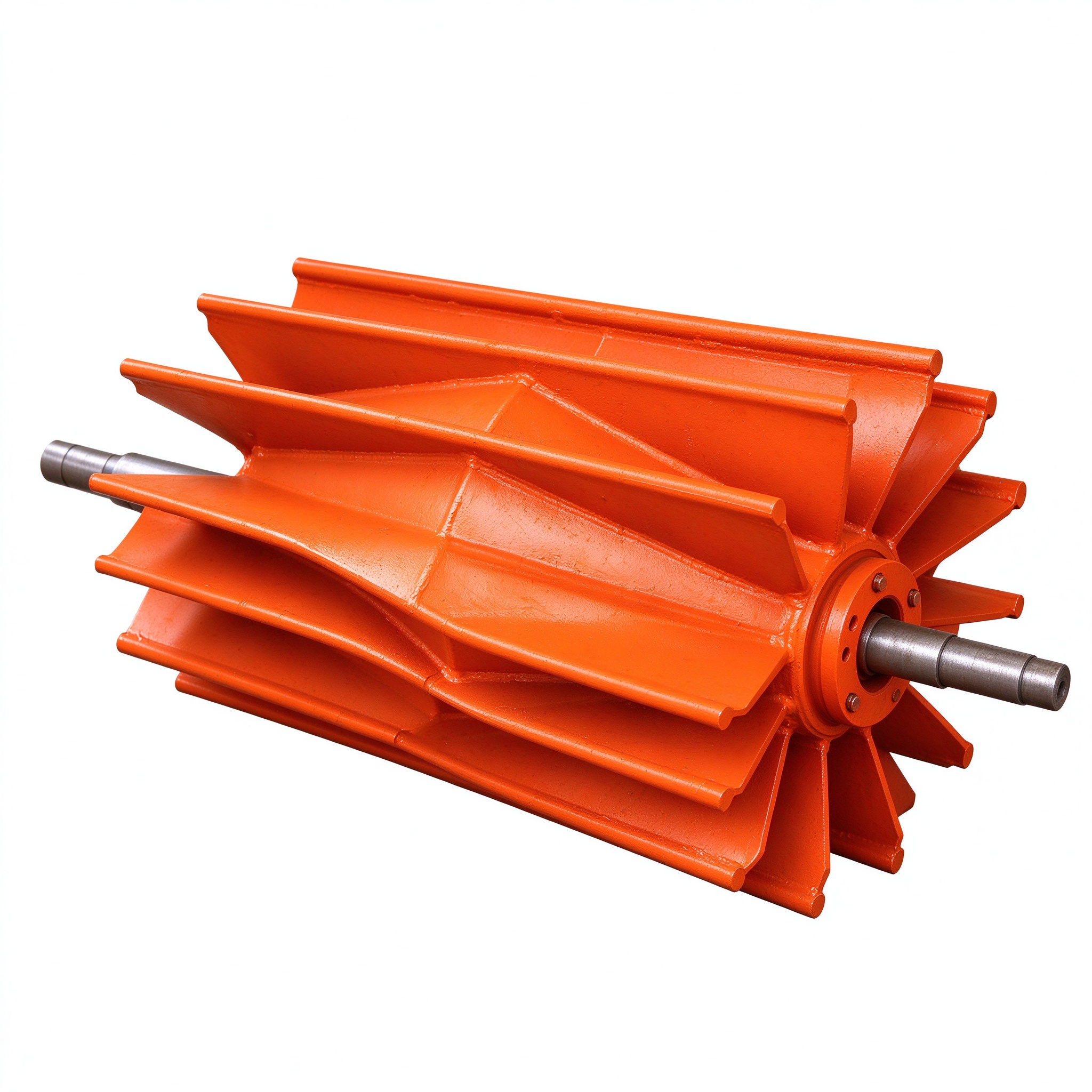
On light, dry, low-capacity belts a single primary PU blade may suffice. On mining, cement and high-capacity port belts, skipping the secondary means fine residue builds into unbalanced return drums and raises tracking problems.
Maintenance that extends life
Keep blade pressure set to the belt, replace segments before they wear flush, and inspect at each service interval. Segmented design and replaceable tips make both cleaners maintenance-friendly consumables.