How to Choose the Right Troughing Idler for Your Belt Width
CEMA B vs C vs D vs E — understanding load ratings, spacing intervals and when to upgrade from standard to heavy-duty idlers.
CEMA load ratings at a glance
The CEMA idler rating (B, C, D, E) reflects tube diameter, bearing size, seal design and maximum load per idler, not just price. B and C suit light, dry, low-capacity belts; D and E are built for heavy bulk densities, long overland runs, high tension and abrasive materials in mines, ports and power plants.
Match the idler to belt width and load
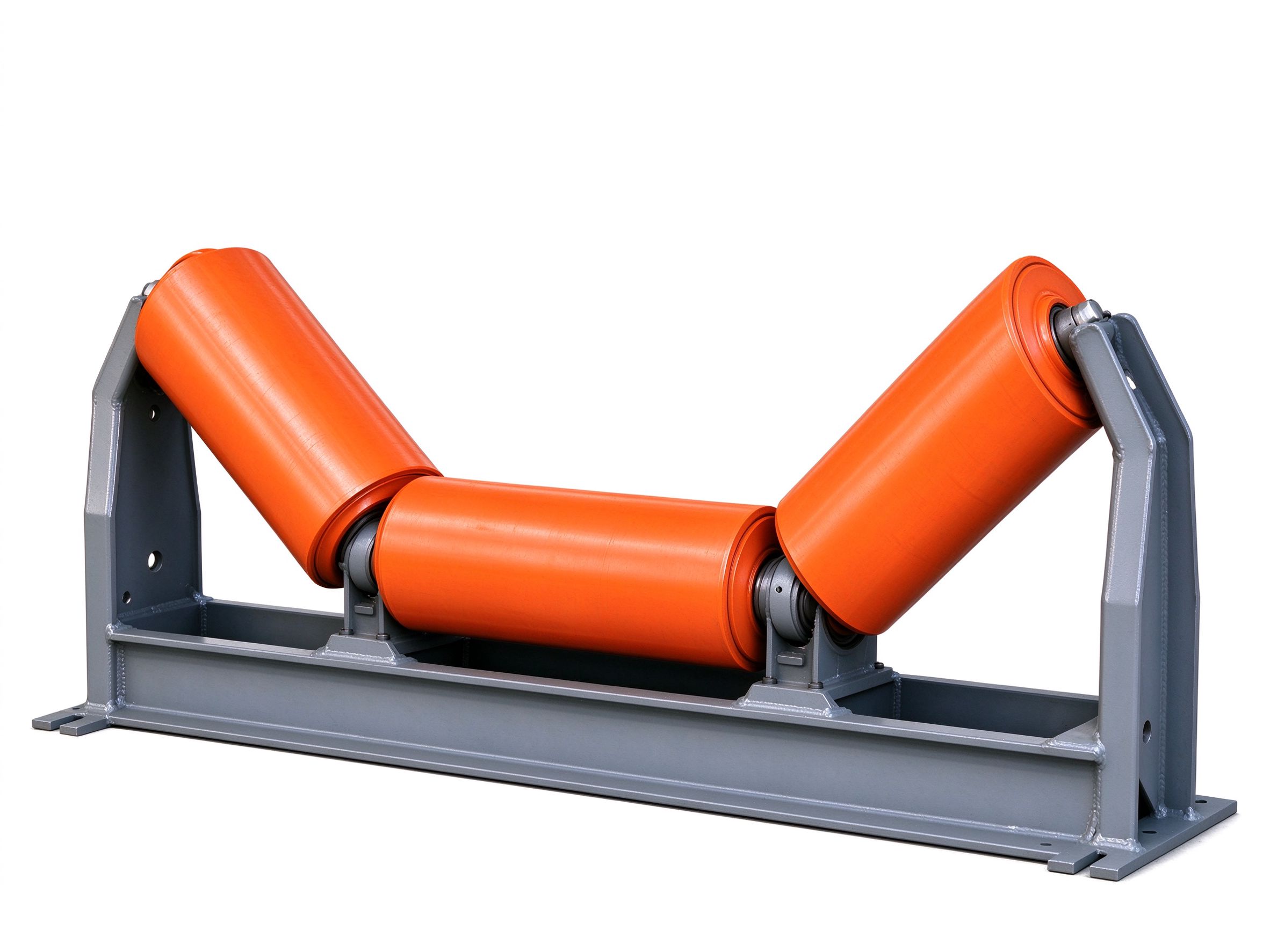
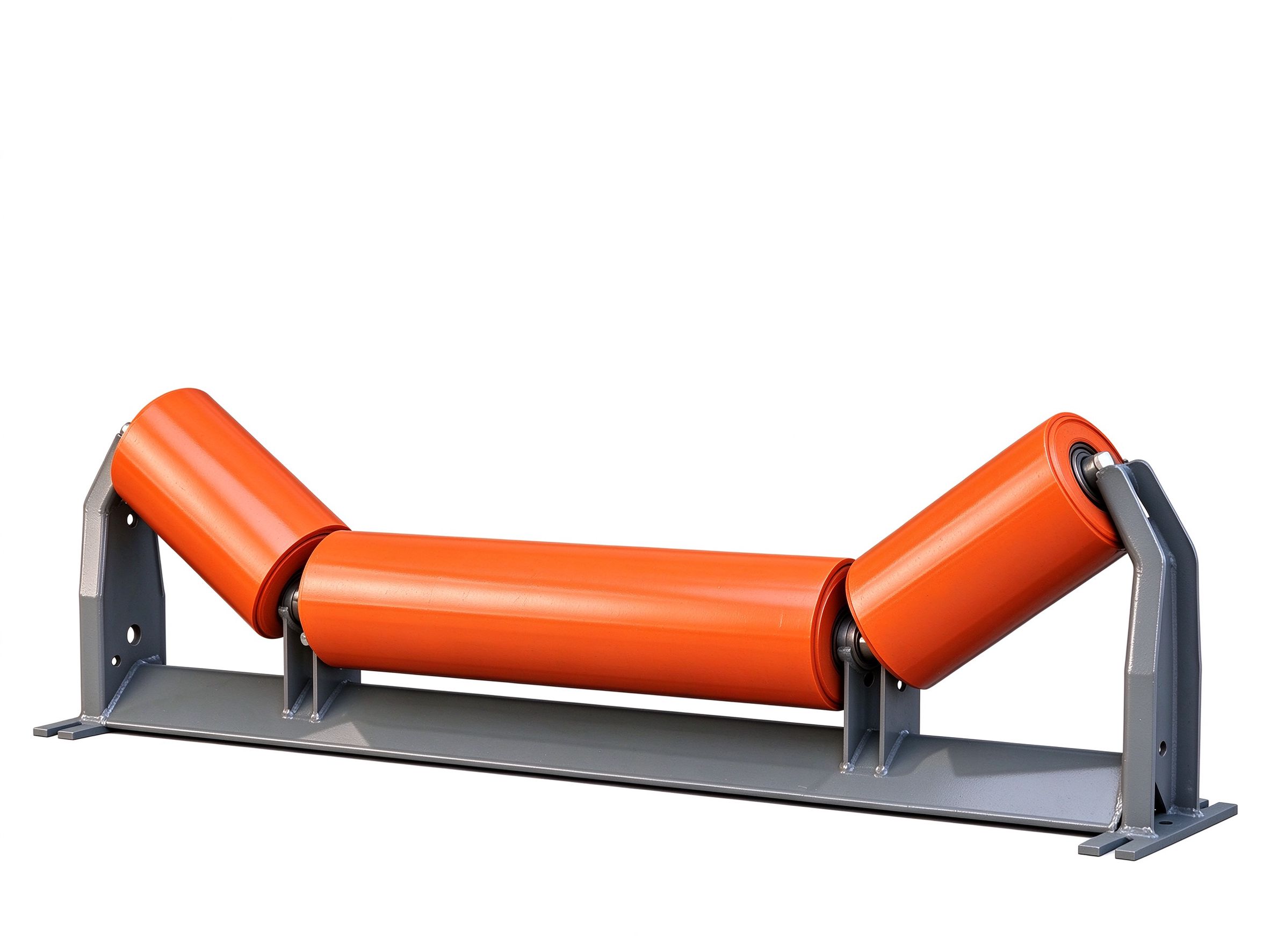
Carrying idlers span the belt width and support the loaded profile. For BW24"–96" belts at high capacity, 5"–7" CEMA D/E rollers on a welded channel frame hold their alignment longer than stamped B/C frames. Equal-length three-roller troughing sets are the default; unequal sets place a longer center roller under the heaviest belt contact at transition zones.
Spacing intervals
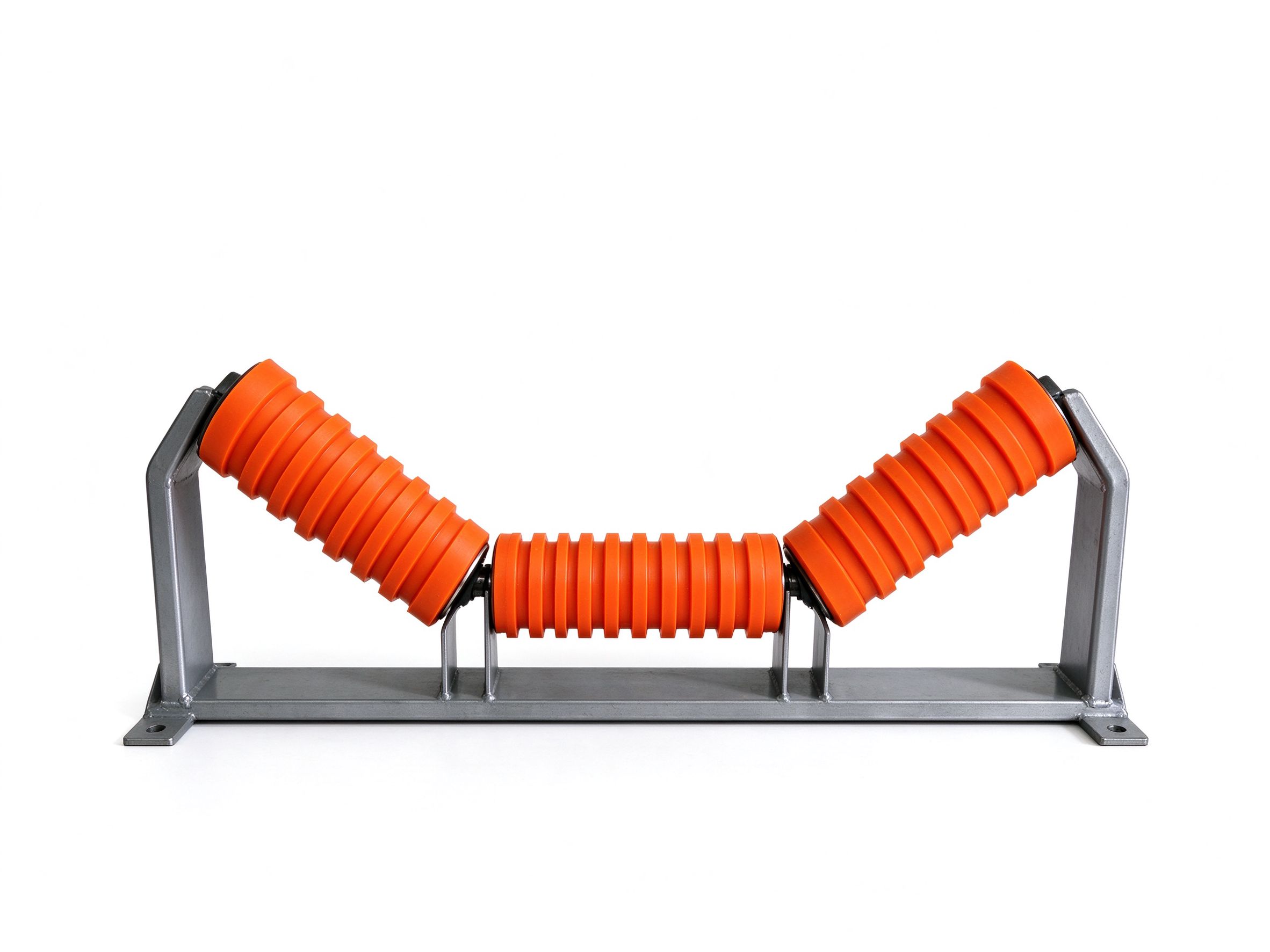
Carrying idlers are spaced closer under the loading point and wider on stable runs. Impact idlers with cushion rings sit directly under the chute; standard troughing sets follow at regular intervals away from the drop. Confirm spacing against the material bulk density, belt sag limit and total belt tension before ordering.
Sealing decides service life
IP66 labyrinth seals keep dust and water out of the bearing in outdoor and washdown conditions. Upgrading the seal package often matters more than upsizing the tube alone — a poorly sealed CEMA E roller fails before a well-sealed CEMA D roller in dusty coal service.