Belt Tracking 101: Fix Misalignment Before It Becomes a Catastrophe
Self-aligning idlers, V-plows and proper take-up tension — the basics of keeping your belt centered.
Why belts drift
A belt wanders when load is off-center, idlers are out of square, the take-up lacks tension, or carry-back builds up on the return run. Left alone, drift rubs the belt edge on the structure and shreds it.
Self-aligning idlers
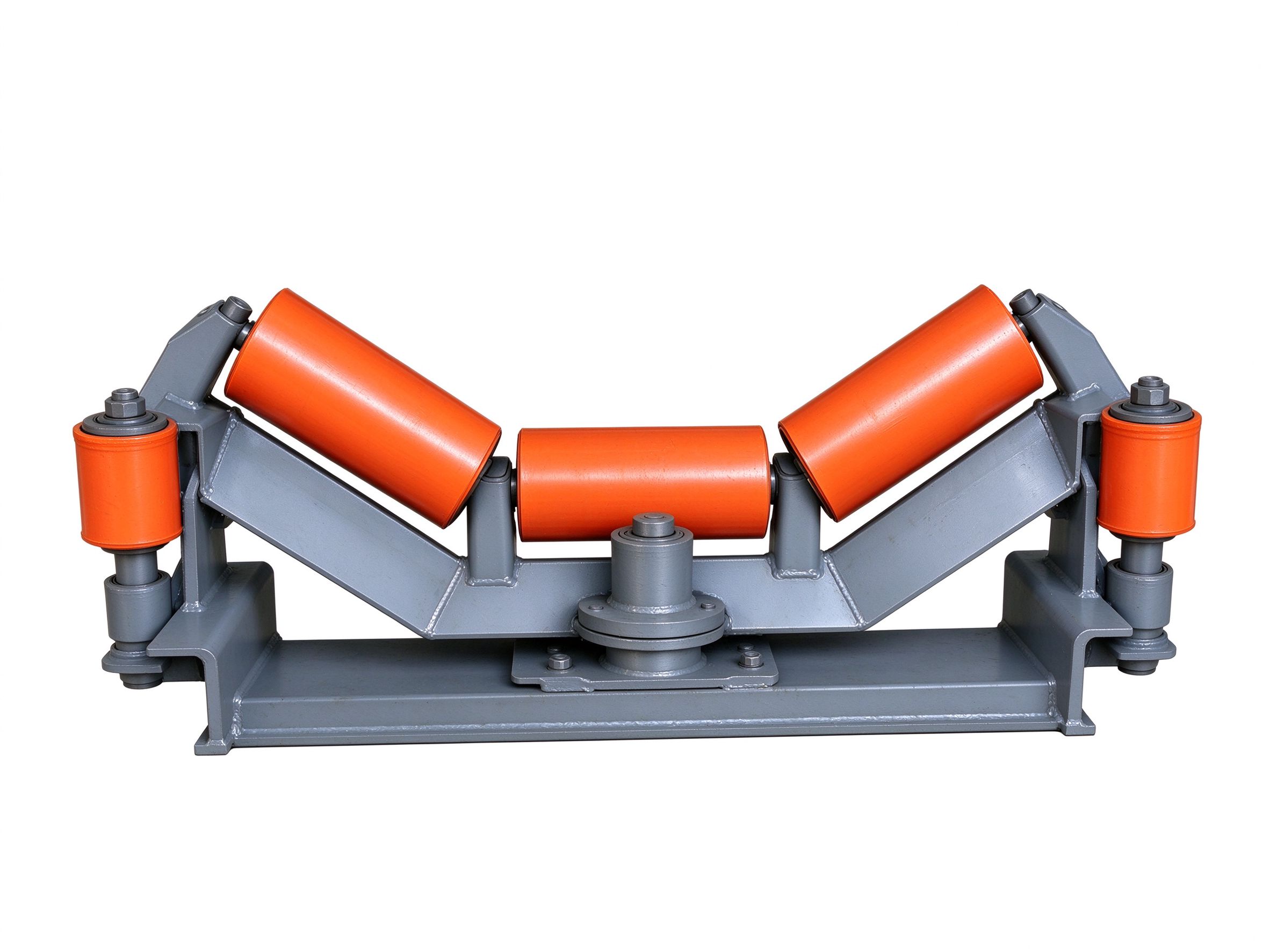
Pivot-mounted self-aligning troughing or return idlers carry vertical guide rollers at the belt edges; as the belt touches a guide, the frame swivels about the central axis and steers the belt back to center. Place them at intervals on long overland and reversible conveyors.
Clean the return run
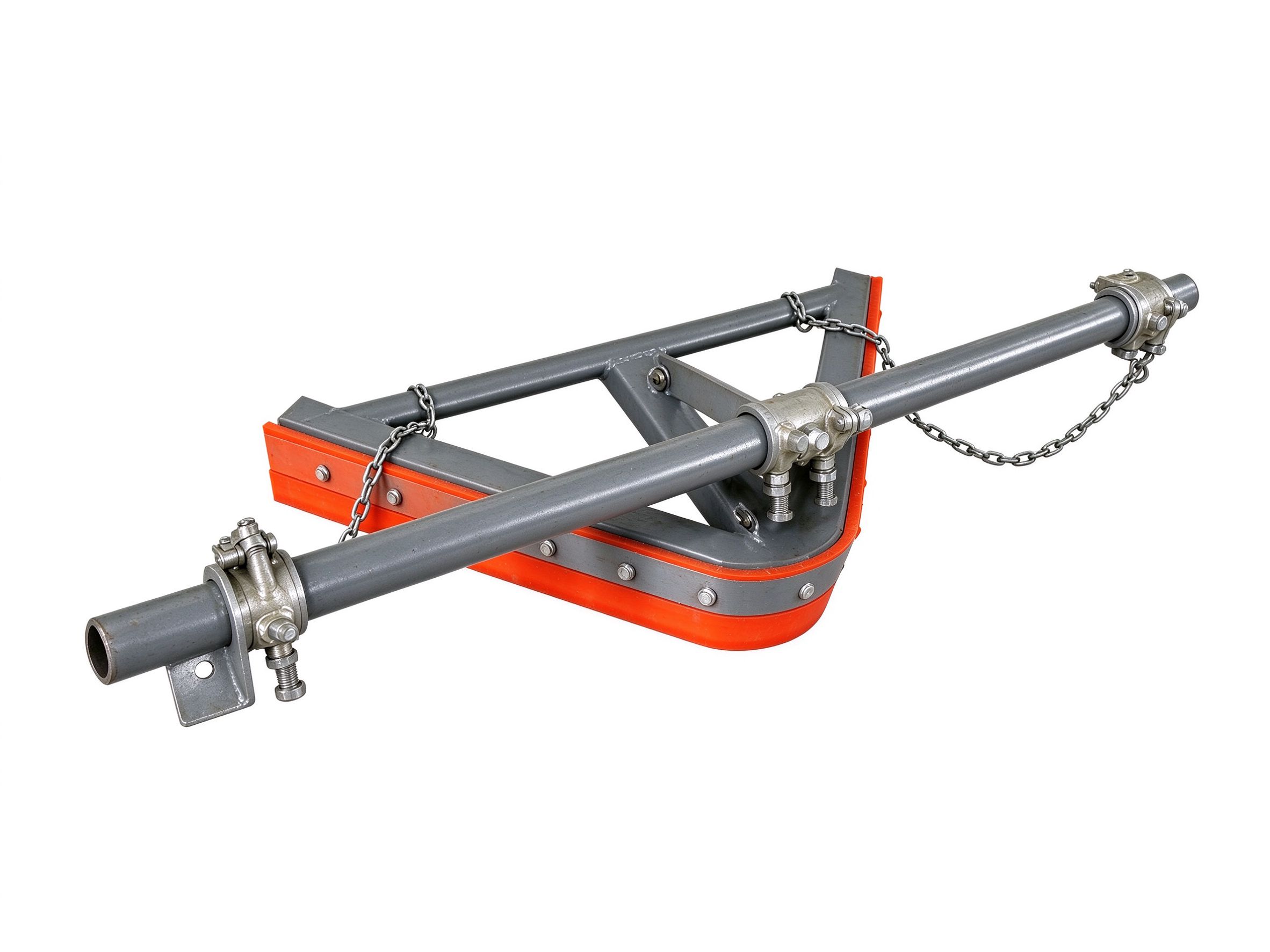
Primary and secondary cleaners remove carry-back at the discharge; a V-plow and rubber-disc return roller shed remaining material before it builds up on idlers and pulleys.
Keep correct tension
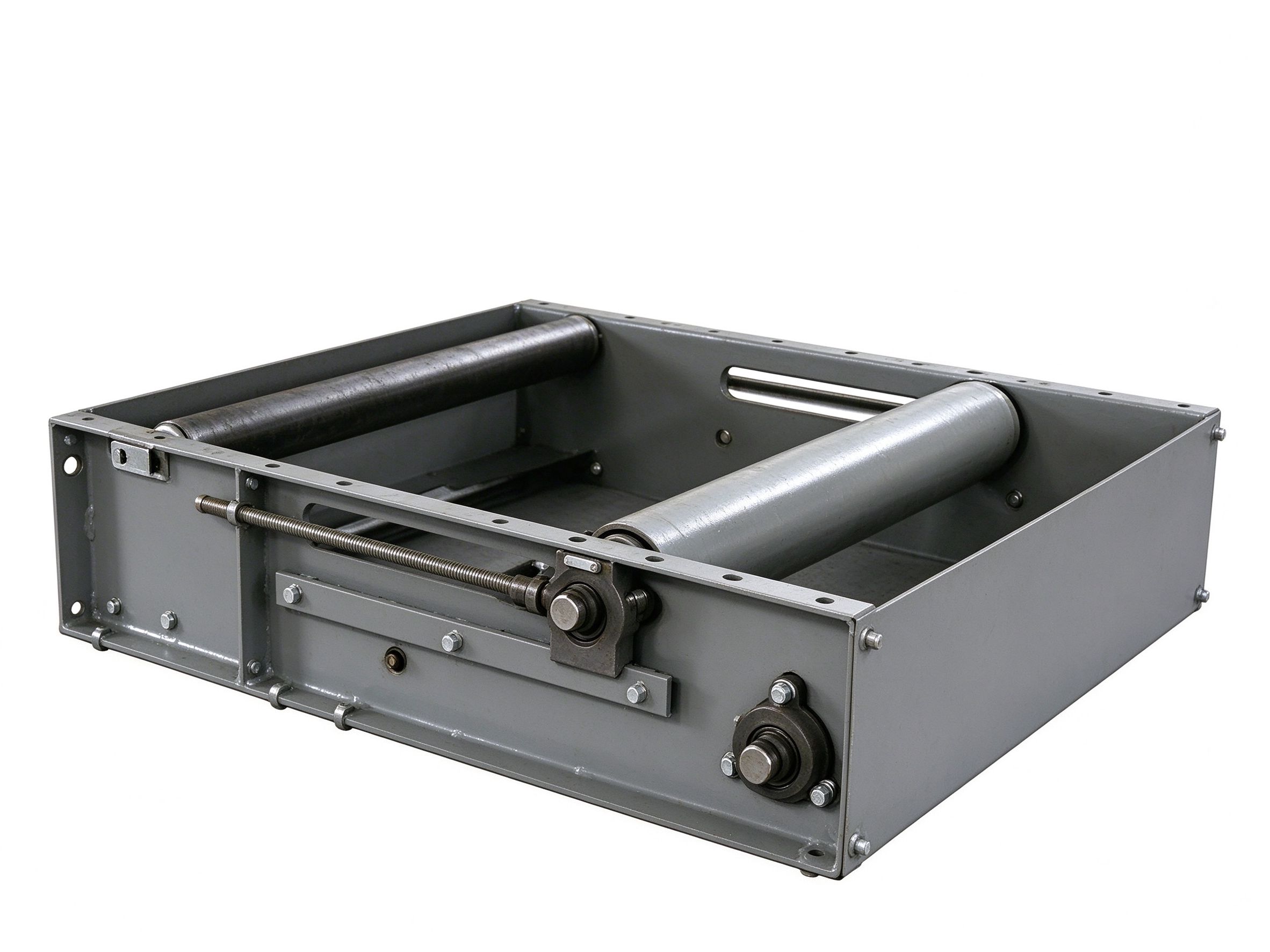
Screw take-ups adjust short conveyors; gravity take-up towers maintain constant tension on long or high-lift belts. A slack belt cannot track — confirm tension and alignment before replacing parts.